


Farkhad Khudyev, conductor
Bion Tsang, cello
This concert will last about 90 minutes with one intermission.
Please silence your electronic devices.
Photography, video, or recording of any part of this performance is prohibited
Program
Adam Schoenberg
Go
Gara Garayev
Layla and Majnun (Fantasy Overture)
intermission
Antonín Dvořák
Cello Concerto, op. 104
Allegro
Adagio ma non troppo
Finale: Allegro moderato
Bion Tsang, cello
About the Program
Program notes by Mark Bilyeu except where noted
Adam Schoenberg
Go
Born November 15, 1980
Composed 2016
Premiered August 22, 2014
7 minutes
Go was originally conceived as a string quartet that premiered in 2014 by The Chamber Music Festival of Lexington. Following the premiere of the quartet, it became apparent that the work was destined to be set to larger forces. I knew the piece could function as a great concert opener, and so I decided to wait until the right opportunity presented itself where I could rework the piece and arrange it for orchestra. Originally inspired by the Kentucky blue landscape and world-renowned horse race tracks and farms, Go is a high energy, groove-oriented work. The piece begins as if each member of the string section is at the starting line of a race. Using glissando techniques to create a revving effect, the movement opens with a series of roaring engines that increase in intensity before locking into a groove that becomes the foundation of the piece. Several different grooves and rhythmic patterns develop as the orchestra continues to round the track. The piece ultimately ends with a “sprint to the finish.”
– Adam Schoenberg
Gara Garayev
Layla and Majnun
February 5, 1918, Baku, Azerbaijan
May 13, 1982, Moscow, Russia
Composed 1947
Premiered September 29, 1947, Azerbaijan State Philharmonic Society
15 minutes
At the age of 20, Gara Garayev had his first public premiere: his cantata The Song of the Heart to the poem by the Azerbaijani writer Rasul Rza. It premiered at Moscow’s famed Bolshoi Theater, in the presence of Joseph Stalin. Following the premiere, Garayev moved to Moscow to study with Dmitri Shostakovich at the Moscow State Conservatory, and their mentorship grew into a friendship; “He surely has a great future,” wrote Shostakovich. Three years later, at the age of 23, he returned to his hometown of Baku to teach at the Azerbaijan State Philharmonic Society. In the years following, he would be awarded two separate Stalin Prizes (a Soviet equivalent to the American Pulitzer Prize), and would go on to hold the Chair of the Union of Composers of Azerbaijan SSR, and serve as the rector of the Azerbaijan State Conservatoire. He completed his tone poem, inspired by the legend of the great 12th century poet Nizami Ganjavi, before his thirtieth birthday. The legend tells the story of Quays, who falls in love with Layla, whose father refuses to let them be together. Quays goes to extreme lengths to prove his love, and the town gives him the epithet of “Manjun” meaning "possessed by genies,” for how unhinged he appears. Layla is forcibly married to another noble and moves to a place in Northern Arabia. Majnun, hearing of her marriage and departure, flees the city to seek her out, but when she is not found, lives a life in the wilderness, and goes mad. Eventually, Layla dies (in some versions of the story, her death is caused by heartbreak), and years later, still wandering in the desert, Majnun is found dead, beside Layla’s grave.
Antonín Dvořák
Cello Concerto, op. 104
Born September 8, 1841, Nelahozeves, Bohemia
Died May 1, 1904, Bohemia
Composed 1895
Premiered March 19, 1896, Leo Stern, cellist, London, England
40 minutes
Antonín Dvořák first tried his hand at composing a concerto for the cello at the age of twenty. After it was finished, the cellist for whom the concerto was written never followed up, and apparently, neither did Dvořák, because that work remains unfinished (it was discovered in 1925, after his death). It was through that experience, however, that Dvořák rather famously avoided writing another showcase for the cello, believing it was an “insufficient” instrument for solo work, with its “nasal high register and mumbling bass.” In his adult years, his friend and colleague, the cellist Hanuš Wihan began to badger the composer for a concerto. And, if any cellist was to sway Dvořák, it would be Wihan: the two had toured together extensively in a piano trio. Dvořák certainly admired his playing-Wihan had been the cellist to premiere Dvořák’s famous “Dumky” Piano Trio — but, it wasn't until the premiere of Victor Herbert’s cello concerto in 1894 that Dvořák believed the cello was capable of such a feat. He set out to write it in November, and by February of the next year, it was completed. He shared the manuscript with Wihan who made several suggestions, and also pushed for the inclusion of two cadenzas. Dvořák was not interested. He went so far as to send a note to his publishers saying “I give you my work only if you will promise me that no one—not even my friend Wihan — shall make any alteration in it without my knowledge and permission, also that there be no cadenza such as Wihan has made in the last movement; and that its form shall be as I have felt it and thought it out.” Despite this friction, Dvořák still asked Wihan to premiere the work, but the cellist was unable to play the premiere in London. He first performed the concerto the following year and continued to play it throughout his career.
In the opening movement, listen to how Dvořák immediately maneuvers around his concern of the cello being overpowered: his sparse orchestrations that accompany the soloist are beautiful transparencies against the more robust tutti sections when the soloist is not playing. The second movement is an homage to his ailing sister-in-law Josefina; in it he quotes her favorite song of his, “Lasst mich allein (Leave Me Alone).” The final movement was completed after her death, prompting him to include another iteration of that same melody. It was after this nostalgic moment that Wihan believed there should be a flashy cadenza to close it out, but Dvořák insisted on his own vision of the cello’s subdued final moments. He wanted it to be “like a breath... then there is a crescendo, and the last measures are taken up by the orchestra, ending stormily. That was my idea, and from it I cannot recede.”
About the Artists

Bion Tsang’s career highlights include appearing on the PBS Great Performances “Now Hear This” with Scott Yoo, including “Beethoven’s Ghost” (S2E4) and “Schumann: Genius and Madness” (S4E2), and earning a Grammy nomination for his performance on PBS’s A Company of Voices: Conspirare in Concert. (Harmonia Mundi). Tsang has performed with the New York, Mexico City, Moscow, Busan and Hong Kong Philharmonic Orchestras, the Atlanta, Pacific, American and National Symphony Orchestras, the Saint Paul and Stuttgart Chamber Orchestras, and the Hollywood Bowl Orchestra. He has been a guest with the Chamber Music Societies of Boston, Brooklyn, Fort Worth, Seattle and Vancouver, Chamber Music International, Da Camera of Houston and Camerata Pacifica, and performed at the Bard Festival, Bravo! Colorado, Domaine Forget de Charlevoix and Marlboro Music. Tsang’s discography includes three live recital recordings, all recorded at Jordan Hall in Boston, as well as Dvořák/Enescu Cello Concertos (Sony) with Scott Yoo and the Royal Scottish National Orchestra, Bach Solo Cello Suites (Sony), and Cantabile (Universal), again with Yoo and the RSNO.
Farkhad Khudyev
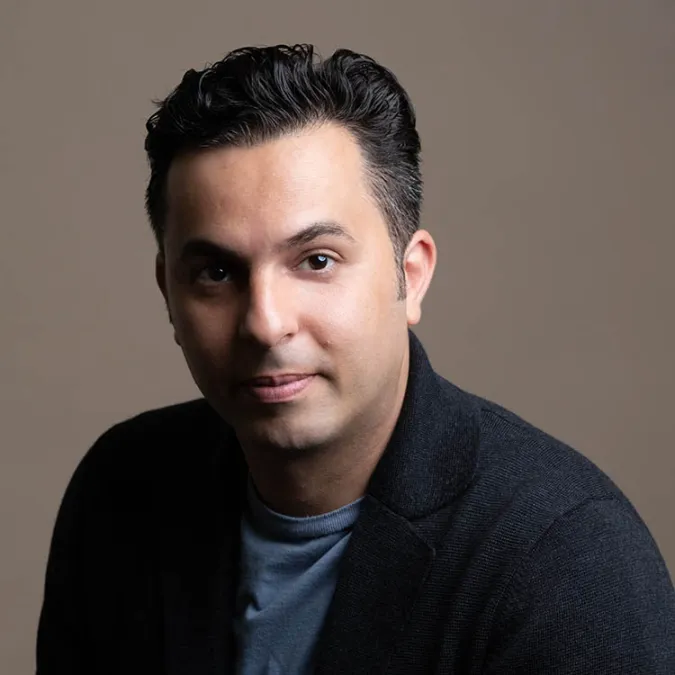
Farkhad Khudyev is the winner of the Gold Medal “Beethoven 250” at the 1st International Arthur Nikisch Conducting Competition; the Solti Foundation US 2018 and 2022 Career Assistance Award; the Best Interpretation Prize at the 1st International Taipei Conducting Competition; the 3rd prize at the 8th International Sir Georg Solti Conducting Competition; and the Gold Medal/Grand Prize at the 2007 National Fischoff Competition. Khudyev has worked with orchestras worldwide including the London Philharmonic Orchestra, Frankfurt Radio Symphony Orchestra, Frankfurt Opera Orchestra, Danish National Symphony Orchestra, Seattle Symphony, Dallas Symphony, Los Angeles Philharmonic, San Diego Symphony, Monterey Symphony, George Enescu Philharmonic Orchestra, Xi’an Symphony Orchestra and the State Taipei Chinese Orchestra. Farkhad was born in Turkmenistan, where he studied at the State Music School for gifted musicians, and then completed his studies at Interlochen Arts Academy, Oberlin Conservatory and Yale University. Khudyev serves as the Music Director of the University of Texas Symphony Orchestra in Austin, and the Orchestral Institute at the Hidden Valley Institute of the Arts in Carmel, California.
Symphony Orchestra
Violin I
Yida An
Leiana Campanaro
Cade Carter
Nicholas Hammel
Shijie Li
Suhyun Lim
Dyer McLeod
Jackie Shim
Mia Zajicek
Yusong Zhao
Violin II
Ivan Arras Morales
Wells Gjerlow
Georgia Halverson
Peter Kim
Wai Shan Ma
Suhaas Patil
Jimmy Shim
Misa Stanton
Zi Wang
Qiyan Xing
Viola
Zhe Cao
Grace Dias
Aiden Thomas Flora
Nelle Joung
Michael Lee
Kamran Merritt
Alexis Mitrushi
Cecilia Nguyen
Hannah Thompson
Cello
Aidan Bolding
Kuan Yu Huang
Javy Liu
Hongjoo (Hannah) Nam
Seungyeon Oh
Yeh Hsuan Pu
Tristan Ramon
Benedict Dan Shane Ventura
Savva Wagner
Double Bass
Ema Deguchi-Kelly
Shiying Feng
Juan Hernandez Labra
Lucas Scott
Flute
Kyndahl Britton
Logan Crocker
Eunha Kim
Oboe
Sara Brown
Noah O'Brien
Spencer Dwyer
Clarinet
Sadie Murray
Maja Pechanach
Alexander Vo
Bassoon
George Alazar
Allison Rogers
Rishabh Sajjan
Horn
Andrew Clarkson
Daniela Garcia
Jordan Perkins
Samuel Stephenson
Austin Waldbusser
Trumpet
Rowan Anthony
Shashe Hossain
Americo Zapata
Trombone
Cristian Cantu
Nicolas Castillo
Jackson Quevedo
Tuba
Haley Pauzus
Percussion
Aaryn Avila
Erin Lockhart
Michael Rivera Gonzalez
Harp
Cai Chen
Keyboard
Derek Hamersly
Upcoming Events

Ring in the season with the Butler School’s annual Holiday Concert with music for everyone to enjoy. You’ll hear traditional holiday carols and winter favorites across many genres, including excerpts from Bach’s Magnificat, jazz standards like “I’ll Be Home for Christmas,” and Hanukkah songs from Sephardic and Mizrahi Jewish traditions.
Featuring
Chamber Orchestra
Concert Chorale
University Chorus
Longhorn Singers
Bereket Middle Eastern Ensemble
Soha Quartet
Horn Choir
Bassoon Ensemble
Musical Theatre Workshop
Jazz Combos
Gregory Eaton, organ
Saturday, December 5, 7:30 p.m.
Sunday ,December 6, 4:00 p.m.
Bates Recital Hall
SYMPHONY ORCHESTRA
Friday, November 6, 7:30 p.m.
Bates Recital Hall
MIRÓ QUARTET
Saturday, November 7, 7:30 p.m.
Bates Recital Hall
UNIVERSITY ORCHESTRA
Free Admission
Tuesday, November 17, 7:30 p.m.
Bates Recital Hall
SYMPHONY ORCHESTRA
Wednesday, February 10, 7:30 p.m.
Bates Recital Hall
UNIVERSITY ORCHESTRA
Free Admission
Tuesday, February 23, 7:30 p.m.
Bates Recital Hall
Event Details
$5 – 15
All University of Texas at Austin students are allowed one free ticket as long as they are available. Student tickets must be picked up at the Box Office with valid student I.D. Seating is unassigned.
If you are a patron with specific seating needs, please email tickets@mail.music.utexas.edu and we will reserve ADA seating for you.