



This concert will last about 75 minutes without intermission.
Please silence your electronic devices.
Photography, video, or recording of any part of this performance is prohibited
Program
Amanda Harberg
Sonata for Piccolo and Piano
Allegro, Flowing
Moderato, Dreamy and
Vivace, Driving, Playful
Luciano Berio
Sequenza I per flauto
Valerie Coleman
Mama Griot
premiered by Thomas with Choo Choo Hu, piano
at the National Flute Association 2025 Flute Convention
Atlanta, GA
Claude Debussy
Syrinx, pour flûte seule
César Franck
Sonata in A Major
Allegretto ben moderato
Allegro
Ben moderato: Recitativo-Fantasia
Allegretto poco mosso
About the Program
Program notes by Mark Bilyeu
Amanda Harberg
Sonata for Piccolo and Piano
Born 1973, Philadelphia, PA
Composed 2018
Premiered 2018, Orlando National Flute Convention, Regina Helcher Yost, piccoloist, Amanda Harberg, pianist
12 minutes
Known as a specialist in crafting music for woodwinds, the composer, pianist, and educator Amanda Harberg has built a uniquely varied career with an exceptional output for instrumentalists across the entire orchestra. Her piccolo concerto was premiered in 2021 by the Philadelphia Orchestra, conducted by Yannick Nézet-Séguin with Harberg’s longtime collaborator Erica Peel as the featured soloist, while her concerto for viola and orchestra was recorded on Naxos American Classics to critical acclaim, and heard around the world. A graduate of The Juilliard School, she is the recipient of many prizes, including a Fullbright-Hays Fellowship to study with Frederic Rzewski. She currently serves on the faculty at the Berklee College of Music as a professor of contemporary writing and production, and her music is published by the Theodore Presser Company and AH Publishing. Her Sonata for Piccolo and Piano was the result of a consortium spear-headed by Regina Helcher Yost and supported by twenty-four distinguished piccoloists, and premiered at the Orlando National Flute Convention with the composer at the piano. “She invigorates the brain and touches the soul,” says composer John Corigliano. “I love her work.”
Luciano Berio
Sequenza I per flauto
Born October 24, 1925 Oneglia, Italy
Died May 27, 2003 Rome, Italy
Composed 1958
Premiered 1958, International Summer Courses for New Music, Darmstadt, Germany, Severino Gazzelloni, flutist
Published 1992
6 minutes
Luciano Berio, an Italian composer who explored the limits of musical composition in both electronic and experimental music, began crafting works for solo instruments in 1958. He called these pieces Sequenzas, composing the last of them just one year before his death in 2003. In total, there were fourteen of these solo works, which ranged from the piano to the female voice, and from the accordion to the trumpet. The first of these, however, was for the flute. As Berio wrote in the inscription to his updated manuscript: “The title refers to the fact that the piece is built from a sequence of harmonic fields from which the other, strongly characterized musical functions are derived. In Sequenza I an essentially harmonic discourse is set out and developed melodically, suggesting a polyphonic mode of listening. In 1958 I wasn’t using the term “polyphonic” in any metaphorical sense, as I would do now when working with monodic instruments, but literally. I wanted to establish a way of listening so strongly conditioned as to constantly suggest a latent, implicit polyphony.” Like the sequenzas which followed, Sequenza I is a virtuosic and technically demanding work for the performer, with the use of extended techniques and extreme dynamics, it requires the most capable of musicians to bring this radical work to life.
Valerie Coleman
Mama Griot
Born 1970, Louisville, KY
Composed 2025
6 minutes
The Boston Globe has described Valerie Coleman as having a “talent for delineating form and emotion with shifts between ingeniously varied instrumental combinations,” and Performance Today named her 2020 Classical Woman Musician of the Year. Coleman is also a performer par excellence. Perhaps most notably, she is the creator, founder, and former flutist of the acclaimed Imani Winds, an ensemble whose performances and original works have redefined wind chamber music with performances that span the globe. In 2011, she created the Imani Winds Chamber Music Festival, a summer mentorship program in NYC that has welcomed musicians from over 100 institutions both nationally and abroad. “Mama Griot” was commissioned by the Burkhart Flute Company to honor Lillian Burkart, the recipient of the 2025 National Flute Association Lifetime Achievement Award. Coleman explains the inspiration for the work:
Griots are musicians, oral historians, praise-singers, genealogists, and storytellers found in West Africa. Today’s musicians, poets, writers, artists, and actors who tell and preserve the stories and songs.” In Mama Griot, we celebrate our griot of the flute making tradition and innovations, someone who is beloved within our flute community tribe. This piece is a drum circle from start to finish, with a little bit of church in the middle.
She concludes succinctly: “Meant to groove.”
Claude Debussy
Syrinx, pour flûte seule
Born August 22, 1862, Saint-Germain-en-Laye, France
Died March 25, 1918 , Paris, France
Composed 1913
Premiered December 1, 1913, by flutist Louis Fleury
Published 1927
3 minutes
In 1913, Claude Debussy agreed to write incidental music for Gabriel Mourey’s play Psyché, but with only two weeks before the opening night, he was experiencing a bit of writer’s block. The offstage music was to be played by the Greek god Pan, who, along with the Acadian nymphs—including Syrinx—were the protagonists of the play. In a letter to Mourey, he admitted: “So far, I have not found what is needed…because a flute singing on the horizon must quickly contain its emotion! I mean, we have no time for multiple restarts, and further: any artifice becomes coarse, the design of the melody cannot count on any interruption of color. Please tell me, very precisely, after what lines the music starts. After several attempts I think that one has to stick to the pan flute alone without other accompaniment. This is more difficult but more in the nature of things.” Debussy’s creation, the evocation of Pan playing a reed flute made from the reeds of Syrinx herself (after shapeshifting to avoid his predatory advances), was finished just days before the premiere. The flutist Louis Fleury learned the work in short order, winning him the composer’s dedication of the work. It was Fleury who (rather selfishly) would go on to bring the work into the icon status it enjoys today, keeping the unpublished work to himself throughout the rest of his career.
César Franck
Sonata in A Major for Violin & Piano
Born December 10, 1822, Liège, Belgium
Died November 8, 1890, Paris, France
1886
Premiered December 16, 1886, Museum of Modern Painting, Brussels
30 minutes
Franck’s Sonata in A Major for Violin & Piano—or simply, “Franck” for those chamber musicians in the know—was given as a wedding gift to the violinist Eugène Ysaÿe in the fall of 1886. That private premiere, given by the groom and his soon-to-be sister-in-law took place three months before its first public outing at the Museum of Modern Painting in Brussels, given by the same duo. They had placed the Franck sonata at the end of a long afternoon program. The museum did not permit any artificial light in its galleries, so as night fell, and the hall became dark, the performers premiered the final three movements from memory. The sonata marked the first major success for César Franck, who until this point (only four years before his death) had a successful career as an organist, teaching at the Paris Conservatory, and holding positions at the Torcadéro and St. Clotilde’s church, but was not acknowledged as a composer of much merit. The work itself is marked by its cyclical use of themes, its devilishly difficult piano part (Franck had unusually large hands, and seemingly was unconcerned that the rest of the world did not), and its Wagnerian-like harmonic language. Ysaÿe would perform the work for the next forty years of his life, always telling his audience that it was a wedding gift from the composer, which is why these performances were “con amore.” Because of this global proselytizing, the work has been transcribed, arranged, and re-calibrated for nearly every configuration imaginable. There are versions for flute, double bass, tuba, saxophone, piano duet, and even one for organ and choir. The version for cello and piano, an endeavor by cellist Jules Delsart, is the only one to have been approved by Franck during his lifetime.
About the Artists
Ebonee Thomas

Thomas is the second flute and piccolo for The Dallas Opera, and has previously served as principal flute of the Knoxville Symphony, principal flute of the Florida Grand Opera, and second flute of the Houston Symphony. She spends her summers as a flutist at Lakes Area Music Festival and Music in the Mountains, and has been guest principal with symphonies and opera companies across the country. A passionate pedagogue, Thomas served as a member of the board of the Greater Dallas Youth Orchestras and is on the national advisory board of the Memphis Youth Symphony Program. She is also currently the piccolo committee chair for the National Flute Association. An avid chamber musician, Thomas has worked with the Austin Chamber Music Society and Voices of Change, a new music ensemble in Dallas. She recently made her debut performance with the ensembleNEWSRQ, a contemporary ensemble highlighting living and underrepresented composers. Thomas received her Bachelor of Music in flute performance from Southern Methodist University and her Master of Music from New England Conservatory of Music. She is a Burkart Piccolo Artist and plays on a Burkart Elite piccolo and 998 flute.
Colette Valentine
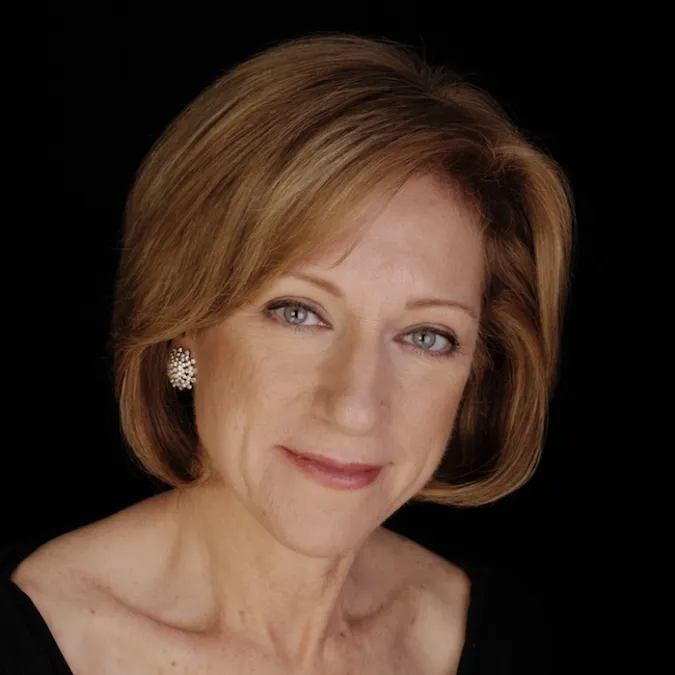
Pianist Colette Valentine has performed in important New York City and Washington, DC venues such as Weill Recital Hall at Carnegie Hall, the 92nd Street Y, the Metropolitan Museum of Art, Merkin Concert Hall, the Kennedy Center Terrace Theater, the Library of Congress, and the Corcoran Gallery; and internationally in Paris, Zurich, Florence, Tokyo, Osaka, Seoul, and Hong Kong. She has collaborated in chamber concerts with the New York Philharmonic Winds, St. Luke’s Chamber Ensemble, the Washington Chamber Society, the Left Bank Concert Society, the Grand Teton Music Festival Players, and the Miró Quartet, among others. Valentine has served as assisting pianist for numerous National and International events, and has recorded for the Naxos, Albany, fontec, Antara, Well-Tempered, and CRI labels. In the fall of 2008, she joined the faculty of the newly created collaborative piano Division at The University of Texas at Austin’s Butler School of Music, and was named director of collaborative piano in 2017.
Upcoming Events
SYMPHONY ORCHESTRA
with Laura Downes, piano & Donnie Ray Albert, baritone
Friday, September 18, 7:30 p.m.
Bates Recital Hall
PATRICK HUGHES, horn & COLETTE VALENTINE, piano
Monday, September 28, 7:30 p.m.
Bates Recital Hall
ANTON NEL & FRIENDS
Monday, October 12, 7:30 p.m.
Bates Recital Hall
MIRÓ QUARTET
Saturday, November 7, 7:30 p.m.
Bates Recital Hall
EBONEE THOMAS, flute | WILHELM MAGNER, viola | EMILY LEVIN, harp
Sunday, January 24, 2027, 3 p.m.
Bates Recital Hall
Event Details
$10 – 20
All University of Texas at Austin students are allowed one free ticket as long as they are available. Student tickets must be picked up at the Box Office with valid student I.D. Seating is unassigned.
If you are a patron with specific seating needs, please email tickets@mail.music.utexas.edu and we will reserve ADA seating for you.