


Anton Nel, piano
Sandy Yamamoto, violin
Wilhelm Magner, viola
Bion Tsang, cello
Jonathan Gunn, clarinet
Colette Valentine, piano
Thomas Burritt, percussion
Arlo Shultis, percussion
This concert will last about 90 minutes with one intermission.
Please silence your electronic devices.
Photography, video, or recording of any part of this performance is prohibited
Program
W.A. Mozart
Piano Quartet in E-flat Major, K. 493
Allegro
Larghetto
Allegretto
Sandy Yamamoto, violin
Wilhelm Magner, viola
Bion Tsang, cello
Anton Nel, piano
Francis Poulenc
Sonata for Clarinet and Piano
Allegro tristmente
Romanza
Allegro con fuoco
Jonathan Gunn, clarinet
Anton Nel, piano
Claude Debussy
Première rhapsodie for Clarinet and Piano, CD 124
Jonathan Gunn, clarinet
Anton Nel, piano
Béla Bartók
Sonata for Two Pianos and Percussion, Sz.110
Assai lento — Allegro molto
Lento, ma non troppo
Allegro non troppo
Colette Valentine, piano
Anton Nel, piano
Thomas Burrit, percussion
Arlo Shultis, percussion
About the Program
Program notes by Mark Bilyeu except where noted.
W.A. Mozart
Piano Quartet in E-flat Major, K. 493
Born January 27, 1756 in Salzburg, Austria
Died December 5, 1791 in Vienna, Austria
Composed 1786
25 minutes
In 1781, a twenty-five year old Mozart made a big change: he moved to Vienna. In truth, he had been ready for a move for a few years, traveling from Paris to Mannheim to Munich in search of a better job opportunity than the employment in his hometown of Salzburg. It was during the trip to Vienna when he learned of his official termination back home, and so decided to stay in Vienna, where he would spend the rest of his life. It was this period of the early 1780’s when Cristofori’s new instrument, the pianoforte, came into prominence. Both Haydn and Mozart continued to churn out wildly popular and commercially successful works for the instrument, adding to its rise. So, it is no surprise that in 1785, Mozart’s first publisher Hoffmeister offered him a commission to create three new chamber works for the instrument and string trio. Mozart’s first work for the ensemble (now commonly known as a “piano quartet”) was his “Piano Quartet No. 1 in G Minor.” The publisher told Mozart the work was too difficult and they agreed to abandon the rest of the contract (although Mozart was still allowed to keep his fee — an important sum for the struggling musician). Mozart next devoted his time to completing his opera La nozze di Figaro, and afterwards immediately set out to write another piano quartet — the one heard on this program.
The work, like many of Mozart’s piano concertos, opens with all players, in a sort of miniature orchestra, until they break off into two autonomous-yet-symbiotic groups: the piano and the string trio. Throughout the work, the two groups interweave and co-mingle in what notator Kai Christiansen describes as “like wood and water or perhaps clouds and starlight.” The second movement is also in sonata form, with Mozart developing and unwinding his larghetto theme into more clouds and more starlight. The final movement is a rather restrained rondo (a musical form that alternates a repeating theme or refrain with one or more contrasting sections), alternating in texture not just between the strings and piano, but also exploring duets, solos, and even some two-handed counterpoint in the piano. With its refined string writing and dazzling passagework for the keyboard player on what Mozart called a “fortepiano” (inverting the “loud” and “soft” compound work), it’s easy to see how Mozart’s piano quartets are considered the first of the genre: not because they were the first ever written, but because they are just that good.
Francis Poulenc
Sonata for Clarinet and Piano
Born January 7, 1899
Died January 30, 1963
Composed 1962
Premiered April 10, 1963, Benny Goodman, clarinet, Leonard Bernstein, piano, Carnegie Hall, New York
14 minutes
Francis Poulenc crafted his Sonata for Clarinet and Piano in the summer of 1962, on the request of the “King of Swing,” Benny Goodman. While Poulenc’s output includes a large scale opera and some orchestral works, miniatures were a constant thread throughout his career, with mélodies serving as a Poulenc hallmark. When Goodman approached him about a new work, Poulenc (having already composed a sonata for two clarinets, and a sonata for bassoon and clarinet), looked forward to intersecting his own love of jazz with Goodman’s virtuosic skill. It would turn out to be one of the last works Poulenc would complete. As part of the commission, Poulenc was to premiere the work with Goodman, but that was not to be. Poulenc died suddenly of a heart attack in January of 1963, months before the premiere. In his place, Leonard Bernstein accompanied Goodman. At the premiere, the New York Times wrote “Poulenc was not a 'big' composer, for his emotional range was too restricted. But what he did, he did perfectly, and his music shows remarkable finish, style and refinement.... The sonata...is typical Poulenc. In the first movement, skittish thematic elements are broken up by a broadly melodic middle section. The slow movement is one of those melting, long-phrased and unabashed sentimental affairs that nobody but Poulenc could carry off.”
Claude Debussy
Première rhapsodie
Born August 22, 1862, Saint-Germain-en-Laye, France
Died March 25, 1918 , Paris, France
Composed 1910
Premiered July 14, 1910, Paris Conservatory
9 minutes
How is it that some of the most compelling music ever written is called a “rhapsody”? George Gershwin’s jazz-infused Rhapsody in Blue, Rimsky-Korsakov’s brilliantly-orchestrated Rhapsodie Espangole and Queen’s over-the-top “mock opera” Bohemian Rhapsody are, unequivocally, musical offerings par excellence. What ties these works together (aside from generational musical genius) is their form. A rhapsody is a work, often a single movement, that is episodic in nature and has a free-wheeling, improvisatory spirit. It’s a form that allows for ultimate freedom, the likes of which would have confused Beethoven and Mozart who themselves expanded the concepts of form. And so, when Debussy was tasked with writing a work featuring solo clarinet for the Paris Conservatory’s exams, he turned to the rhapsody. The work is dedicated to the school’s clarinet professor, Prosper Mimart, although his students were the musicians who premiered the work during their final exams on July 14, 1910. Debussy marks the opening to his rhapsody as rêveusement lent (slow and dreamy) as the clarinet unfolds its melody underneath the piano’s undulations. There are a few false starts and a few quick turns before the bouncy scherzando appears and then quickly dissolves back into the long lines of Debussy’s melodic prowess. Suddenly, we find ourselves in the flashy finale that surely motivated the students at Debussy’s alma mater to spend a few additional minutes in the practice rooms.
Béla Bartók
Sonata for Two Pianos and Percussion, Sz.110
Born March 25, 1881, Nagyszentmiklós, Hungary (Presently Sânnicolau Mare, Romania)
Died September 26, 1945, New York City, New York
Composed 1937
Premiered January 16, 1938 at the International Society for Contemporary Music
27 minutes
Hungarian composer, pianist, and ethnomusicologist Béla Bartók is widely considered one of the most important composers of the twentieth century. This Sonata was premiered by Bartók, with his wife Ditta Pástory-Bartók at the second piano, and with percussionists Fritz Schiesser and Phillip Rühlig in Basel, Switzerland. The American premiere took place two years later in New York City’s Town Hall, also featuring the Bartóks, this time with the percussionists Saul Goodman and Henry Deneke. The percussionists play seven instruments: timpani, bass drum, cymbals, triangle, snare drum, tam-tam, and xylophone. The score is quite rigid, with explicit instructions on the layout of the instruments, types of sticks used, and other details. The first movement maintains the overall structure of sonata form, with apparent introduction, exposition, development, recapitulation, and coda; however, rather than tonic-dominant or even third relationships of the Classic and Romantic Eras, respectively, the piece explores the tritone interval between F# and C — not uncommon in Bartók’s music. The second movement, in ternary form, is exemplary of Bartók’s “Night Music,” a term that he approved to describe his musical works that include representations of sounds of nature at night. The finale is a dance-like rondo. Although it was premiered with only two, the Sonata is often performed by several percussionists, as the complex parts can easily be shared.
– Penny Brandt
About the Artists
Anton Nel
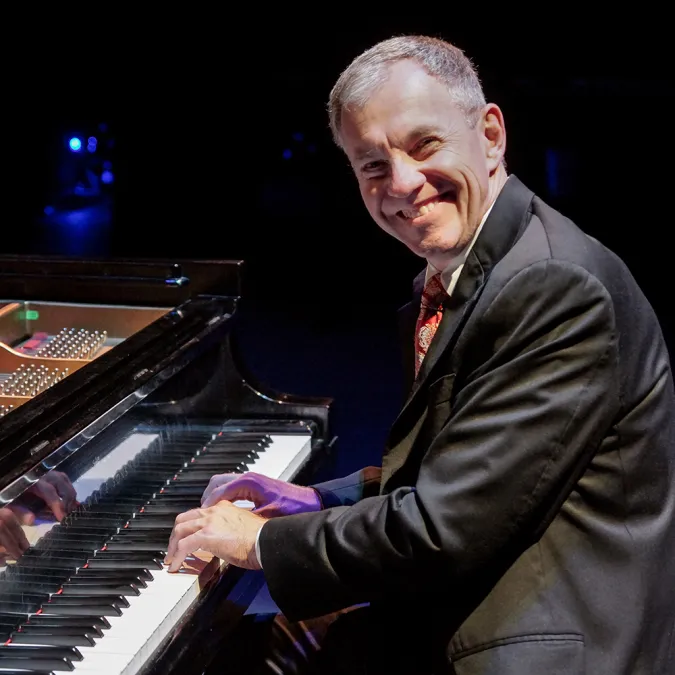
Winner of the 1987 Naumburg International Piano Competition at Carnegie Hall, Anton Nel continues to tour internationally as recitalist, concerto soloist, chamber musician and teacher. Highlights in the U.S. include performances with the Cleveland Orchestra, and the Chicago, San Francisco, Dallas, Seattle, and Detroit Symphonies (he has a repertoire of more than 100 works for piano and orchestra.) In addition to recitals in virtually every U.S. state he has appeared overseas at the Wigmore Hall in London, the Concertgebouw in Amsterdam, Suntory Hall in Tokyo, as well as major venues in China, Korea, and South Africa. Much sought after as a chamber musician he regularly appears with some of the world’s finest instrumentalists and singers at festivals on four continents. He holds the Joe R. and Teresa Lozano Long Endowed Chair at The University of Texas at Austin and also gives an annual series of masterclasses at the Manhattan School of Music and the Glenn Gould School in Toronto. During the summers he is on the artist-faculties at the Aspen Music Festival and School, the Steans Institute at the Ravinia Festival, and the Orford Music Academy in Quebec. Nel also frequently performs as harpsichordist and fortepianist. His recordings include four solo albums, chamber music recordings (including the complete Beethoven and Brahms cello/piano works with Bion Tsang), and works for piano and orchestra by Franck, Faure, Saint-Saens and Edward Burlingame Hill. The Johannesburg-born Mr. Nel is a graduate of the University of the Witwatersrand, where he studied with Adolph Hallis, and the University of Cincinnati where he worked with Bela Siki and Frank Weinstock. His website is antonnel.com.
Sandy Yamamoto
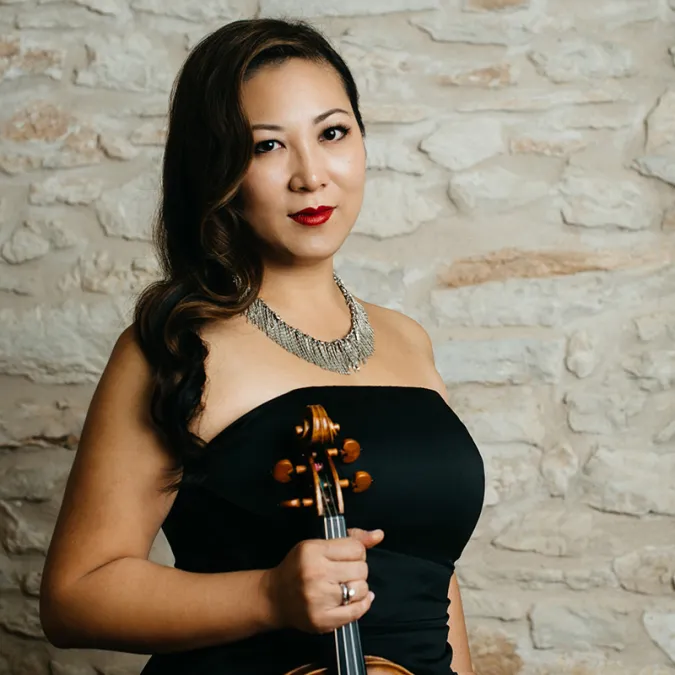
Violinist Sandy Yamamoto has dazzled audiences in concert performances around the globe for the past three decades as a soloist and as a member of the Miró Quartet. With the Miró Quartet, she performed on the major concert stages of the world, regularly concertizing in North America, South America, Europe and Asia. As a member of the Quartet, she was a recipient of the Naumburg Chamber Music and Cleveland Quartet Awards, won First Prize at the Banff International String Quartet Competition and was one of the first chamber musicians to be awarded an Avery Fisher Career Grant. Since leaving the Quartet in May 2011, she has been appointed Associate Professor of Practice in Violin Performance at the Butler School of Music and was the recipient of the Butler School of Music Teaching Excellence Award. For the 2024-25 season, she is Co-Concertmaster of the San Antonio Philharmonic under the artistic leadership of Jeffrey Kahane. Most recently, she has accepted a position as the new Artistic Director of the Austin Chamber Music Center.
Wilhelm Manger
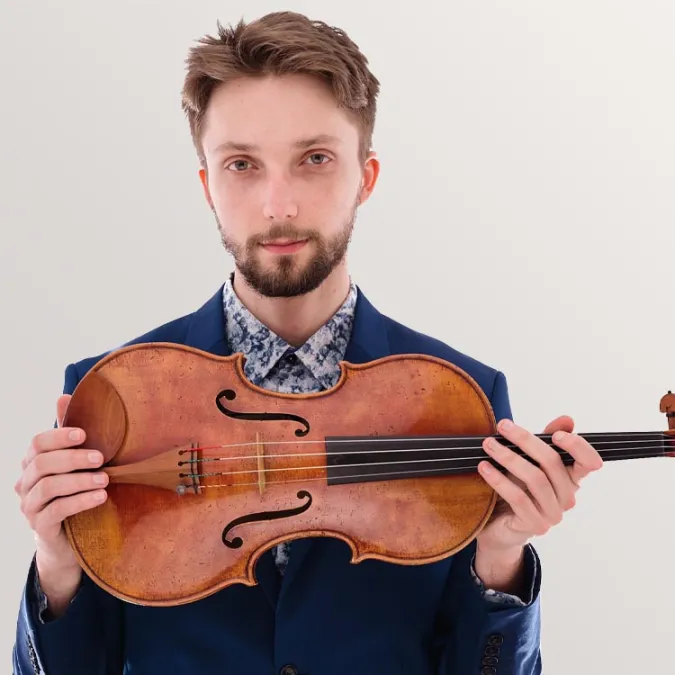
The first violist in 111 years of the competition to be awarded the Prix d'Europe in 2022, Wilhelm's solo engagements in 2023-2024 include recitals and chamber music concerts in Canada, the United States and Poland. Wilhelm is interested in expanding the viola repertoire and has transcribed many works by composers such as Bach, Lutoslawski, Paganini and Waxman for the viola. In addition to performing, he has given masterclasses in the USA and Canada. He holds a master's degree in viola performance from Yale University in the class of professor Ettore Causa. Previously, he studied with Professor André Roy and Natalia Kononova. He was named to CBC Music's "30 under 30" list in 2022. Wilhelm has appeared in many summer festivals, including Yellowbarn, Gstaad Menuhin Festival, Kneisel Hall, the Young Artists Program of the National Arts Center, and the Orford Music Academy. In his spare time, Wilhelm enjoys playing chess and listening to music. Wilhelm is a recipient of the Sylva Gelber Foundation award. He plays a Ryan Soltis, Nelson, 2023 viola and an Ouchard bow generously loaned by CANIMEX INC. of Drummondville (Quebec), Canada.
Bion Tsang

Bion Tsang’s career highlights include appearing on the PBS Great Performances “Now Hear This” with Scott Yoo, including “Beethoven’s Ghost” (S2E4) and “Schumann: Genius and Madness” (S4E2), and earning a Grammy nomination for his performance on PBS’s A Company of Voices: Conspirare in Concert. (Harmonia Mundi). Tsang has performed with the New York, Mexico City, Moscow, Busan and Hong Kong Philharmonic Orchestras, the Atlanta, Pacific, American and National Symphony Orchestras, the Saint Paul and Stuttgart Chamber Orchestras, and the Hollywood Bowl Orchestra. He has been a guest with the Chamber Music Societies of Boston, Brooklyn, Fort Worth, Seattle and Vancouver, Chamber Music International, Da Camera of Houston and Camerata Pacifica, and performed at the Bard Festival, Bravo! Colorado, Domaine Forget de Charlevoix and Marlboro Music. Tsang’s discography includes three live recital recordings, all recorded at Jordan Hall in Boston, as well as Dvořák/Enescu Cello Concertos (Sony) with Scott Yoo and the Royal Scottish National Orchestra, Bach Solo Cello Suites (Sony), and Cantabile (Universal), again with Yoo and the RSNO.
Jonathan Gunn
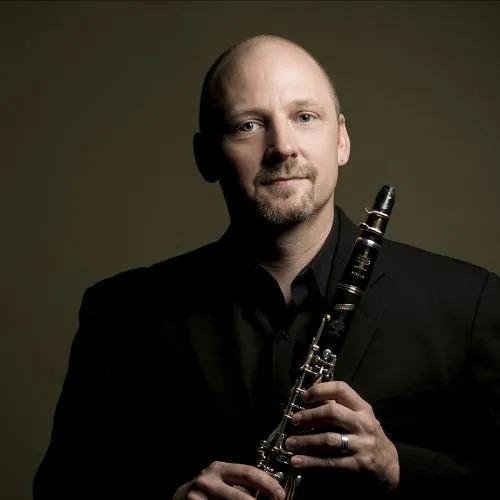
Clarinetist Jonathan Gunn is a versatile artist with a varied career as educator, soloist, chamber musician, and orchestral performer. He was associate principal and E-flat clarinet of the Cincinnati Symphony Orchestra from 2004 to 2011, and served as principal until 2016. Gunn has also performed as guest principal clarinet with the Chicago Symphony Orchestra and Houston Grand Opera as well as a guest with the New York Philharmonic and Pittsburgh Symphony. Gunn has performed at music festivals including Tanglewood, Aspen, St. Bart’s, Sunflower, and Buzzard’s Bay. As a soloist, he has appeared with the Cincinnati Pops Orchestra, the Fort Wayne Philharmonic, and around the world. Recently, he recorded the Corigliano Clarinet Concerto with The University of Texas Wind Ensemble for Reference Recordings. Mr. Gunn gives masterclasses and recitals internationally, and has served on the faculties of the Buffet-Crampon Summer Academy, the Aria International Summer Academy, the National Youth Orchestra of the USA and Round Top Music Festival. Gunn is a D’Addario Artist and Musician Advisor, and a Buffet Group USA Performing Artist.
jonathangunnclarinet.com
Thomas Burritt

Thomas Burritt received degrees from Ithaca College School of Music, Kent State University, and Northwestern University. Active in the creation and performance of new music, Burritt has built a reputation as a percussion soloist and a concert marimbist. He has performed regularly at the Leigh Howard Stevens International Marimba Seminar and was a featured faculty performer at the 2007 and 2009 Zeltsman Marimba Festival. In April 2004 Burritt performed at Carnegie Hall as member of the Hammers and Sticks Ensemble. Later the same year the ensemble released a CD on the Innova label featuring works by Steven Mackey, Zhou Long, Alvin Singleton, Alex Shapiro, Joseph Harchanko and Belinda Reynolds. As Percussion Soloist Burritt has performed percussion concertos by Steve Mackey, Joseph Schwantner, Michael Dougherty, David Maslanka John Mackey, and James MacMillan. He has recorded for guitarist Eric Johnson and recording artist David Byrne, and has two solo recordings: All Times Identical — New American Music for Marimba, and Groundlines. In 2009, Burritt was nominated for a GRAMMY™ for his performances on Conspirare in Concert. In 2012, Burritt was cited as one of “The most influential Music Professors on Twitter.”
Arlo Shultis

Hailed an “excellent timpanist” by the Baltimore Sun, Arlo Shultis holds a wide range of orchestral experience. He is principal timpanist/percussionist of the Marlboro Music Festival Orchestra, conducted by Leon Fleischer and Mitsuko Uchida, and has frequently performed as principal timpanist of the Yale Philharmonia under the direction of Peter Oundjian. As principal timpanist of the Peabody Symphony Orchestra, Arlo has recorded the music of Aaron Kernis under the baton of Marin Alsop and Leonard Slatkin. Other conductors include Ludovic Marlot, David Robertson, Markus Stenz, and Hugh Wolf. Notable solo performances include David Lang’s The Anvil Chorus, and Iannis Xenakis’ Psappha, at the Yale School of Music. As a member of the Yale Percussion Group, Shultis has performed Steven Mackey’s It Is Time, As a former member of the Michigan Percussion Quartet, Arlo was invited to perform a concert at the Stellenbosch International Chamber Music Festival in South Africa. As part of this trip, the quartet traveled to several local schools to perform interactive masterclasses with students in the greater Cape Town area. Arlo recorded the GRAMMY™-nominated L’Orestie d’Eschyle, by Darius Milhaud, as a member of the University of Michigan Symphony Orchestra and Percussion Ensemble. He was the winner of the University of Michigan Symphony Band Concerto Competition in 2014, in which he performed Michael Daugherty’s Raise the Roof for solo timpani and wind ensemble, the performance of which can be found on YouTube. Arlo is on the percussion faculty of the Baylor University School of Music as lecturer of percussion.
Colette Valentine
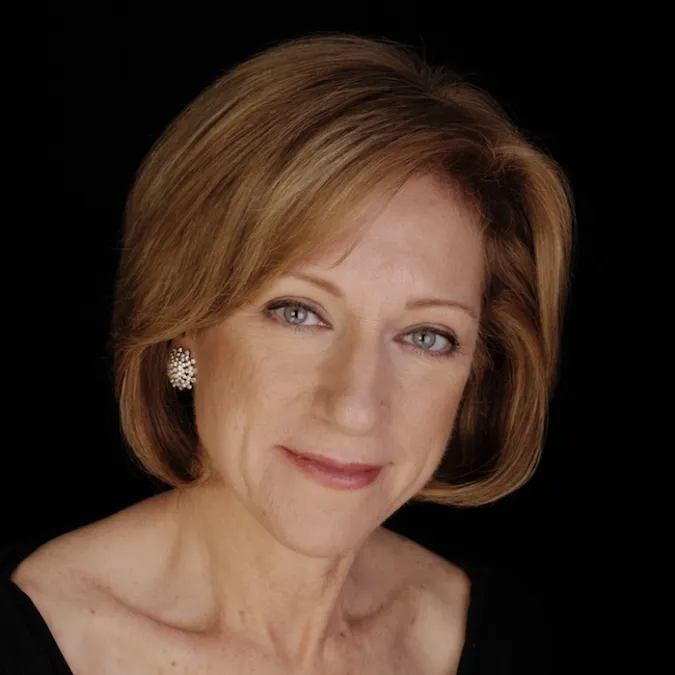
Pianist Colette Valentine has performed in important New York City and Washington, DC venues such as Weill Recital Hall at Carnegie Hall, the 92nd Street Y, the Metropolitan Museum of Art, Merkin Concert Hall, the Kennedy Center Terrace Theater, the Library of Congress, and the Corcoran Gallery; and internationally in Paris, Zurich, Florence, Tokyo, Osaka, Seoul, and Hong Kong. She has collaborated in chamber concerts with the New York Philharmonic Winds, St. Luke’s Chamber Ensemble, the Washington Chamber Society, the Left Bank Concert Society, the Grand Teton Music Festival Players, and the Miró Quartet, among others. Valentine has served as assisting pianist for numerous National and International events, and has recorded for the Naxos, Albany, fontec, Antara, Well-Tempered, and CRI labels. In the fall of 2008, she joined the faculty of the newly created collaborative piano Division at The University of Texas at Austin’s Butler School of Music, and was named director of collaborative piano in 2017.
Upcoming Events

Ring in the season with the Butler School’s annual Holiday Concert with music for everyone to enjoy. You’ll hear traditional holiday carols and winter favorites across many genres, including excerpts from Bach’s Magnificat, jazz standards like “I’ll Be Home for Christmas,” and Hanukkah songs from Sephardic and Mizrahi Jewish traditions.
Featuring
Chamber Orchestra
Concert Chorale
University Chorus
Longhorn Singers
Bereket Middle Eastern Ensemble
Soha Quartet
Horn Choir
Bassoon Ensemble
Musical Theatre Workshop
Jazz Combos
Gregory Eaton, organ
Saturday, December 5, 7:30 p.m.
Sunday ,December 6, 4:00 p.m.
Bates Recital Hall
GREGORY EATON
Music for One & Two Organs
Monday, October 19, 7:30 p.m.
Bates Recital Hall
ROSS MARGITZA, jazz piano
Sunday, October 25, 7:30 p.m.
Bates Recital Hall
MIRÓ QUARTET
Saturday, November 7, 7:30 p.m.
Bates Recital Hall
SANDY YAMAMOTO, violin & ANTON NEL, piano
Monday, February 22, 7:30 p.m.
Bates Recital Hall
BION TSANG, cello & ANTON NEL, piano
Celebrating 200Th Anniversary of Beethoven
Special Two-Night Event
Bates Recital Hall
Night One
Friday, March 26, 7:30 p.m.
Night Two
Saturday, March 27, 7:30 p.m.
Event Details
$10 – 20
All University of Texas at Austin students are allowed one free ticket as long as they are available. Student tickets must be picked up at the Box Office with valid student I.D. Seating is unassigned.
If you are a patron with specific seating needs, please email tickets@mail.music.utexas.edu and we will reserve ADA seating for you.