


David Hurd, organ
Featuring the Butler School’s newly acquired Op. 171 continuo organ
This concert will last about 90 minutes with one intermission.
Please silence your electronic devices.
Photography, video, or recording of any part of this performance is prohibited
Program
J.S. Bach
Prelude (Toccata) and Fugue in F Major, BWV 540
Padre Antonio Soler
Concerto VI de dos organos obligados
Allegro/Andante
Minué
David Hurd, organ
John Stanley
Voluntary in D Major
Rob Peters
Sonata Festiva voor twee orgels, op. 121
Allegro moderato
Adagio e dolce
Presto
David Hurd, organ
César Franck
Choral No. 3 in A Minor, FWV 40
Allegro
Andante
Vivace non troppo
About the Program
Program notes by Gregory Eaton
INTRODUCING FISK CONTINUO ORGAN, OP. 171! We at the Butler School of Music are thrilled to announce the arrival of our new continuo organ, built by the C.B. Fisk Organ Company of Gloucester, Massachessetts. Tonight's program will show the new instrument in both a collaborative and a solo function. This small and portable organ will be a great resource for music-making by a wide variety of Butler School groups and soloists, and we hope that you get to hear it on many occasions in the future. The remainder of the program highlights two major works of the ‘traditional' organ literature. There can be no doubt that the name of Johann Sebastian Bach immediately comes to mind when thinking of Baroque organ music, while the same is true for César Franck when we think of the Symphonic/Romantic school of organ literature. As is always my goal, I hope that this program will give the audience a sense of the wonderful variety and range of the organ and its literature.
J.S. Bach
Toccata and Fugue in F Major, BWV 540
Born 1685
Died 1759
Composed ~1713
14 minutes
It is generally agreed by scholars that most of Bach's large preludes and fugues for organ were written during his employment at the court in Weimar (1708 – 1717). One clue for the date of the Prelude is the wide range of the writing for pedal. In the Baroque era, large organs could have pedal boards spanning up to two octaves and a second, from low C to d'. Smaller instruments might have two octaves or less. However, the organ in Weißenfels, which Bach played in 1713, had a range of two octaves and a fourth, from C to F'. It would be quite natural for him to write a piece in which he could show off this unusually wide range. We find that the piece begins with a semi-canonic arrangement of two voices over an F pedal-point, which is followed by a bravura solo for pedal. The keyboard part then reverses left and right hand, and moves to the dominant, with a pedal point over C. The second pedal solo ascends all the way to that high F which would have been impossible on most other organs of the time. Bach then takes us on a journey through various keys, using broken arpeggios with liberal use of Phrygian chords and applied dominants to get to distant tonal destinations. The original motif returns three times with sections in D minor, A minor, and G minor, all surrounded by the climbing, layered arpeggios. The overall effect is of a piece that has a sense of both inevitability and forward motion, while surprising the listener with its harmonic shifts and surprises.
The Fugue is the only true double fugue Bach ever wrote for organ. It begins in a rather severe-sounding stile antico, using the half-note as the basis for the beat. The subject, however, is rather daring for the old style, with a mix of chromaticism and leaps which would not have been characteristic in the days before Bach. After developing the original subject, a more lively second subject enters, using rocking thirds and faster movement to lighten the atmosphere. Finally, Bach brings back the original subject, and the two form a bonded pair, buoying the listener along to the end of the fugue.
Antonio Soler
Concierto VI
Born 1729
Died 1783
Composed 1770
10 minutes
Soler, a native of Catalonia, was known in Catalan as Antoni Soler i Ramos. A musical prodigy, he held his first position as music director in Lleida at the age of 17. At 23, he was admitted to the monastery of San Lorenzo del Escorial. There he continued his musical training concurrently with his studies in theology and ordination as a priest. His talent allowed him to come to the attention of the royal court of Carlos III, and this facilitated his studies with Domenico Scarlatti. While known for his keyboard sonatas, Soler also wrote six concertos for two organs, dedicated to his pupils at the court, Infantes (princes) Antonio and Gabriel. It is likely that Infante Gabriel, to whom the 6th sonata is dedicated, would likely have played one organ, with Soler on the other. It is also possible that the two brothers would have divided the playing of the concerto.
The organs for which the piece was written were not large instruments, which means that our new Fisk continuo organ works very well on one part, as long as the other organist doesn't get too carried away with the stops on our big Visser-Rowland concert organ.
The second movement of this sonata (Minué), was used by organist E. Power Biggs as the basis for his arrangement of what he called The Emperor's Fanfare. Many organists have enjoyed playing it in that form, and maybe some of you in the audience have also heard it. Tonight, we are able to present it in its original form.
John Stanley
Voluntary in D Major
Voluntary in D, op. 6, no. 6
Born 1712
Died 1786
7 minutes
At the age of two, an accident left young John Stanley almost completely blind. This was not enough, however, to derail his musical talent. He began playing in church at the age of nine; by eleven years old he was appointed organist of the church; and by 17 he was the youngest person ever to earn a bachelor of music degree from Oxford University. In 1734 her was appointed organist to the Temple Church, and would hold that position for 52 years until his death.
Stanley's organ voluntaries are written for the English instruments of his time. Most had no pedals, and some had only one keyboard, using divided stops to get different sounds in the treble and bass portions of the keyboard. That makes this a perfect piece to show off the capabilities of our new Fisk instrument. You will hear the following sounds during the piece:
I Adagio — 8' Gedeckt (flute) and 4' Principal
II Allegro — 8' + 4' Flutes, with Treble Quint 22/3' in ‘trumpet' sections
III Adagio — 4' Flute
IV Allegro — 8' Gedeckt as ‘echo', with Treble Open 8' in dialogue
Rob Peters
Sonata Festiva voor twee orgels, op. 121
Born 1969
Composed 2004
Premiered May 28, 2004, Amersfoort, The Netherlands
11 minutes
Dutch composer/organist Rob Peters was born in Valkenburg, in the southern Netherlands. After initially writing chamber and orchestral works, he has turned his attention to liturgical, choral, and organ writing. He states "I have found that my composing style, which is more conservative than that of most of my peers, fits better in the church than in the concert hall. I personally find the limitations set on composing in a liturgical context inspiring and guiding. When you write for the church, you deal with a rich — also musical — tradition that always plays in the background. It's a challenge to let that tradition resonate in newly composed music."
The Sonata Festiva was written for a celebration in honor of organist Wim van Beek, to whom the piece is dedicated. It received its premiere at the Joriskerk in Amersfoort in 2004. Designed for a large organ with pedals and a small organ without pedals, it is in the standard sonata form of three movements. The first is a celebratory Allegro, with the two instruments functioning in dialogue. The second has each instrument playing its own independent motifs, but the overall effect when the two are blended is quite beautiful. Finally, a semi-fugal movement features a musical quote from the chant Veni Creator, included because the sonata was premiered very close to the feast of Pentecost. As the composer writes, "Quoting this Pentecost hymn gives a double meaning to the title Sonata Festiva: not just ‘festive sonata,' but also ‘sonata for a holiday.'"
César Franck
Choral No. 3 in A Minor, FWV 40
Born 1822
Died 1890
Composed 1890
13 minutes
Though remembered today as one of the most important French composers for organ, Franck was actually born in Belgium, where he received his early music education. Following a pattern established by other composers on this program, he gave his first public concerts at the age of 11, and was taken by his father to Paris the following year. Because the Paris Conservatoire would not accept foreigners, Franck was prevented from entering until he could obtain French citizenship two years later. He would enter the school at the age of 14. By distinguishing himself as both a composer and performer, he rapidly gained acclaim in Paris. Eventually, his ‘foreign' origins would be forgotten. Though his personal life was a struggle of burdens from overwork, he wrote some of the most important organ works of the French Romantic-Symphonic organ school. Indeed, the whole idea of an Organ Symphony comes from his Grande Pièce Symphonique of 1862.
In many ways the Trois Chorals, completed just before his death, are considered among his finest and most important works for organ. These pieces are not composed on pre-existing chorale melodies, but spring from their own melodies in Franck's style of cyclical writing. In all three pieces, the choral theme does not appear at the beginning, but is stated after an opening introduction. In the case of this choral, there is speculation that the opening figure outlining the key of a-minor is an homage to the opening of Bach's great Prelude in A minor, BWV 543. Once the choral is stated in a hymn-like form, it is subjected to a rhapsodic development, frequently incorporating the motivic material from the opening. This leads to a grand statement of the choral theme with all of the stops of the organ, bringing this beautiful piece to a majestic conclusion
About the Artists
Brian Lewis
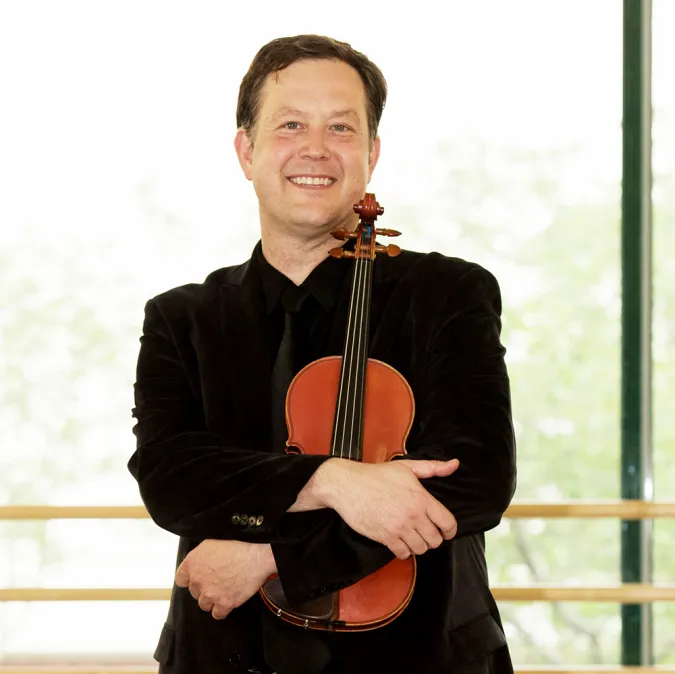
“There are a lot of fine violinists on the concert stage today, but few can match Lewis for an honest virtuosity that supremely serves the music,” reports the Topeka Capital-Journal. Acclaimed performances include concerto debuts in both New York’s Carnegie Hall and Avery Fisher Hall, among many others. Awards for his musical contributions include the Instrumentalist Award by the 2014 Austin Critics’ Table, two Teaching Excellence Awards at the University of Texas, ING Professor of Excellence Award, Medal of St. Barthélemy (French West Indies), Texas Exes Teaching Award, Fredell Lack Award, Peter Mennin Prize, William Schuman Prize, Waldo Mayo Talent Award, and two Elizabeth B. Koch fellowships. He is also the artistic Director of the Starling-DeLay Symposium on Violin Studies at The Juilliard School in New York City.
David Hurd
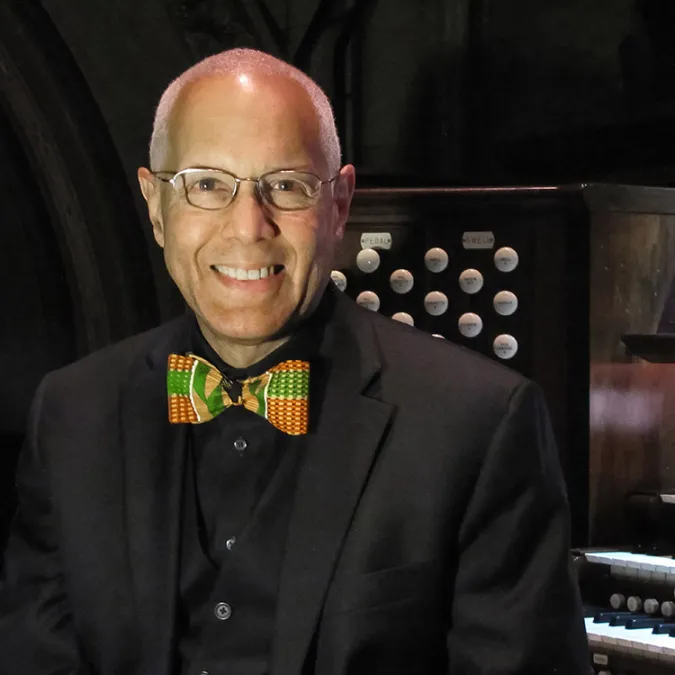
David Hurd is a native New Yorker and has studied at the Juilliard School, Oberlin College, the University of North Carolina, Chapel Hill, and the Manhattan School of Music. Subsequently he received doctoral degrees honoris causa from five other academic institutions. He was on the faculty of The General Theological Seminary in New York City for nearly four decades. He has taught also at Duke University, the Manhattan School of Music, Westminster Choir College, and Yale University. Since winning first prizes both in organ performance and in improvisation at the 1977 International Congress of Organists, he has performed extensively throughout North America and in Europe. His catalogue of published compositions includes choral, organ, instrumental ensemble, and liturgical works. In 2010 he became the sixteenth recipient of The American Guild of Organists' Distinguished Composer Award. Since 2016, he has been organist and director of music Director of the Church of the Church of Saint Mary the Virgin in midtown Manhattan.
Gregory Eaton
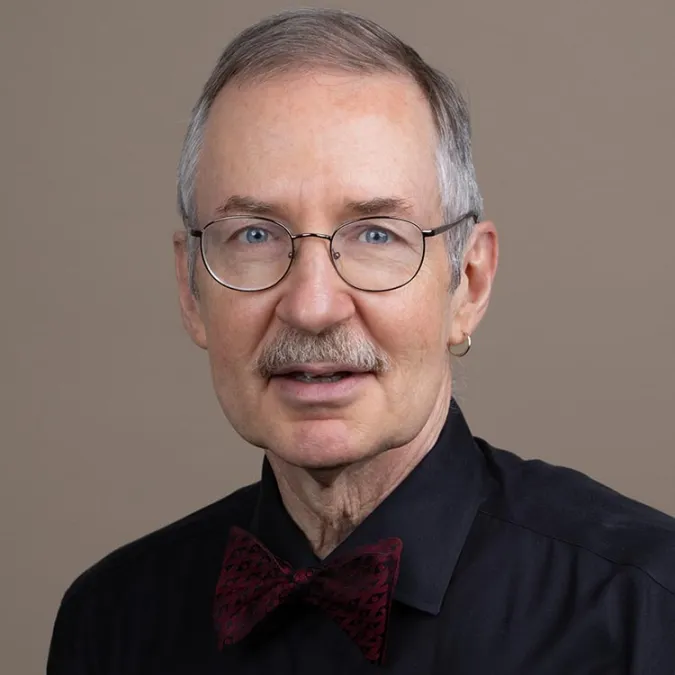
Gregory Eaton is a conductor, organist, harpsichordist, and recorderist, and has served as lecturer in organ and harpsichord at the Butler School of Music since 2019. His most formative study was with Dr. Leslie Spelman in organ. Dr. Spelman was himself a pupil of Joseph Bonnet and Charles-Marie Widor in Paris. Eaton is the Organist/Choirmaster at All Saints' Episcopal Church, in Austin, TX, where he has been since November of 2014. He is on the Board of La Follia Austin Baroque Orchestra, and former president of the Board of Ensemble VIII. Eaton is a member of the American Guild of Organists, and has served as Dean of both the Austin and Brooklyn Chapters of the Guild. Prior to Austin, Eaton was in New York from 1984 to 2014, at Trinity Church, Wall Street; as lecturer in church music at the General Theological Seminary for 24 years, and as director of music at St. Ann & the Holy Trinity Church for 21 years. At St. Ann's, he founded a weekly organ concert series on the church's historic EM Skinner organ, on which he played over 600 concerts in a 15-year span, with a repertoire of more than 650 large and small works.
Upcoming Events

Ring in the season with the Butler School’s annual Holiday Concert with music for everyone to enjoy. You’ll hear traditional holiday carols and winter favorites across many genres, including excerpts from Bach’s Magnificat, jazz standards like “I’ll Be Home for Christmas,” and Hanukkah songs from Sephardic and Mizrahi Jewish traditions.
Featuring
Chamber Orchestra
Concert Chorale
University Chorus
Longhorn Singers
Bereket Middle Eastern Ensemble
Soha Quartet
Horn Choir
Bassoon Ensemble
Musical Theatre Workshop
Jazz Combos
Gregory Eaton, organ
Saturday, December 5, 7:30 p.m.
Sunday ,December 6, 4:00 p.m.
Bates Recital Hall
ROSS MARGITZA, jazz piano
Sunday, October 25, 7:30 p.m.
Bates Recital Hall
CONCERT CHORALE
Sunday, November 1, 4:00 p.m.
Bates Recital Hall
MIRÓ QUARTET
Saturday, November 7, 7:30 p.m.
Bates Recital Hall
UNIVERSITY CHORUS
Free Admission
Sunday, November 15, 4 p.m.
Bates Recital Hall
Butler Opera Center Presents
MOZART EVERLASTING
Scenes from beloved Mozart operas celebrating his 250th birthday
Free Admission
December 2 & 3, 7:00 p.m.
McCullough Theatre
Event Details
$10 – 20
All University of Texas at Austin students are allowed one free ticket as long as they are available. Student tickets must be picked up at the Box Office with valid student I.D. Seating is unassigned.
If you are a patron with specific seating needs, please email tickets@mail.music.utexas.edu and we will reserve ADA seating for you.