


Evah Destruction, voice
Hila Plitmann, soprano
Marc Sosnowchik, conductor
Admission to this Event is Restricted to Ages 18+
This concert will last about 90 minutes with one intermission.
Please silence your electronic devices.
Photography, video, or recording of any part of this performance is prohibited
Program
ACT I
WITCHES
Arnold Schoenberg
Nacht from Pierrot Lunaire
Hila Plitmann, soprano
Clarice Assad
The Book of Spells
The Siren's Seduction
Spell of Summon Greed
Traditional
arr. Enrico Lopez-Yañez
La Llorona
Hila Plitmann, soprano
Madonna
arr. Anderson
Frozen
Evah Destruction, voice
ACT II
DEVILS
Igor Stravinsky
L'histoire du soldat
The Soldier’s March
Pastorale
The Royal March
Ragtime
The Devil’s Dance
Triumphal March of the Devil
Meg Meyers
arr. Anderson
Desire
Evah Destruction, voice
ACT III
Vampires
David del Tredici
Dracula
Hila Plitmann, soprano
Lady Gaga
arr. Mathieu
Bloody Mary
Evah Destruction, voice
About the Program
Program notes by Mark Bilyeu except where noted.
Arnold Schoenberg
Selections from Pierrot Lunaire
Born September 13, 1874 Vienna, Austria-Hungary
Died July 13, 1951, Los Angeles, California
Composed 1912
Premiered October 16, October 1912, Arnold Schoenberg conducting, Berlin Choralion-Saal, Berlin, Germany,
35 minutes
What to say about Schoenberg’s iconic Pierrot Lunaire, one of classical music’s most distinctive works? The work’s primary mode of communication is sprechtstimme, a notated form of ‘spoken singing’ which had already existed for nearly twenty years before it was thrust into the spotlight by Pierrot. It was written on a commission by the actress Albertine Zehme, who had been fascinated with the texts of the Belgian writer Albert Giraud. She had, in fact, commissioned a ‘melodrama’ by the composer Otto Vrieslander on the same texts for piano and narrator, but found it insufficient, and approached Schoenberg to try his hand. Schoenberg expanded the musical palette to include several more musicians (an ensemble formation now commonly called “Pierrot Ensemble”), setting twenty-one of Giraud’s poems.
The work required forty rehearsals before its 1912 premiere, which featured both Zehme and the composer. As one attendee recounted, “When [Zehme] appeared in a Pierrot costume, her painted, frightened face framed by a ruff, her aging ankles in white stockings, she was greeted by an ominous murmur from the audience. One could not help admiring her courage, as she went on from poem to poem, disregarding the hissing, booing and insulting invective shouted at her and Schoenberg. There were also fanatical ovations from the young generation, but the majority were outraged.” The outrage stemmed from both the scandalizing ‘musical’ content as well as some blasphemous-adjacent texts which, when spoken, upset audiences even more. Schoenberg famously responded, "If they were musical, not a single one would give a damn about the words. Instead, they would go away whistling the tunes."
Clarice Assad
The Book of Spells
Born 1978, Rio de Janeiro, Brazil
Composed 2020
Premiered March 21, 2021, Merian Ensemble, Atlanta Symphony Orchestra
10 minutes
I have long been intrigued by anything unexplained with pure logic, so occult themes, witchcraft, and the fantasy world have long been companions of my imagination. The Book of Spells is a three-movement composition inspired by rituals that deal with magic, which is done to achieve a particular goal, righteous or wicked. Each movement explores a rite and follows the reasoning of a book I came across. The chapter sections are thematic, each focusing on assorted areas of interest: Chapter one deals with matters of the heart (Love and Relationship); Chapter Two is about bringing wealth and prosperity into one’s life. Chapter Three is about Health and well-being. Within each chapter, hundreds of spells teach the practitioner how to prepare and perform the rites, each for a particular purpose.
– Clarice Assad
Madonna Louise Ciccone (Madonna)
Frozen
Born August 16, 1958, Bay City, Michigan
Composed 1998
5 minutes
In 1990, the filmmaker and director Bernardo Bertolucci released his drama The Sheltering Sky, which showed a couple trying to save their marriage while on a trip to Africa. The film, along with its score by Ryuichi Sakamoto and Richard Horowitz, intersected with Madonna’s mid-90’s fascination with Eastern mysticism, as she was setting out on her seventh studio album “Ray of Light.” In an interview, Madonna said she wanted her single “Frozen” to have the "whole Moroccan/orchestral/super-romantic/man-carrying-the-woman-he- loves-across-the-desert vibe.” Mission accomplished, Diva! The music video opens with Madonna as a shapeshifting witch clad all in black, turning herself into a flock of birds, and even a black dog, as she sings of a cold, heartless man. Entertainment Weekly’s Chuck Arnold wrote: "sounding unlike anything Madonna had ever done before, and creating a mystical forest of sonic wonder—sweeping strings and all—'Frozen' possesses an almost operatic grandeur that never fails to give you chills."
In 1998, the Queen of Pop made a surprise appearance at a Rainforest Foundation benefit concert at Carnegie Hall, headlined by Sting, Elton John, and Roberta Flack. The New York Times reviewer Jon Pareles wrote “After intermission, Madonna made an unannounced appearance to sing ''Frozen,'' a song that urges a friend to let go of the past. Strings played mournful chords or quasi-Arabic lines while a midtempo hip-hop beat came and went. Madonna, dulcet and careful, had turned herself into America's answer to Bjork.”
Enrico Lopez-Yañez
La Llorona
Born 1989, San Diego, CA
arr. 2020
Premiered Cincinnati Pops Orchestra, 2020
3 minutes
The legend of La Llorona, the vengeful ghost of Hispanic folklore, is best known through the Mexican folk song which tells her tale: a woman who drowned her children in the river, and now eternally sits alongside bodies of water mourning their death, and cursing those who are unfortunate enough to hear her. This setting by Enrico Lopez-Yañez, Principal Pops Conductor of the Detroit, Nashville, & Pacific Symphony orchestras, was commissioned by the Cincinnati Pops Orchestra for their Dia de Los Muertos celebration in 2020.
Janice Sue Meghan Myers (Meg Myers)
Desire
Born October 6, 1986, Nashville, TN
Composed 2013
Premiered September 9, 2013
5 minutes
“I always wanted to write catchy pop songs," wrote Meg Myers, "I just didn't have the technical knowledge to make them work. But I grew up listening to well-crafted songs. I loved Sting, Led Zeppelin, Dire Straits, James Taylor and Fleetwood Mac. That's what I was drawn to. I love the simplicity of a great song.” Throughout the course of her career, Meg Myers has — despite her self-effacing comments — written some great songs. Her debut album, “Sorry” was released by Atlantic Records in 2015, which included the track “Desire.” With lyrics like “I’m gonna tear into your soul,” “I want to skin you with my tongue,” and “I’m gonna lay you in the ground,” it’s hard to believe the song came from an unassuming teenager from Nashville. Music critic Katherine St. Asaph wrote “The [song’s] sonic palette [is] one of slow-burn guitar, harpsichord, industrial percussion and synths; the voices are roared and only fragile in the sense that they’re frayed; the lyrics tend to be explicit, desire as a barbed and craggy thing.” The music video includes more than barbs and craigs: images of disappearing footprints in a soaked Berber carpet, mysterious hand prints on foggy mirrors, and a half-clothed body of the artist levitating above an 80’s hideaway sofa, it’s easy to see how one Tumblr reviewer described it as “cannibalistic and ritualistic as a good high mass, as teenage-melodramatic as [an] All Ages Night at the goth club.”
Igor Stravinsky
L’histoire du soldat
Born June 17, 1882, Lomonosov, Saint Petersburg, Russia
Died April 6, 1971, New York, NY
Composed 1918
Premiered 28 September 28, 1918: Lausanne, Switzerland. Conducted by Ernest Ansermet
Full production: 1 hour / Suite: 25 minutes
Money, as with many commodities, was hard to come by as the first World War was nearing its end. For Igor Stravinsky things were beginning to feel dire: his royalties from German publishers were being withheld, his family estate had been frozen by the Russian government, and his large orchestral works were not financially viable to mount for arts organizations. So, Stravinsky joined his friends, writer C.F. Ramuz and conductor Ernest Ansermet, to create a work he described as “... a sort of little traveling theater, easy to transport from place to place and to show in even small localities.” The team settled on a telling of the Faustian story of a man selling his violin to the devil. “We were particularly drawn to the cycle of legends dealing with the adventures of the soldier who deserted, and the Devil who inexorably comes to carry off his soul,” explained Stravinsky. The work, L’histoire du soldat, was originally conceived to be “read, played, and danced” through the use of a seven-instrument orchestra, narrator, and dancer. The complete work, lasting roughly an hour, was an immediate hit. Over the course of several years, Stravinsky made several shorter adaptations and arrangements of the full work, which includes the musical suite, as well as an arrangement for piano, clarinet, and violin.
David Del Tredici
Dracula
Born March 16, 1937, Cloverdale, CA
Died November 18, 2023 (age 86 years), Manhattan, New York, NY
Composed 1999
Premiered March 4, 1999, Eos Ensemble, Jonathan Sheffer, conductor, Ethical Culture Society, New York, NY
20 minutes
“Del Tredici is that rare find among composers —” wrote Aaron Copland, “...a creator with a truly original gift. I venture to say that his music is certain to make a lasting impression on the American musical scene. I know of no other composer of his generation who composes music of greater freshness and daring, or with more personality.” Personality would, history shows, be one of the most accurate descriptors of Del Tredici’s works. He maintained a lifelong fixation on Lewis Carroll’s Alice in Wonderland, receiving the 1980 Pulitzer Prize in Music for his Alice-inspired work In Memory of a Summer Day. Twenty years later, he explored another literary work, Alfred Corn’s poem “My Neighbor, the Distinguished Count," which retells the famous gothic tale of Dracula from the point of view of a woman living next-door to "the distinguished count." In five scenes, the poem chronicles her initial disinterest, gradual seduction, then degradation, rejection and, finally, "vampiristic" transformation. Be especially on the lookout for the use of the thermin- which Del Tredici describes as “the exotic, other-worldly-sounding electronic instrument that evoked ‘horror’ and ‘mystery’ in early Hollywood films.”
“The piece touches many emotional levels,” he wrote, “With the use of the theremin, copious amounts of wind-machine and roiling bass drum, "scary" is a primary reaction —; as is "funny." Nervous giggles and startled gasps would not be unwelcome here. Deeper down, the listener confronts the more ominous world of addiction, betrayal and obsession. And inevitably, there comes the ultimate degradation " a faustian bargain with a devilish price: devolution into the living dead.”
Stefani Joanne Angelina Germanotta (Lady Gaga)
Bloody Mary
Born March 28, 1986, New York City, NY
Composed 2010
Premiered May 23, 2011
4 minutes
Lady Gaga’s second studio album, Born This Way debuted in May of 2011 at the top of US Billboard 200, selling over a million copies in just its first week. On the album, which she called “the anthem of [this] generation,” was the title track “Born This Way,” alongside several other religiously-themed songs, including “Judas” and “Bloody Mary.” While Bloody Mary is typically a reference to the English queen Mary Tudor, Gaga attaches the moniker to the woman she called “the ultimate rockstar’s girlfriend”: Mary Magdalene. “The lyrics are Mary sort of talking...” said Gaga in an interview with Popjustice, “If you listen to the lyrics and the way the cadence goes, the way I'm actually singing, I start quite sweetly then I go into these quite demonic tones, then I come back to sweetness, and then the chorus is me ultimately, publicly singing, ‘I won't cry for you, I won't crucify the things you do, I won't cry for you when you're gone I'll still be Bloody Mary’. I'll still bleed, is what I'm trying to say. I guess I'm fascinated by her....In my belief Mary was in it all along. I think she knew what was going to happen. But I also believe that she loved him, and I believe there was a moment when she cried.” Critics loved the tune, with Caryn Ganz from Spin calling the song "hypnotically sleazy," and Bianca Gracie of Uproxx describing it as "one of the most sonically wicked tunes" in Gaga's catalogue.
About the Artists
HilA Plitmann

Two-time Grammy Award-winning soprano, songwriter, and actress Hila Plitmann is known for opera, concert, film, and theater performances filled with emotionally-charged fearlessness, unique expressivity, and mesmerizing drama. She rose to prominence after premiering a work by Del Tredici with the New York Philharmonic just one year after graduating from Juilliard — on only two weeks’ notice — and has since become a frequent soloist on major stages across the world. Widely-recognized as one of today’s foremost interpreters of contemporary music, she regularly performs new works by a diverse array of composers, as well as traditional repertoire, and boundary-pushing projects in non-classical genres. With jazz guitarist Shea Welsh and tabla virtuoso Aditya Kalyanpur, she co-founded global music project Renaissance Heart. Her tour-de-force role in Eric Whitacre’s groundbreaking electro-musical Paradise Lost: Shadows and Wingsat Pasadena’s Boston Court Theatre, involving singing, acting, dancing, and martial arts, won her a nomination as “Best Actress in a Musical” from the Los Angeles Ovation Awards and L.A. Ticketholder Awards. She leads innovative residencies and workshops at campuses across the U.S., bringing diverse pedagogical methods combining technical focus, tools and approaches for connecting, and a sense of inner confidence, mindfulness, centering, and presence.
Marc Sosnowchik
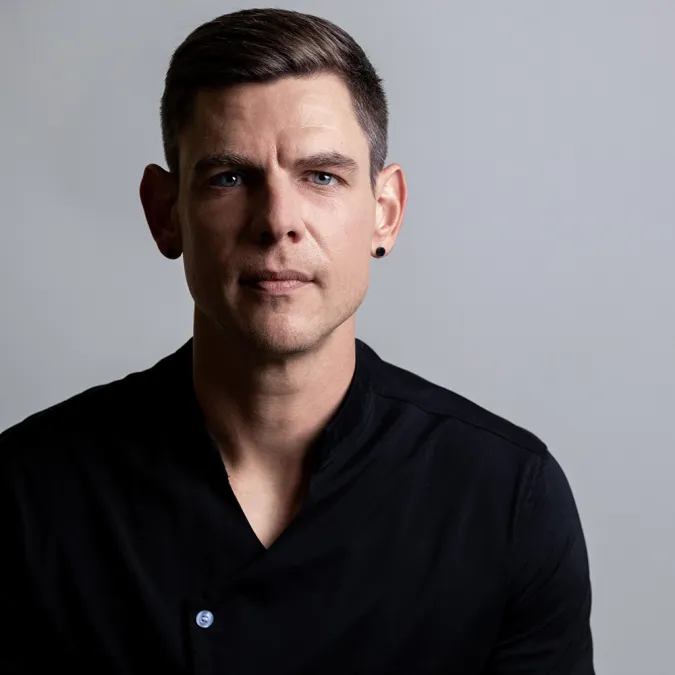
Dr. Marc Sosnowchik is a conductor, educator, arranger, and clinician based in Austin, Texas. His current duties as assistant director of bands at the University of Texas include conducting the New Music Ensemble and Longhorn concert bands, instructing courses in conducting and wind literature, and teaching the Longhorn Bands. Before his appointment at UT Austin, Sosnowchik served as associate director of bands at the University of South Florida, assistant director of bands at Oklahoma State University, and associate conductor of the Florida Wind Band. Sosnowchik maintains an active schedule as a clinician, conductor, and arranger. He conducts ensembles throughout the U.S., and in the summer teaches at the World Youth and Adult Wind Orchestra Projects as part of the Mid-Europe Festival in Schladming, Austria. Sosnowchik earned his bachelor’s degree in music education from the University of Alabama, and both his master’s and doctor's degrees in conducting from The University of Texas at Austin.
New Music Ensemble
Violin
Brandon Garza
Eric Wang
Viola
Reese Chen
Cello
Selina Xu
Double Bass
Zakrey Hernandez
Flute
Deepti Vadhiyar
Oboe
Rachel Marquez
Clarinet
Chase Cano
Bassoon
Daniel Alvarez
Horn
Margaret Euscher
Trumpet
Will Paladino
Trombone
Koby Elias
Percussion
Marcus Alvarado
Colton Townsend
Keyboards
Michael Lenahan
Maria Parrini
Harp
Tate Ahmann
Ensemble Assistant
Sophie Mathieu
Creative Director
for songs performed by Evah Destruction
Luther Toston
Upcoming Events
SYMPHONY ORCHESTRA
Friday, November 6, 7:30 p.m.
Bates Recital Hall
WIND ENSEMBLE
Sunday, November 8, 4:00 p.m.
Bates Recital Hall
NEW MUSIC ENSEMBLE
Free Admission
Wednesday, November 18, 7:30 p.m.
Bates Recital Hall
NEW MUSIC ENSEMBLE
Free Admission
Wednesday, March 3, 7:30 p.m.
Bates Recital Hall
NEW MUSIC ENSEMBLE
Free Admission
Wednesday, April 14, 7:30 p.m.
Bates Recital Hall
Event Details
Free admission