


Jerry Junkin, conductor
Michael Lebrias & Alec Rodriguez, guest conductors
This concert will last about 90 minutes with one intermission.
Please silence your electronic devices.
Photography, video, or recording of any part of this performance is prohibited
Program
John Williams
arr. Bocook
Liberty Fanfare
HyeKyung Lee
A-ri-A-rang premiere performance for band
Lucio San Pedro
Lahing Kayumanggi U.S. premiere
Michael Lebrias, conductor
Zhou Tian
Petals of Fire
Alec Rodriguez, condcutor
David Maslanka
Symphony No. 2
Moderato
Deep River
Allegro Molto
About the Program
Program notes by Mark Bilyeu
John Williams
Liberty Fanfare
Born February 8, 1932, New York City, NY
Composed 1986
Premiered July 4, 1986, Boston Pops Orchestra, John Williams, conductor
4 minutes
John Williams was commissioned to write a work for the festivities celebrating the centennial of the Statue of Liberty for televised performance on July 4, 1986. Ahead of the occasion, Williams described the work as “about five minutes long, and it has a one-minute detachable front-piece that will be the signature music for all of the ABC presentations connected with the Fourth of July. I’ve tried to create a group of American airs and tunes of my own invention that I hope will give some sense of the event and the occasion.” After its premiere, The music critic Anthony Tommasini wrote that “as fanfares go, [it] is a humdinger. It’s got two great tunes: a brassy and boisterous fanfare riff, all roulades and flourishes and forward motion; and a long-lined tune for hushed-up strings that sounds like lots of others Williams has composed for Hollywood, but still gets you right in the back of the throat.”
HyeKyung Lee
A-ri-A-rang
Born 1959, Seoul, South Korea
Composed 2024
10 minutes
Born in 1959 in Seoul, Korea, Lee attended Seoul Arts School (Yewon, Yego), and studied at YonSei University in Seoul, the Czech-American Summer Music Institute in Prague, and The University of Texas at Austin, where she earned her M.M., D.M.A. in composition, and a piano performance certificate. She is associate professor of music at Denison University in Granville, Ohio. “A-ri-A-rang” is a Korean folk song, believed to be over 600 years old, roughly translated to “loving you” or “missing you.” The song is so woven into the culture of Korea that it is often mistaken for its national anthem, and was even the title of the latest BTS album. Lee first created this setting of this ancient Korean folk tune in 2012 for saxophone quartet, and has since been commissioned to craft versions for other ensembles, including the performance today, the premiere of the work for wind ensemble.
Lucio San Pedro
Lahing Kayumanggi U.S. premiere
Born February 11, 1913, Angono, Philippines
Composed 1961
13 minutes
Translated to “Brown Rice,” Lucio San Pedro composed his work Lahing Kayumanggi in 1961, dedicating it to the Filipino struggles against colonialism. He sought to "immortalize the virtues and aspirations of the masses whom [the composer] believes are the pillars of the nation." Although containing three distinct sections, the work is in one large movement, like the tone poems of Strauss or Sibelius, telling the story of the Philippines from its pre-colonial history through to its liberating fight for independence in 1946.
The slow opening uses the rhythm of the ‘kumintang,’ a song and dance form originating from the pre-Spanish conquest era of the archipelagic nation. The second section contains several vignettes: first depicting the early conflict with invaders, then moving to a pastoral landscape, a glimpse of a family celebration, and finally a return to the music of conflict, permeating life in the Philippines. The final part, marked Tranquillo solemne utilizes one of the nation’s oldest folk melodies, “Bahay Kubo,” turning this ubiquitous song about the rich vegetation and resources found on the islands into a glorious finale celebrating a resilient nation and its triumphant fight for independence.
Zhou Tian
Petals of Fire
Zhou Tian
Petals of Fire
Born 1981, Hangzhou, China
Composed 2017
Premiered March 6, 2017, CBDNA National Convention. Kauffman Center for the Performing Arts, Kansas City, Missouri. Michigan State University Wind Symphony conducted by Kevin Sedatole
6 minutes
At the age of 12, Chinese-born composer Zhou Tian was already working as a studio pianist and arranger alongside his father, who worked as a composer for Chinese television shows. At the age of 19, Zhou moved to the United States and began his studies at the Curtis Institute, followed by The Juilliard School, and finally at the University of Southern California. Alongside his own cultural identity, his interests in jazz, dance, and film music combine to create sounds that have been described as “a prime example of 21st-century global multiculturalism.” In 2018, he became the first Chinese-born composer to be nominated for a GRAMMY Award in the Best Contemporary Classical Composition category for his Concerto for Orchestra. This work, which Zhou describes as “a love letter to the symphony orchestra,” follows the traditional concerto format of fast-slow-scherzo-finale, but unlike a traditional concerto (meant to feature one specific soloist), Zhou creates a work in which all instruments get to show off - even the timpani. Petals of Fire is taken from this GRAMMY-nominated orchestral work, and transformed for wind ensemble. As the composer writes, “Petals of Fire is a fierce and colorful rhapsody inspired by American artist Cy Twombly’s 1989 painting of the same title... I’ve always been interested in learning how artists mix different styles and techniques to create a unique, new look. Inspired by Twombly’s attempt to combine text and color to express himself visually (literally, words are part of his painting, much like what Chinese painters did during the Song dynasty), I, as a composer, wanted to create a fusion of musical styles, harmony, and timbre, using a large wind ensemble. In a way, everyone in the ensemble is a “petal”: together, the fire glows, disappears, and dances…”
David Maslanka
Symphony No. 2
Born August 30, 1943, New Bedford, Massachusetts
Died August 7, 2017, Missoula, Montana
Composed 1986
Premiered 1986
34 minutes
At the 1986 premiere of his Symphony No. 2, composer David Maslanka wrote:
The first movement is in sonata form. It travels with gathering force to a climax area halfway through, and then dissolves suddenly into a heated fantasia. A very simple restatement of the opening theme and a brief coda finish the movement. This music is deeply personal for me, dealing with issues of loss, resignation, and acceptance.
The second movement opens with an arrangement of “Deep River,” a traditional African-American melody. The words of the song read in part: “Deep River, my home is over Jordan. Deep River, Lord, I want to cross over to camp ground.” The composition of this movement involved for me two meaningful coincidences. The body of the movement was completed, and then I came across Deep River while working on another project. The song and my composition fit as if made for each other, so I brought the song into the Symphony. The last notes were put onto the score of this movement almost to the hour of the space shuttle Challenger disaster. The power of these coincidences was such that I have dedicated this music to the memory of the astronauts who lost their lives: Francis R. Scobee, Michael J. Smith, Judith A. Resnick, Ellison S. Onizuka, Gregory B. Jarvis, and Christa McAuliffe.
The finale of this Symphony is once again in sonata form. There are three broad theme areas occupying more than a third of the movement, a development based primarily on themes one and three, a recapitulation (minus the third theme area) , and a brief coda. The underlying impulse of this movement is an exuberant, insistent outpouring of energy, demanding a high level of playing precision and physical endurance from the performers.
In 2016, Maslanka added to his original note, saying:
Nearly thirty years have passed since the premiere of Symphony No. 2, the first of my seven symphonies for wind ensemble. In that time I have come to recognize that issues of transformation are at the heart of my work, initially my personal issues of loss, grief, and rage, then knowing that my own change is the start for some element of outward movement, for change in the world. This is a long, slow process, but it is the requirement of our time. The crux of Symphony No. 2 is the river metaphor of the second movement: crossing over to the other side … death, yes, but also movement away from ego/self and toward compassion.
About the Artists
Mike Lebrias

Dr. Mike Lebrias is a conductor, music educator, & content creator residing in Austin, Texas. He currently serves as an Assistant Director of Bands and Director of Creative Media for the University of Texas Bands department, where he co-teaches the Longhorn Band & Longhorn Pep Band, conducts the Austin Youth Wind Ensemble, and oversees content creation efforts for the department. Dr. Lebrias also maintains his own social media channels - he enjoys making content geared towards providing educational music and conducting content to his viewers, and aims to help bring the Wind Band art form, its composers, and its music into the mainstream. Dr. Lebrias has been fortunate enough to conduct ensembles at all levels of performance - from middle school honor bands to professional wind bands; he keeps an active schedule as a clinician, music arranger, and a content creator for wind music - creating content for composers & professional wind bands across the country.
Alec Rodriguez
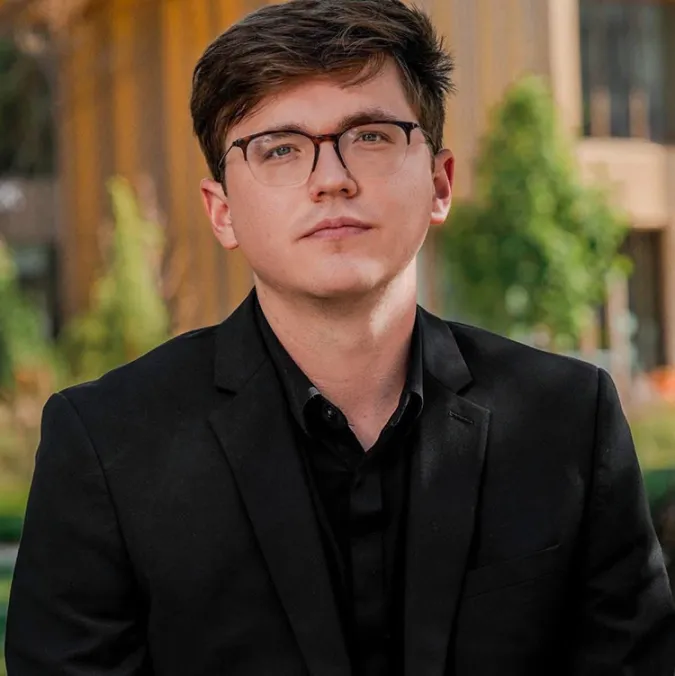
Alec Rodriguez is a conductor and music educator pursuing a Doctor of Musical Arts in Wind Band Conducting at the University of Texas at Austin, where he serves as a Graduate Assistant with the University Bands. In this role, he assists with conducting, ensemble operations, and undergraduate teaching while advancing his artistry and scholarship. From 2022 to 2025, Rodriguez was Associate Director of Instrumental Music at Clovis High School (CA), conducting the Symphonic Band and String Orchestra, leading the percussion program, and managing transportation and facility operations. Previously, he taught at Independence High School (2019–2022), directing the Symphonic Band and Indoor Percussion Ensemble, which earned first place at the 2022 WGI Merced Regional. Rodriguez holds a Master of Arts in Music – Conducting and a Bachelor of Music in Music Education from California State University, Fresno. A passionate advocate for student-centered, inclusive music-making, he emphasizes emotional authenticity, technical excellence, and diversity in repertoire. Active in the marching arts, Rodriguez serves as Front Ensemble Coordinator for Blue Devils B and has worked with Red Wave Indoor, Golden Empire Drum and Bugle Corps, and Bakersfield College Indoor. His research focuses on expanding wind band repertoire to reflect diverse and LGBTQIA+ voices.
Jerry Junkin
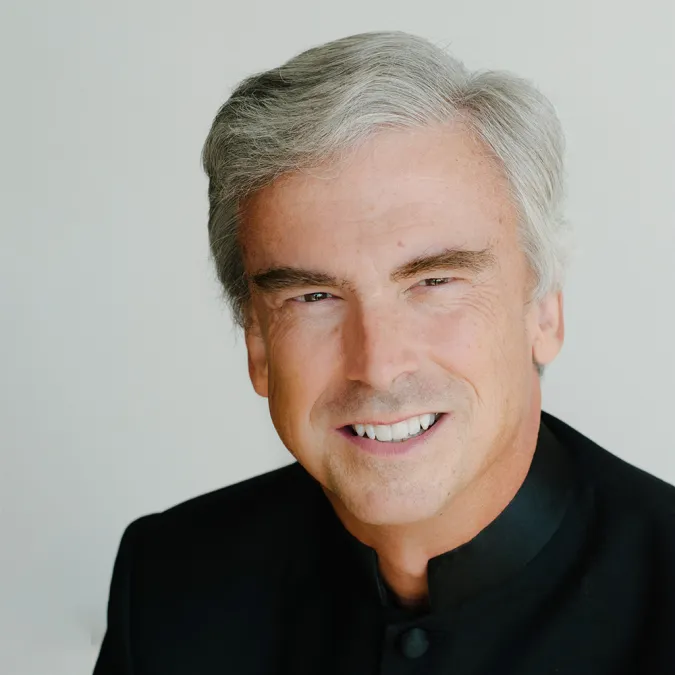
Serving since 1988 on the faculty of The University of Texas at Austin, where he holds the Vincent R. and Jane D. DiNino Chair for the Director of Bands, in addition to serving as a University Distinguished Teaching Professor, Jerry Junkin is recognized as one of the world’s most highly regarded wind conductors. Previously, he served on the faculties of both the University of Michigan and the University of South Florida. In addition to his responsibilities as professor of music and conductor of the Texas Wind Ensemble, he serves as head of the conducting division and teaches courses in conducting and wind band literature. He has served as music director and conductor of the Hong Kong Wind Philharmonia since 2003, and as artistic director and conductor of the Dallas Winds since 1993. He also serves as visiting professor at the Senzoku Gakuen College of Music Wind Ensemble in Tokyo, Japan. Mr. Junkin has conducted All-State bands and festivals in forty-eight states and five continents, and is a Yamaha master educator.
Wind Ensemble
Flute
Juan Fajardo
Leilani Foreman
Eunha Kim
David Ma
Subin Oh
Oboe
Genevieve Britten
Caden Thomas Cromer
Jonah Richardson
Luke Sanchez
Clarinet
Andrew Battaglia
Tan Charintranont
Juhyun Lee
Yonghun Lim
Kerry Morgan
Katelyn Nguyen
Alayna Rosas
Johnny To
Alexander Vo
Bassoon
Jose Gutierrez Martinez
Benjamin Miller
Isabella Perez
Allison Rogers
Bailey Workman
Saxophone
Ethan Ashley
Quinlan Collins
Jacob Feldman
Alexis Santana
Andrew Stine
Horn
Charlotte Allen
Owen Clark
Elena Rose Elorreaga
Dylan Estella
Andrew Ryan
Trumpet
Samuel Acosta
Harmon Byerly
Carson Michael Frank
Cameryn Key
Jax Latham
Enrique Lopez
Mehdi Mercier
Aiden Spicer
Trombone
Mary Bailey
Jace Byrd
Caleb Andrew Collins
Ross Ganske
Ryan Smalley
Euphonium
Henry Otts
Troy Rosales
Tuba
Jeffrey Fields
Chancellor Joseph
Percussion
Matthew Garcia
Randy Griner
Khaden Joyner
Marcos Jurado
Meghan Lawson
Chia Yu (Erica) Lin
Isabella Scotti
Antonio Valadez
Double Bass
Kaitlyn Ruiter
Harp
My (Mimi) Tran
Keyboard
Shao-Chu Pan
Upcoming Events

Ring in the season with the Butler School’s annual Holiday Concert with music for everyone to enjoy. You’ll hear traditional holiday carols and winter favorites across many genres, including excerpts from Bach’s Magnificat, jazz standards like “I’ll Be Home for Christmas,” and Hanukkah songs from Sephardic and Mizrahi Jewish traditions.
Featuring
Chamber Orchestra
Concert Chorale
University Chorus
Longhorn Singers
Bereket Middle Eastern Ensemble
Soha Quartet
Horn Choir
Bassoon Ensemble
Musical Theatre Workshop
Jazz Combos
Gregory Eaton, organ
Saturday, December 5, 7:30 p.m.
Sunday ,December 6, 4:00 p.m.
Bates Recital Hall
SYMPHONY BAND
Free Admission
Sunday, November 15, 7:30 p.m.
Bates Recital Hall
WIND ENSEMBLE
Adam Schoenberg, visiting composer
Sunday, February 7, 4:00 p.m.
Bates Recital Hall
WIND SYMPHONY & SYMPHONY BAND
Free Admission
Monday, February 8, 7:30 p.m.
Bates Recital Hall
WIND ENSEMBLE
with Epoch Percussion Quartet
Wednesday, March 10, 7:30 p.m.
Bates Recital Hall
WIND ENSEMBLE
with Michael Sachs, trumpet
Friday, April 9, 7:30 p.m.
Bates Recital Hall
Event Details
$5 – 15
All University of Texas at Austin students are allowed one free ticket as long as they are available. Student tickets must be picked up at the Box Office with valid student I.D. Seating is unassigned.
If you are a patron with specific seating needs, please email tickets@mail.music.utexas.edu and we will reserve ADA seating for you.