



February 25, 2026

Eric Whitmer Talks About the Differences Between How Orchestras Spend Their Budgets and Their Mission Statements
For two days over Valentine’s weekend, scholars, musicians, nonprofit leaders, and city officials gathered in Austin for the Symposium on Musicking Communities and Labor, a wide-ranging exploration of how music shapes, and is shaped by, the economic and social systems around it.
Musicking, a term coined by music scholar Christopher Small in 1998, treats music as something people do instead of a thing, a piece, a score, or a product. As AI begins to generate more music, the act of people making music becomes increasingly complex. For many, music is a calling, something they cannot live without, but how do we, as a society, support that love and passion while also confronting the economic realities AI presents?
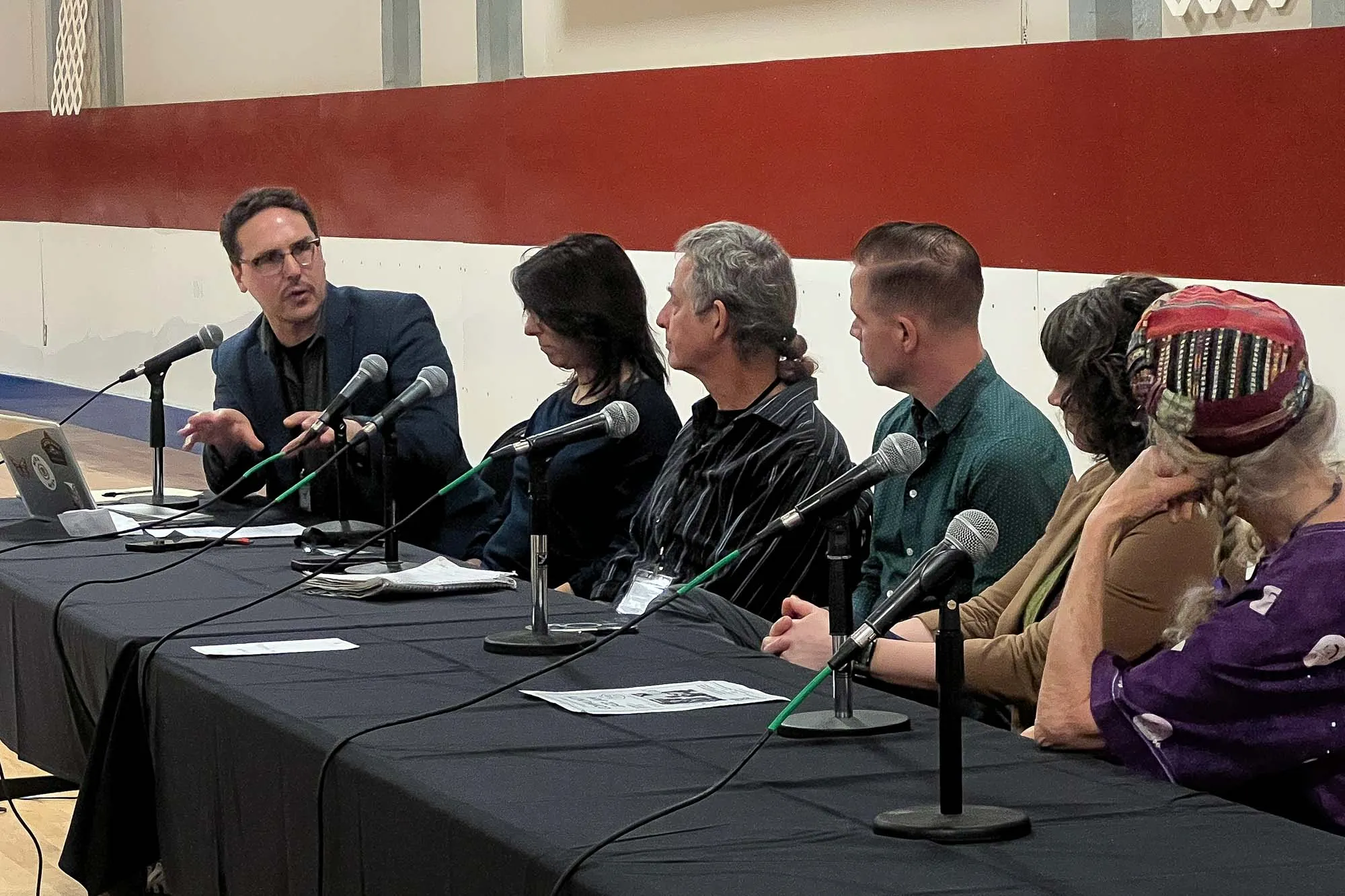
Assistant Professor of Musicology and Ethnomusicology Tony Rasmussen Discusses Live Music in Austin
While academic in structure, the symposium had a distinctly non-academic energy, with many participants coming from outside academia. Presentations addressed not only the problems facing musicians and institutions, but also practical and imaginative solutions.
The topics were weighty, and even the Austin weather seemed to reflect the mood. Rain poured down all day Saturday, casting the School of Music in an eerie half-light. At times, it felt as though we had been transported to Finland or Russia in the dead of winter rather than sunny Austin, Texas. Nothing was off the table, with questions such as “Is the orchestra dead?” and “Is the orchestra the only thing that can provide meaning in the age of AI?” arising just minutes apart.
Saturday’s sessions unfolded at the Butler School of Music, where the morning panel, “Music and Cities,” set an ambitious tone. Chaired by Robin D. Moore, the discussion ranged from Austin’s music economy to St. Louis, Chicago, and even the economies of cruise ships. The late-morning panel, “Digital Communities & Mass Media,” shifted to the online sphere, asking whether digital visibility can translate into genuine economic sustainability.
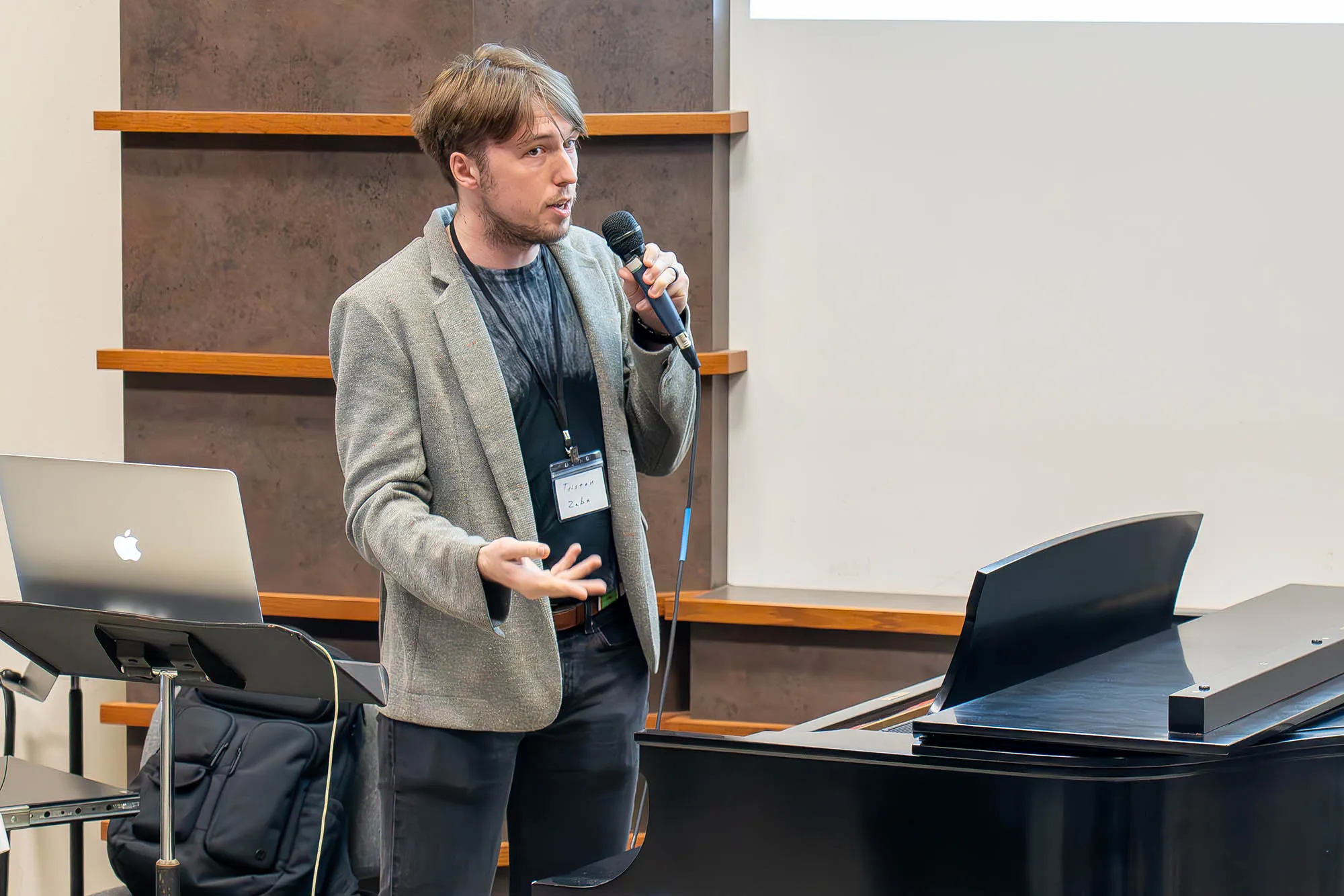
Tristan Zaba Gives an Overview of 30 Years of Research on Musicking
Afternoon sessions, chaired by Sonia Tamar Seeman and Charles Carson, examined nonprofit institutions, philanthropic initiatives, and community music programs, questioning whether they reinforce or challenge the existing arts economy. The day culminated in a keynote by cultural historian George Lipsitz, “‘Knowing the Work You Want Your Work to Do:’ Why Music Matters Now,” a talk that underscored the moral and civic stakes of musical labor.
On Sunday, the conversation moved off campus to the Millennium Youth Entertainment Complex, signaling a shift from theory to practice. If Saturday emphasized diagnosis, Sunday leaned toward prescription. The weather seemed to understand this change as well, the rain cleared, and Austin looked like itself again. Over breakfast tacos and coffee, local artists and administrators mingled before a Town & Gown workshop led by Hannah Neuhauser, who challenged universities to translate academic work into public-facing programming and to meet audiences where they are.
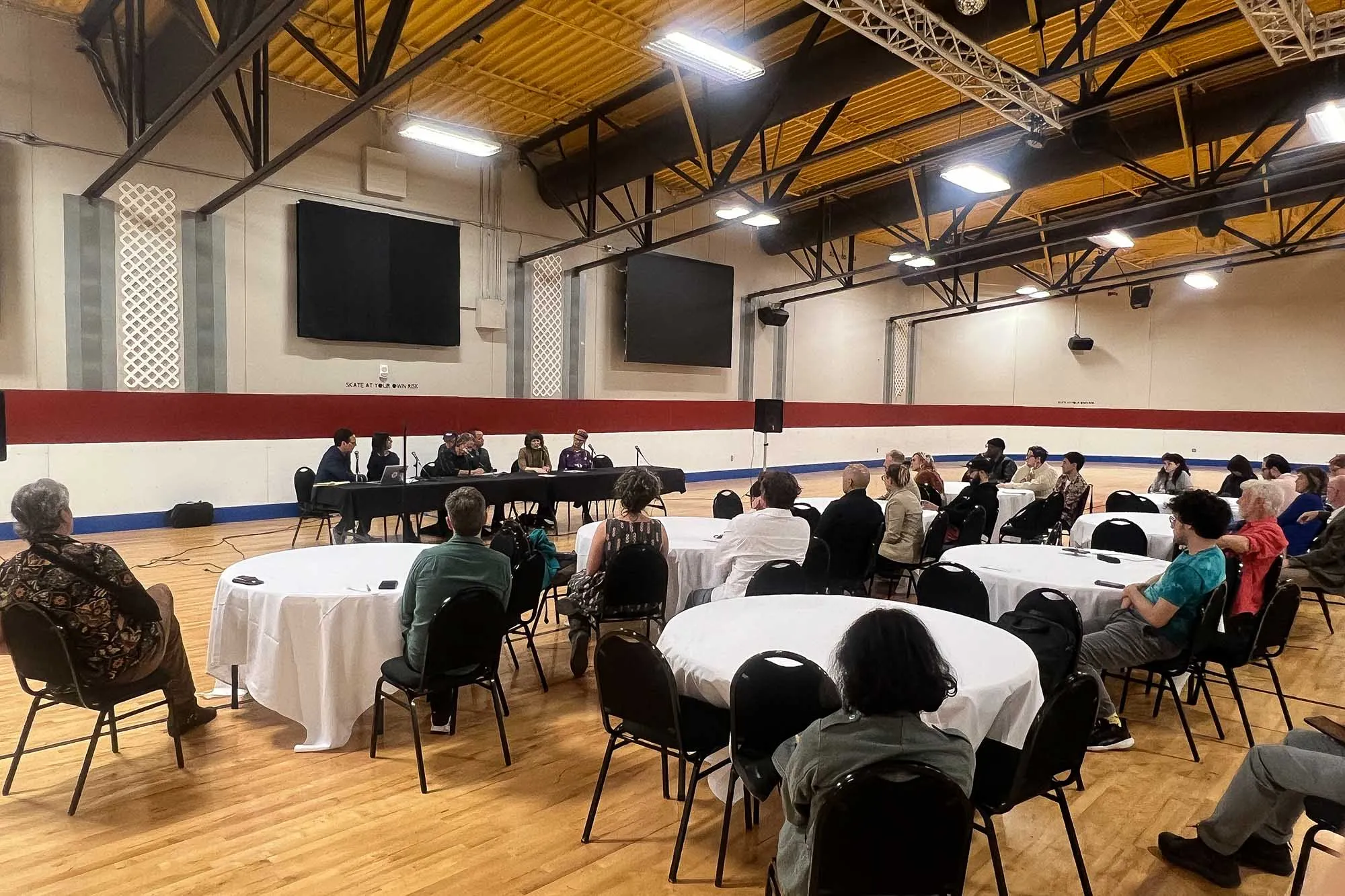
Day Two of the Symposium at the Millennium Youth Entertainment Complex
A panel titled “From Gig Economy to Cultural Infrastructure” explored how Austin musicians might move beyond a patchwork of freelance work toward more stable forms of employment. The positive energy carried into lunch, when the Mazel Tov Kocktail Hour filled the hall with exuberant klezmer tunes. Their performance of Yiddish folk traditions transformed the gathering into a living example of community-centered music-making.
The afternoon emphasized local and actionable solutions. A producers’ roundtable chaired by Dr. Tony Rasmussen invited candid conversation about venue economics and collaboration. The symposium concluded with a presentation on the City of Austin’s ACME grant programs by Kimberly McCarson, outlining concrete funding pathways for artists and organizations. By the end of the weekend, the questions raised about AI, labor, and sustainability remained complex, but the gathering made one thing clear: music is not simply a product to be consumed. It is work, it is community, and it is something people choose to do together, even in uncertain times.