




Marc Sosnowchik, conductor
Donnie Ray Albert, narrator
This concert will last about one hour without intermission.
Please silence your electronic devices.
Photography, video, or recording of any part of this performance is prohibited
Program
Benjamin T. Martin
Unfurling Dances
Katherine Balch
Chamber Music
Nina Šenk;
Twenty in Five for narrator and ensemble
Donne Ray Albert, narrator
Arturo Márquez
Danzón No. 8 chamber version
About the Program
Benjamin T. Martin
Unfurling Dances
Born 1998
2024
Premiered December 6th, 2024, Grossman Ensemble, Chicago, Illinois
8 minutes
When I compose, I tend to personify musical elements in my head as I’m working through them. I’ll think of certain melodic lines, rhythms, or instruments as characters in a play, neighbors in an imagined musical community — friends (or enemies, as the case may be) with whom I can converse in the largely solitary stretches of the compositional process. The protagonist of this piece, Unfurling Dances, has a very quirky and somewhat volatile personality. When they introduce themselves at the top of the piece, they come across as brash, slightly reckless, and sort of all-over-the-place, entreating the entire ensemble to follow them blindly on their precarious and lopsided rhythmic itinerary. They get easily distracted and change paths on a whim — a jaunty string section, a crazed piano figure, a wild drum break. However, after they run out of steam, we see a more vulnerable side of them in the form of incredibly slowed-down, disjointed versions of their original iteration over a bed of lush sound.
Equipped with this newfound understanding, our protagonist attempts their original flight path once more against a more metrically grounded groove, and we learn they’re actually a pretty good dancer.
This piece is presented with immense thanks to every single member of the Grossman Ensemble for their incomparable artistry, creativity, musicianship, and incredible warmth and generosity throughout this entire process. My utmost thanks also to Phil Pierick, Augusta Read Thomas, and the CCCC for their amazing support, diligence, and stellar work in cultivating this uniquely awesome organization and making it run so brilliantly.
– Benjamin T. Martin
Katherine Balch
Chamber Music
Born 1991, San Diego, California
Composed 2018
Premiered 29, 2018, Oregon Symphony Orchestra, Portland Oregon, Jun Märkl, conductor
12 minutes
When composers write for orchestras, they often take advantage of the full sound spectrum of instruments and timbres within the ensemble. In creating Chamber Music, Balch has chosen to focus on the intimacy of collaboration, what she describes as “interconnected introversion,” rather than an expansive soundscape. Balch describes the work as “a very intimate, intricate music intended for close listening and made among friends. There are many soloists who chatter amongst each other and exchange musical materials. I wanted to distinguish this from the idea of a ‘concerto’ for orchestra, without the sort of virtuosic extroversion that a concerto implies. I guess I’m attracted to the idea of an intimate or hushed virtuosity.”
Constructed in two halves, the first section of Chamber Music alternates periods of bouncy rhythmic woodwind textures with what Balch calls “whisper music.” “Whisper music is all sorts of little clicking, popping, crunching, whispering sounds that soloists babble to each other,” Balch explains. “Sometimes this is a playful, active gossiping; other times it’s more solemn and still.” The second section features a quiet chorale that flutters and disappears. “Sometimes parts of the orchestra ‘fall out of tune’ with other parts (by playing a quarter-tone lower), which results in what to me are very colorful and expressive beatings in the music.”
Chamber Music is a companion piece to Balch’s Leaf Fabric, which was commissioned and premiered in 2017 by the Suntory Summer Arts Festival in Japan. “Both are inspired visually by the intricate, detailed veination of leaves, and sonically by the dense but very quiet omnipresent sounds of the outdoors — imagine lying down in the grass and just listening to all the crinkling, swishing, and chirping around you,” says Balch.
– Provided by the composer
Nina Šenk
Twenty in Five for narrator and ensemble
In 2011, on the twentieth anniversary of Slovenia’s independence, I invited Slovenian writers — members of the Slovenian Writers’ Association — to share short reflections on their view of Slovenia and its current state. These could be newly written texts or excerpts from existing literary works: critical or celebratory, personal or political — portraits of a nation, its culture, its people. The response was overwhelming. I received contributions from 26 authors. From each author, I selected one text and wove them into a twenty-minute composition for narrator and ensemble. The narrator delivers the texts, while the ensemble responds — commenting, shaping, and coloring the emotional landscape.
What I could not have anticipated in 2011 is how these texts would grow in resonance over time. Today, in light of current circumstances, they feel even more urgent and relevant. For performances abroad, most of the texts have been translated into English. Due to the proximity of borders and the cultural context of the authors, certain excerpts also appear in Italian and German.
The composition “Twenty in Five” represents twenty years in five pictures:
ONE – The Beginning
TWO – First Impressions
THREE – Facts: our origins and our journey / Artists: reflections and critiques of culture and nation
FOUR – Pessimistic Views of the Present
FIVE – Visions of the Future
– Nina Šenk
Artúro Marquez
Danzón No. 8 chamber version
Born December 20, 1950, Álamos, Sonora, Mexico
Composed 2004
9 minutes
Born in Mexico, Arturo Márquez spent his middle school and high school years outside of Los Angeles, in La Puente, California, where he began his musical training. He returned to Mexico to study at the Conservatory of Music and the Institute of Fine Arts before traveling to Paris to study with Jacques Castérède. While his initial interests veered towards the avante-garde, he began incorporating aspects of minimalism, electronics, and jazz into his compositions. He wrote his first Danzon in 1992, inspired by the traditional Cuban salon music of the same name, which had gained popularity in Veracruz and in Mexico City. That first Danzon was for electronic tape and optional saxophone. His Danzon No. 2 was commissioned by the National Autonomous University of Mexico's Department of Musical Activities for full orchestra, and has been called “Mexico’s second national anthem,” due to its wild popularity. This Danzon No. 8 was also written for full orchestra, and bears the dedication “for Maurice.” Despite being in 4/4 time, if you listen closely, and you’ll hear many references to Maurice Ravel’s famous ear worm Bolero.
– Mark Bilyeu
About the Artists
Donnie Ray Albert
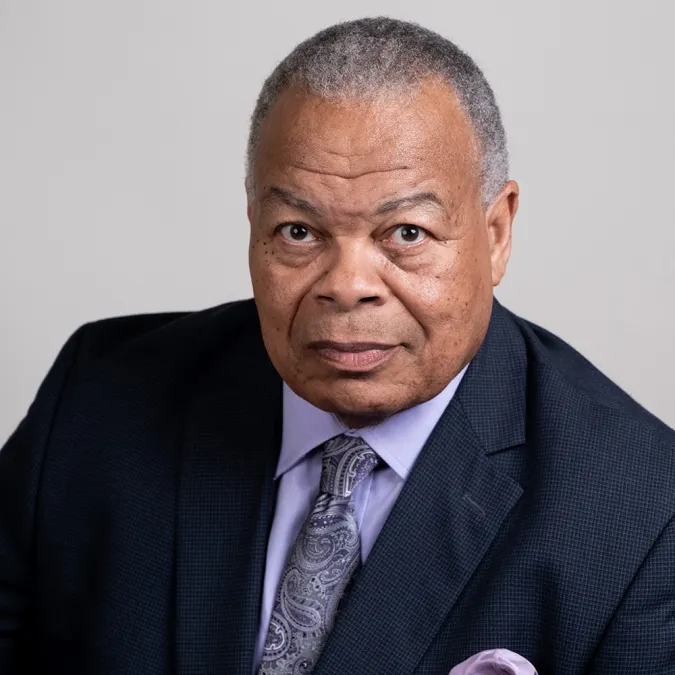
Donnie Ray Albert is a regular guest of opera companies and symphony orchestras around the world, including numerous appearances with Opera Pacific, Houston Grand Opera, and opera houses across the U.S., Canada and Europe. He is a resident artist with the Center for Black Music Research at Chicago’s Columbia College. Mr. Albert may be heard on RCA’s Grammy Award and Grand Prix du Disque winning recording of Porgy and Bess, NOW’s recording of The Horse I Ride Has Wings with David Garvey on piano, EMI’s Frühlingsbegräbnis and Eine Florentinesche Tragodie by Zemlinsky conducted by James Conlon, and Simon Sargon’s A Clear Midnight on the Gasparo label.
Marc Sosnowchik
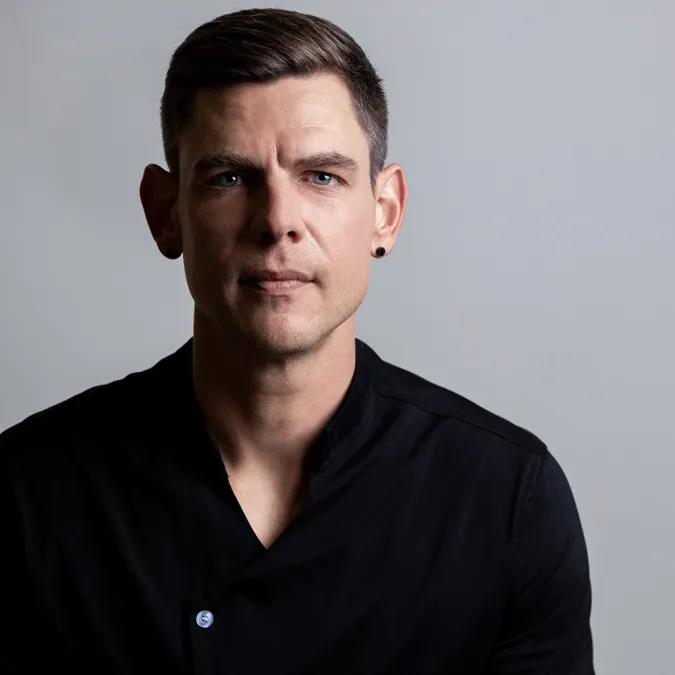
Dr. Marc Sosnowchik is a conductor, educator, arranger, and clinician based in Austin, Texas. His current duties as assistant director of bands at the University of Texas include conducting the New Music Ensemble and Longhorn concert bands, instructing courses in conducting and wind literature, and teaching the Longhorn Bands. Before his appointment at UT Austin, Sosnowchik served as associate director of bands at the University of South Florida, assistant director of bands at Oklahoma State University, and associate conductor of the Florida Wind Band. Sosnowchik maintains an active schedule as a clinician, conductor, and arranger. He conducts ensembles throughout the U.S., and in the summer teaches at the World Youth and Adult Wind Orchestra Projects as part of the Mid-Europe Festival in Schladming, Austria. Sosnowchik earned his bachelor’s degree in music education from the University of Alabama, and both his master’s and doctor's degrees in conducting from The University of Texas at Austin.
New Music Ensemble
Violin I
Zichuan Wang
Violin II
Yvonne Ma
Viola
Reese Chen
Cello
Tristan Ramon
Double Bass
Lucas Scott
Flute
Elizabeth Alsenz
Oboe
Mary Creel
Clarinet
Andrew Battaglia
Bassoon
Mario Rios Valverde
Saxophone
Ben Kaplan
Horn
Charlotte Allen
Trumpet
Medi Mercier
Trombone
Konner Wetterstrom
Tuba
Jeffrey Fields
Percussion
Michael Rivera Gonzalez
Marcos Jurado
Harp
Jordan Allen
Piano
Michael Lenahan
Maria Pamini
Teaching Assistant
Matt Abajian
Event Details
Free admission