



Due to inclement weather, this concert has been rescheduled from January 26 to February 6 at 7:30pm.
Mikhail Smigelski, bass
Joohyun Kim, mezzo soprano
Chloe Yofan, violin
Katsuaki Arakawa, cello
Margarita Denenburg, piano
Rick Rowley, piano
Students from Mikhail Smigelski's Voice studio
Please silence your electronic devices.
Photography, video, or recording of any part of this performance is prohibited
Program
Dmitri Shostakovich 1906-1975
Preface to the Complete Edition of My Works
and a Brief Reflection Apropos of this Preface, op. 123 1966
Mikhail Smigelski, bass
Margarita Denenburg, piano
Shostakovich
24 Preludes, op. 34 1933
Moderato
Allegretto
Andante
Moderato
Allegro vivace
Allegretto
Andante
Allegretto
Presto
Moderato non troppo
Allegretto
Allegro non troppo
Margarita Denenburg, piano
Shostakovich
Piano Trio No. 1 in C Minor, Poème, op. 8 1923
Chloe Yofan, violin
Katsuaki Arakawa, cello
Rick Rowley, piano
Shostakovich
Antiformalist Rayok 1948-1968
Yevgeniy Sharlat, opening remarks
Joohyun Kim, Secretary
Mikhail Smigelski, Comrade Numberone
Mikhail Smigelski, Comrade NumberTwo
Mikhail Smigelski, Comrade NumberThree
Smigelski Voice studio, music figures and professionals
Translations
translations by Mikhail Smigelski, Printed with permission.
Preface to the Complete Edition of My Works
and a Brief Reflection Apropos of this Preface
I stain the page in one breath.
I heed the booing with an accustomed ear.
Then I torment the world’s hearing.
Then I’m published — and splash into oblivion.
Such a preface could be written not only for the complete collected works of mine,
but also for the complete works of many composers, both Soviet and foreign alike.
And here is the signature: Dmitri Shostakovich.
People’s Artist of the USSR.
And many other honorary titles besides.
First Secretary of the Union of Composers of the RSFSR.
Simply Secretary of the Union of Composers of the USSR.
And also many other highly responsible duties and posts.
Antiformalist Rayok
Secretary
Well then, comrades, shall we begin?
There aren’t very many people here today, unfortunately.
We still suffer, it must be said, from an underestimation
of the cultural maximum of lecture-based propaganda.
But since, according to the plan of our Palace of Culture,
a series of presentations on the topic “Realism and Formalism in Music” is scheduled for today.
We shall go ahead and carry out this theme — that is, these very presentations.
Agreed? Agreed.
The introductory remarks on this subject will be delivered by Musicologist Number One,
our chief consultant and music critic, Comrade NumberOne.
Let us greet, comrades, our dear and beloved great Comrade NumberOne!
Music figures and professionals
Glory! Glory to the great NumberOne! Glory!
NumberOne
Comrades!
Realist music is written by people’s composers,
while formalist music is written by anti-people’s composers.
The question arises:
why do people’s composers write realist music,
and anti-people’s composers write formalist music?
People’s composers write realist music because, comrades,
being realists by nature, they cannot help but write realist music.
And anti-people’s composers, being formalists by nature,
cannot — cannot help but write formalist music.
The task, therefore, consists in ensuring that people’s composers
develop realist music,
while anti-people’s composers cease
their more-than-dubious experimentation in the field of formalist music.
Secretary
Correct! Precisely!
Comrades, let us thank our dear and beloved great NumberOne for his historic speech,
for his presentation, for the enrichment and illumination
of important questions of musical practice.
Music figures and professionals
Thank you, thank you for the historic speech!
Thank you, thank you for your paternal care!
Secretary
According to the plan that follows, I now give the floor to Musicologist Number Two,
who also possesses a voice and the ability to vocalize.
I give the floor to Comrade NumberTwo.
NumberTwo
Comrades!
With my remarks I do not intend to introduce dissonances or atonality
into the thoughts we have heard here.
We, comrades, demand from music
beauty and elegance.
Does that seem strange to you? Yes?
Of course it seems strange to you.
Strange it seems to you, strange it seems to you.
Yes, of course it seems strange to you,
strange it seems to you, strange it seems to you,
as though something were not quite right.
And yet — it is right! I did not misspeak!
We stand for beautiful, elegant music.
Music that is unmelodic, music that is unaesthetic,
music that is disharmonious, music that is inelegant —
that is, that is… a dental drill.
Or, or… a musical meat grinder.
Let us therefore love the beautiful, the elegant,
let us love the aesthetic, the harmonious, the melodic,
the lawful, the polyphonic, the folk-like, the noble, the classical!
Furthermore, comrades, I must inform you
that in Caucasian operas
there must be a genuine lezginka,
In Caucasian operas the lezginka
must be simple and well known,
dashing, ordinary, popular,
and necessarily Caucasian.
It must be genuine, always must be genuine,
and only, only genuine,
Yes, yes, yes, yes, yes — genuine.
Secretary
That was a truly scientific presentation.
What analysis! What depth!
The floor is given to Comrade NumberThree.
NumberThree
Comrades!
We must be like the classics.
Everything must be according to the classics! Yes!
Glinka, Tchaikovsky, Rimsky-Korsakov,
You are musical, elegant, well-proportioned.
Glinka, Tchaikovsky, Rimsky-Korsakov,
You are melodic, beautiful, resonant!
Glinka, Tchaikovsky, Rimsky-Korsakov,
You touch several strings at once.
How correct this is, how true!
Our person is a very complex organism!
Therefore, comrades, we need symphonies, poems, quartets, sonatas, suites, suites, quintets…
My suites, little suites, my little sonatas,
My merry little quartets, my little cantatas.
Oh, Glinka, my kalinka, my little rasberry,
My little symphony, little poem, little suite.
Oh, Glinka, my Dzerzhinka, my Tishinka,
My damn little poem, my little suite…
But one must always remember:
Vigilance, vigilance always, everywhere.
Vigilance, vigilance always in everything.
Be vigilant constantly, everywhere!
Tell no one anything!
Music figures and professionals
Vigilance, vigilance always, everywhere.
Vigilance, vigilance always in everything.
Be vigilant constantly, everywhere!
Say nothing at all!
Numberthree
The great leader taught us all and ceaselessly told us:
Look here, look there, let all enemies be afraid.
Look this way, look that way, and uproot the enemy.
Music figures and professionals
Look here, look there, let the enemy tremble at home.
Look this way, look that way, and uproot the enemy.
Numberthree
Vigilance, vigilance always, everywhere.
Vigilance, vigilance always in everything.
Do not allow any attempt
at the infiltration of bourgeois ideology
into our youth.
Thus you will safeguard our ideas.
And if someone should absorb bourgeois ideas,
we shall imprison them for a long time,
and place them in high-security concentration camps.
Music figures and professionals
Yes, yes, yes, yes,
imprison them, imprison them,
and send them all to the camps.
Numberthree
The great leader taught us all and constantly told us:
Look here, look there, let all enemies be afraid.
Music figures and professionals
Look here, look there, let the enemy tremble at night.
Look this way, look that way, and uproot the enemy.
About the Artists
Joohyun Kim
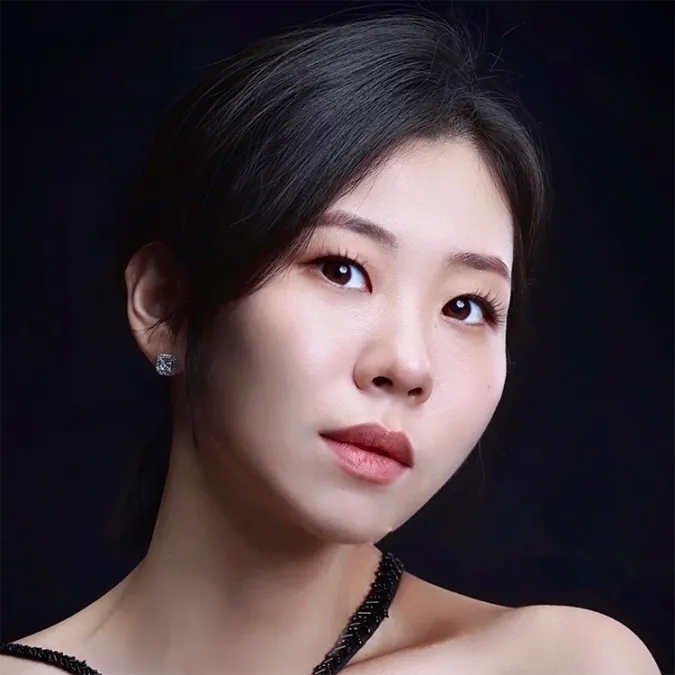
Joohyun Kim is a mezzo-soprano and second-year D.M.A. student in opera performance at The University of Texas at Austin. She holds a Master of Music and a Professional Studies Diploma from the Mannes School of Music in New York. Her operatic credits include Cherubino in Le nozze di Figaro, Dorabella in Così fan tutte, Madame de la Haltière in Cendrillon, Flora in La Traviata, Susanna in The Ghosts of Versailles, and Orfeo in Orfeo ed Euridice. In 2025, she received an Encouragement Award at the Metropolitan Opera’s Laffont Competition (Colorado–Wyoming District).
Chloe Yofan
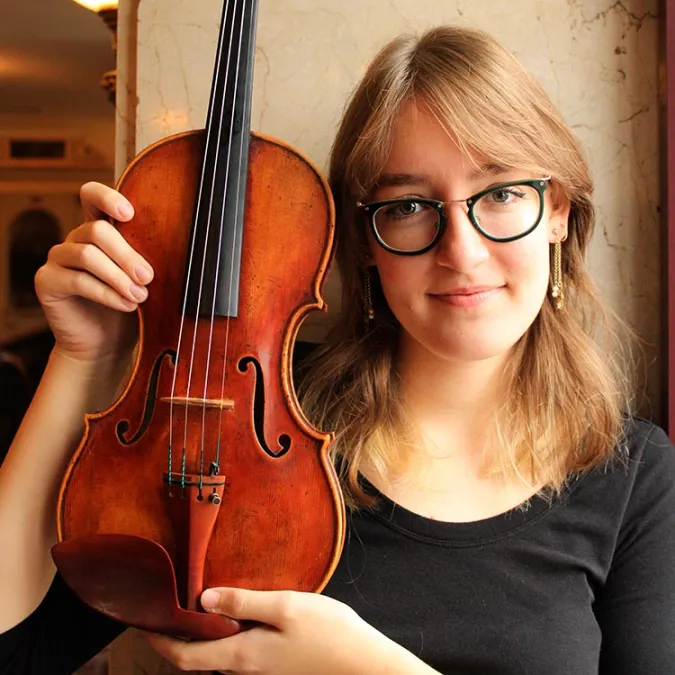
A native of Pittsburgh, Pennsylvania, Chloe Yofan is currently pursuing an artist diploma in violin performance at The University of Texas at Austin where she studies with Sandy Yamamoto. Chloe also received her master's degree at UT while serving as the teaching assistant to Yamamoto, and she received her bachelor’s degree from the Eastman School of Music under Oleh Krysa. Chloe is the assistant concertmaster of the Austin Symphony Orchestra, having played one season in the second violin section before assuming her current position. She is also a member of the first violin section of the Austin Opera Orchestra. Since moving to Texas in 2023, Chloe has performed with the Dallas Symphony Orchestra and the San Antonio Philharmonic as a substitute violinist. She is also a member of the Soha Quartet, first place winners of the 2025 Music Teachers National Association Chamber Music competition and semi-finalists in the 2025 Plowman Chamber Competition. In the summers, Chloe has performed as a fellow at the Sarasota Music Festival and the Aspen Music Festival and School.
Katsuaki Arakawa
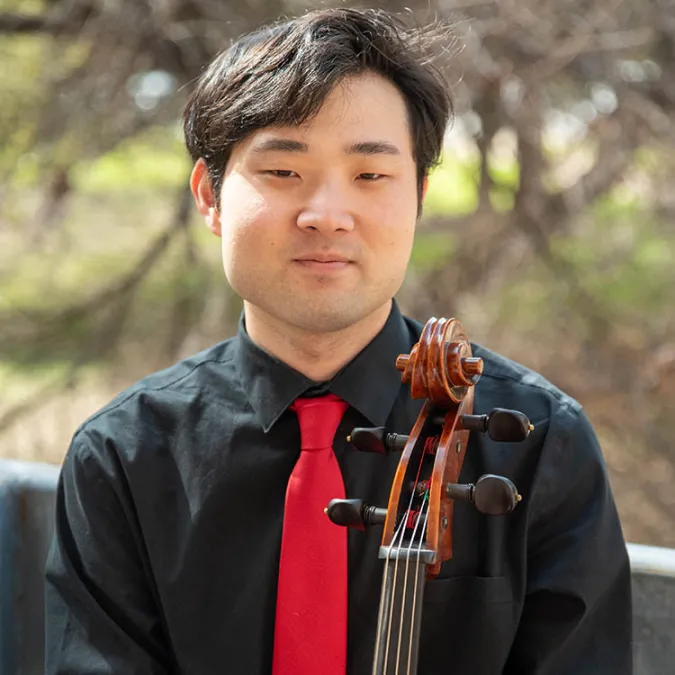
Katsuaki Arakawa is a cellist currently based in Austin. He is active as a chamber musician, soloist, and orchestral player. Katsuaki is the cellist of the Soha Quartet, which has recently been awarded First Prize in the Music Teachers National Association Chamber Music Competition and competed in the semifinals of the Plowman competition. Katsuaki was a winner of the Austin Civic Orchestra Texas Rising Stars Competition in 2023. As an orchestral musician, Katsuaki currently performs with the Central Texas Philharmonic, is a substitute section cellist in the San Antonio Philharmonic, and serves as co-principal of The University of Texas Symphony Orchestra. Katsuaki currently studies with professor Bion Tsang at the Butler School of Music and has been awarded the Friends of Cello Scholarship.
Mikhail Smigelski
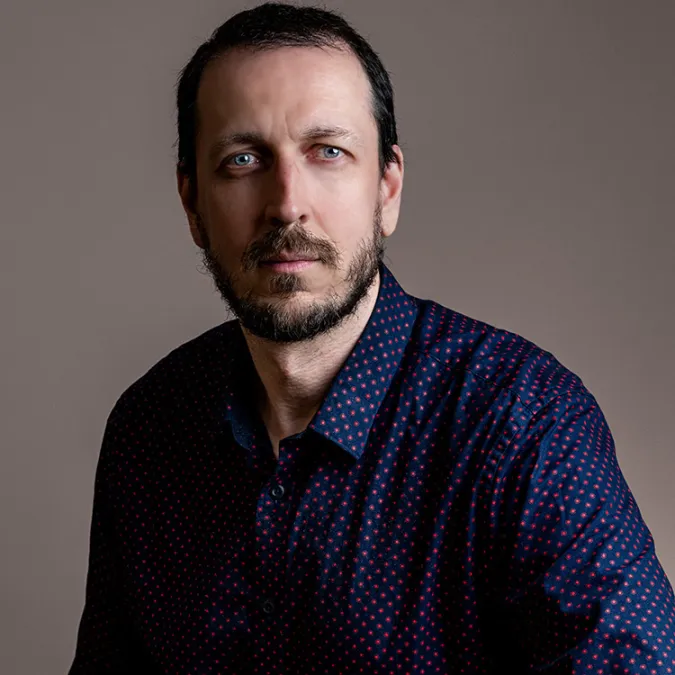
Hailed as “phenomenal” (The Harvard Crimson), “impressively epic” (schwäbische.de), and praised for his “wine-dark bass” (The Boston Globe), bass-baritone Mikhail Smigelski enjoys a versatile career spanning various genres, including opera, oratorio, early music, musical theatre, and contemporary music. Born in St. Petersburg, Russia, Mikhail has performed on some of the world's most prestigious stages, including Carnegie Hall, the Saint Petersburg and Moscow Philharmonias, Berliner Philharmonie, and Kölner Philharmonie. He has also collaborated with renowned European and American opera companies, such as Saint Petersburg Chamber Opera, Theater Aachen, Theater Solingen, Theater Leverkusen, Miami Lyric Opera, The Cleveland Opera, Opera in the Heights, among others. Smigelski’s performance portfolio features over 30 roles in classical and contemporary operas as well as other stage works. A passionate advocate for contemporary classical music, he has participated in numerous festivals, including New York’s Ferus Festival and the Cohen New Works Festival, and has premiered works with ensembles such as the East Coast Contemporary Ensemble, Density 512, and Rhapsode Guild.
Margarita Denenburg
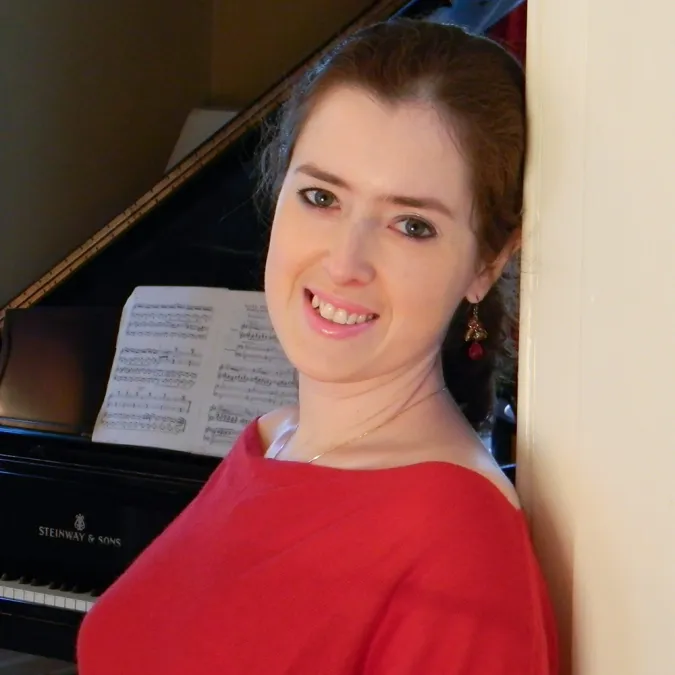
Margarita Denenburg, NCTM is associate professor of practice in piano pedagogy at The University of Texas at Austin. Dr. Denenburg is a passionate musician and pedagogue who was recognized for her teaching effectiveness through the “Innovative Teaching Award” and the “Excellence in Education Award” for the state of Ohio. Denenburg has multiple articles with American Music Teacher journal, Clavier Companion magazine, Piano Pedagogy Forum. She presented at Music Teachers National Association national conference, College Music Society national conference, National Group Piano/Piano Pedagogy Forum, Ohio Music Teacher Association as well as several College Music Society regional conferences. Denenburg enjoys playing as much as teaching and writing. Most recently performing several solo recitals in Ohio and currently preparing for concert series with her duo partner Gerald Evans, working on the complete cycle of Planets by Gustav Holst. Past performance projects include music by the Holocaust composers, the sentential research and performance of the Rite of Spring, and the music by Robert Schumann. Denenburg held several leadership positions on the board of the Ohio Federation Music Clubs, Ohio Music Teachers Association, and College Music Society. Recent positions on OhioMTA board included: president elect, vice president for student activities, and a chair for the Commissioned Composer Award.
Rick Rowley
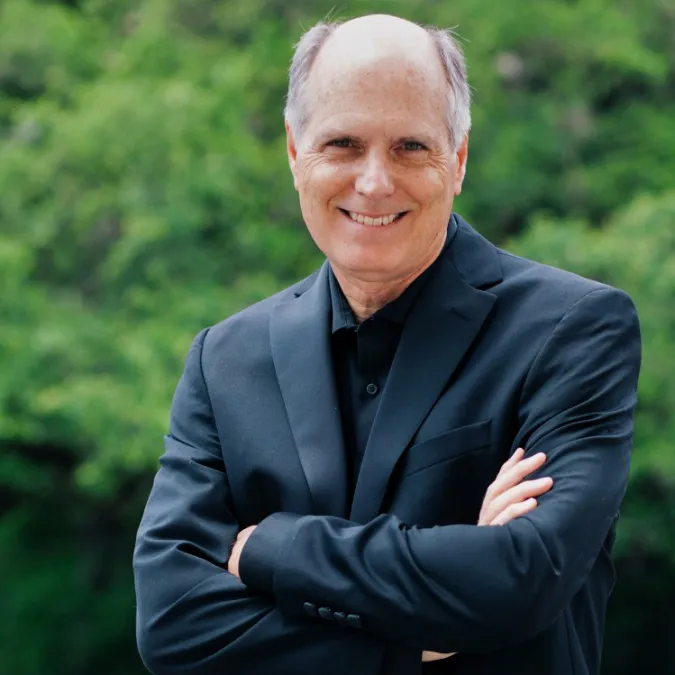
Rick Rowley leads a diverse musical life. He gives concerts with many of the world’s finest instrumentalists and singers and his solo, concerto and collaborative performances have taken him throughout the United States, to Europe and Latin America. Mr. Rowley has made several recordings of solo piano repertoire, chamber music and art songs. His second CD with flutist, Marianne Gedigian, was one of the first recordings issued on the UT Longhorn label. He has recorded piano music of Chopin, Liszt, Granados, Mompou and American composers David Guion, Richard Cumming, Aaron Copland and Samuel Barber. His recordings with sopranos Cheryl Parrish and Mela Dailey also feature music of American composers. He has begun making video performances as part of a series of concerts in partnership with Professor Emeritus Darlene Wiley of the Butler School voice faculty. Mr. Rowley coaches singers and works with collaborative pianists, has taught classes in German, French and American art song, singing and acting for musical theater and a history of musical theater on Broadway. He has appeared three times as soloist with the UTSO and is heard frequently on broadcasts of live performances from the Butler School.
Upcoming Events
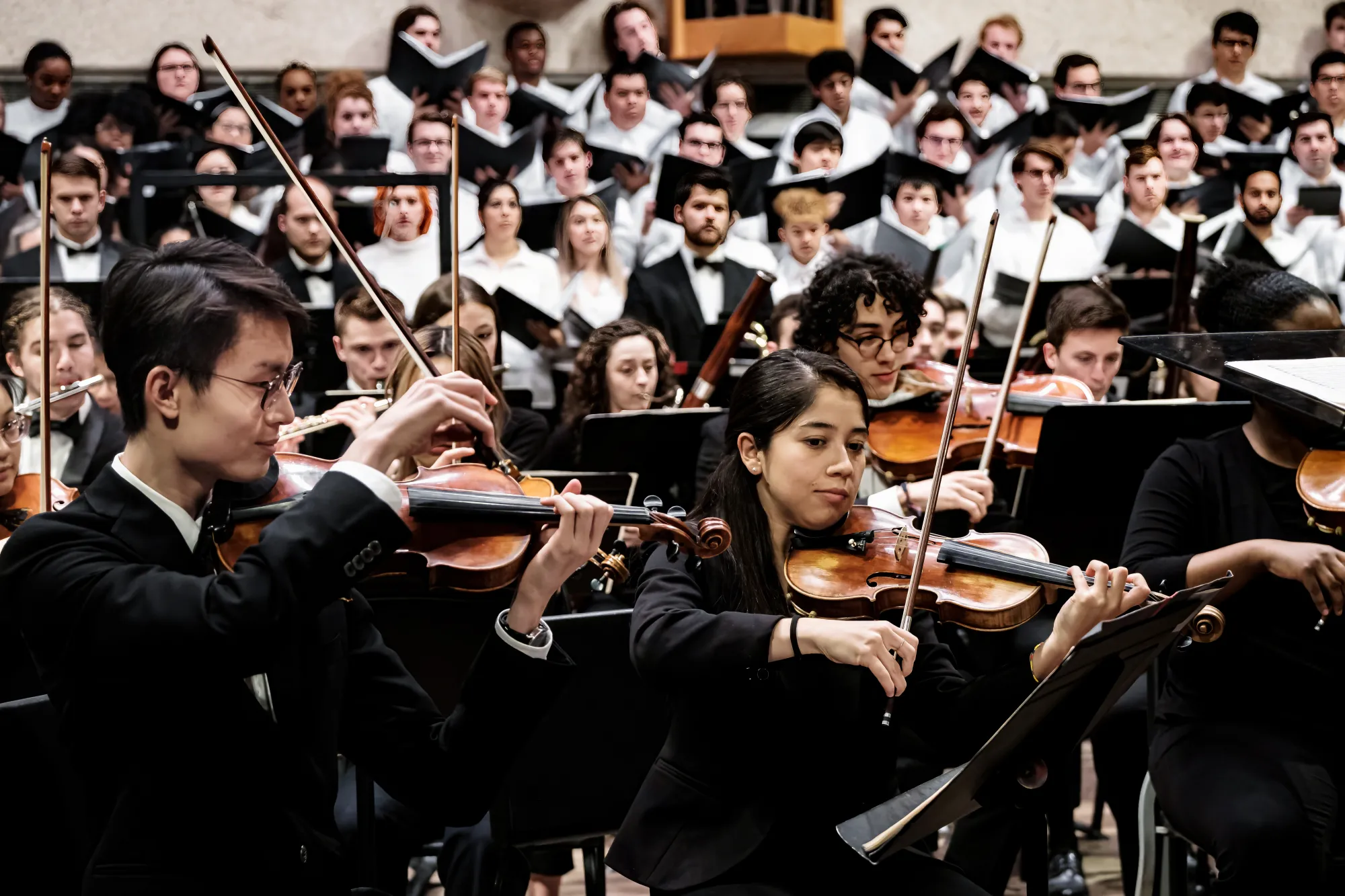
Mahler Symphony No. 2
Resurrection
Symphony Orchestra & Combined Choirs
Leah Crocetto, soprano
Sophio Dzidziguri, mezzo soprano
One of the most beloved symphonies in the canon, Mahler's "Resurrection" symphony boasts a large orchestra, mezzo and soprano soloists, and similarly to Beethoven's 9th Symphony, a large choir in the final movement. For this performance, the Butler School's Concert Chorale and University Chorus ensembles will join forces; they will be joined by Butler School alumni singers and community choral singers from around Austin.
Tuesday, March 31, 8:00 p.m.
Long Center for the Performing Arts
Event Details
Free admission