




Farkhad Khudyev, conductor
Yida An, violin
Jinni Shen, soprano
Aaron Kurz, piano
Kevin Charoensri, composer
Matthew Pavon, guest conductor
This concert will last about 70 minutes with one intermission.
Please silence your electronic devices.
Photography, video, or recording of any part of this performance is prohibited
Program
Kevin Charoensri
orch. Nathan Dumrongthai
A Jasmine Tree
Matthew Pavon, conductor
Henryk Wieniawski
Violin Concerto No. 1 in F-sharp Minor, op. 14
Allegro moderato
Preghiera: Larghetto
Rondo: Allegro giocoso
Yida An, violin
Giacomo Puccini
Un bel di, vedremo from Madama Butterfly
Jinni Shen, soprano
intermission
Sergei Prokofiev
Piano Concerto No. 3 in C Major, op. 26
Andante - Allegro
Tema. Andantino
Allegro, ma non troppo
Aaron Kurz, piano
About the Program
Program notes by Mark Bilyeu except where noted.
Kevin Charoensri
A Jasmine Tree
Composed 2024
My first experiences falling in love with music were Thai temples and Thai street music. And when I came to the United States, I equally fell in love with American-influenced film scores, band pieces, and jazz charts. When I joined band in the 6th grade, I struggled to find music that authentically supported my Thai/Asian background. I desperately wanted to play a piece that authentically represented my early childhood growing up in Thailand. Similar to my wind ensemble piece Rising Light, A Jasmine Tree is inspired by the bi-cultural identity I grew up with, seeking to combine both Thai and American cultures as one. The piece pulls melodic material from Thai/Asian styled phrasing blossoming over American-influenced jazz harmony. The beginning of the piece utilizes these melodies in a traditional contrapuntal style, where instruments slowly enter, similar to a meditation. As the piece progresses, the harmony supports the pentatonic melodies. I wanted to show my interpretation of the Asian-American musical style, as one. I hope A Jasmine Tree gives a voice of representation, while also inspiring and educating up and coming musicians in the beautiful meshing of culture, through music.
– Kevin Charoensri, July 2024
Henryk Wieniawski
Violin Concerto No. 1 in F-sharp Minor, op. 14
Born July 10, 1835, Lublin, Poland
Died March 31, 1880, Moscow, Russian Empire
Composed 1852
Premiered October 27, 1853, Leipzig by the Gewandhaus Orchestra Leipzig, Germany, Henryk Wieniawski, soloist, Ferdinand David, conductor
28 minutes
Henryk Wieniawski was only seven when he first appeared as a professional violin soloist, and by thirteen he was touring all over Europe. The public took an immediate liking to him, as Niccolò Paganini had died in 1840, when Wieniawski was only five, and they were looking for someone to carry the mantle of Europe’s finest violinist. The young Polish virtuoso began crafting music to showcase his own immense skill, and at the age of 17, he stunned the world with his first concerto. The work opens with a gloriously Chopin-esque orchestral introduction (for the rest of the work, the orchestra is more or less relegated to supporting roles throughout). As the violinist enters, the fireworks erupt in the form of harrowing double stops in dotted rhythms. The driving force of the movement is the soloist’s constant embellishing of the themes in gravity-defying stratospheres, technically demanding ornamentations, and too many double stops to count. The second movement is titled Preghiera (Prayer), and is crafted after the iconic soliloquy scenes from opera’s greatest Rossini divas. Here, there is no thirty-thousand foot acrobatics or technical madness, just a gorgeous melody offered by an unobstructed soloist. The third movement takes another turn back into the world of technical sorcery with a wind-in-your-hair rondo that only a virtuoso could conjure. Hang on tight as this alla polacca dance unfurls with its syncopations, trills, and outright exuberance. During his lifetime, the work was not heard much outside of Wieniawski’s own engagements (who would dare?!), and today it is still considered one of the pinnacles of the repertoire.
Giacomo Puccini
Un bel di, vedremo from Madama Butterfly
Born 22 December 22, 1858 Lucca, Italy Composed 1903
Premiered 17 February 17, 1904, La Scala, Milan, Italy
5 minutes
Is there anything more iconic than a Puccini opera? La Bohéme, Tosca, and Madame Butterfly are skillfully crafted with the necessary building blocks of a masterpiece: riveting stories, lush orchestrations, and beautiful melodies. There is a reason that these Puccini operas are perennially staged at opera houses around the world — they are just that good. His first opera, Le Villi, was written shortly after his graduation from the Milan Conservatory and received its premiere at La Scala (not too shabby for a twenty-something). What would follow was a series of major successes: Manon Lescaut, La Bohéme, Tosca, and Madame Butterfly, all between 1893 and 1904, cementing him as the next great Italian operatic composer after Verdi’s retirement.
Madame Butterfly tells the story of the geisha named Cio-Cio-San, known as Madam Butterfly, who marries an American soldier named Pinkerton. In doing so, she has ostracized herself from her family, and after their wedding night, Pinkerton leaves for the States. For three years, she raises their son on her own, with no word from her husband, remaining committed to her marriage. Pinkerton returns, with his American wife, seeking to retrieve his son to raise him with his new wife. Cio-Cio-San agrees to give up her son, but before the exchange happens, she takes a dagger and dies by suicide, choosing to not live in her shame. The famous aria “Un bel di, vedremo” (One fine day we shall see) is sung by Butterfly to open the second act, as she awaits Pinkerton’s return, looking out onto the harbor where his boat might appear, certain of their future together.
Sergei Prokofiev
Piano Concerto No. 3 in C Major, op. 26
Born April 27, 1891, Sontsovka, Russian Empire
Died March 5, 1953, Soviet Union
Composed 1913-1921
Premiered December 16, 1921, Chicago Symphony Orchestra, Sergei Prokofiev, pianist, Frederick Stock, conductor
30 minutes
Sergei Prokofiev wrote and performed his first piano concerto as his final student examination at the St. Petersburg Conservatory in 1914. He had pursued what we would now consider a ‘dual track’ at the conservatory, training as both a composer and concert pianist, and for much of his early career, he was able to create concert programs of his own music. This is similar to Rachmaninoff — another Russian pianist/composer a few years older than Prokofiev — who had a slight bent towards the more conservative and romantic Russian ideal than Prokofiev’s more angular, rhythmic, and often acerbic musical language. Having seen Rachmaninoff’s success touring in the United States, Prokofiev was able to envision a similar plan for himself, and so in the summer of 1921, he returned to a set of piano variations he had crafted in 1913, and in December of that year, turned those variations into his third piano concerto, premiering the work with the Chicago Symphony Orchestra.
The first movement opens with a languorous clarinet duet before it launches into its bright, buoyant, and sometimes brittle opening with treacherous white-key-only scale passages, sudden rhythmic shifts, and even castanets. In the middle, Prokofiev offers us one of the most evocative and orchestrally stunning iterations of the primary theme, this time in a slow, highly-romantic moment for solo piano, before launching directly back into the whirling dervish of scales, glissandi, and even more castanets to reach its exhilarating conclusion.
The second movement is a theme and variations set based on a gavotte first presented by the woodwinds. You’ll be able to count the variations as they come along — here are five of them. Prokofiev’s use of the variation set is second to none, and while some have suggested that the variations are excellent insights into Prokofiev’s complicated personal character, his greatest ability was as a shape-shifter and so it is impossible to identify what is honest and what is façade.
The composer himself called the final movement an “argument” between the soloist and the orchestra, and his intention is clear from the get-go. The pianist and orchestra offer competing themes, with the pianist forced to toe the line between technical agility and bombastic accuracy. Listen for how the pianist and orchestra take each other's themes and restate them right back to each other. The slow section demands the most Debussian lightness, which is immediately contrasted with Prokofiev’s demands for sheer power. The work culminates in a fortissimo C-major chord — as all productive arguments should.
About the Artists
Kevin Charoensri
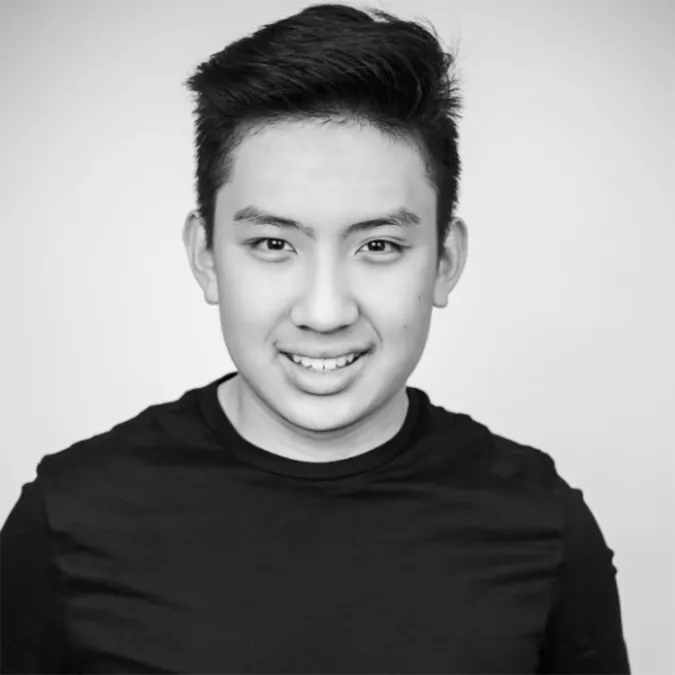
Kevin Charoensri is a Thai-American composer, pianist, conductor, and arts advocate from San Diego, CA. Described by The Washington Post as offering a "bristling musical response," and having appeared on CNN and NPR to speak on cultural advocacy, equity, and youth leadership, Kevin is a passionate public voice for representation and social justice in the arts; his work Rising Light was inducted into the Smithsonian National Museum of American History for its cultural impact. At fifteen, Kevin made his international composing and conducting debut at the Sydney Opera House, conducting his original work Return. His composition Rising Light, a musical response to post-COVID Asian hate, was programmed by "The President's Own" United States Marine Band, with works also heard in Carnegie Hall. An internationally active guest composer and conductor, Kevin has led ensembles across the United States, Thailand, and Australia, with residencies at UCLA, Cal State Fullerton, Texas Tech, and the Pacific Symphony Youth Ensembles. He has lectured at Mahidol and Kasetsart Universities in Thailand and at twenty-three will be among the youngest guest professors in Kasetsart's history. Kevin holds a B.M. from The University of Texas at Austin and is currently pursuing his M.M. at Michigan State University, studying with Dr. David Biedenbender.
Yida An
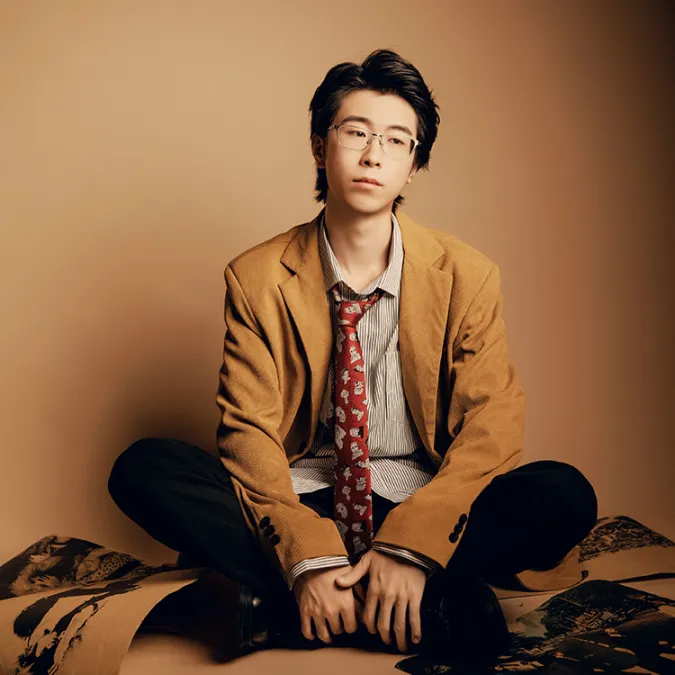
Yida An is a violinist currently pursuing the Artist Diploma at The University of Texas at Austin, where he studies with Brian Lewis. He previously earned his Master’s degree at the Bard College Conservatory of Music under Gil Shaham and Adele Anthony, and completed his Bachelor’s degree at the Central Conservatory of Music in Beijing under Haoming Xie. He is the winner of the Butler School of Music Concerto Competition (2025) and the UT Rising Stars Competition (2024). Yida has served as concertmaster or associate concertmaster with the Sarasota Music Festival Orchestra, the University of Texas Symphony Orchestra, and the Bard Conservatory Orchestra. As a soloist, he has appeared with the Austin Civic Orchestra, The Orchestra Now, and the Bard Conservatory Orchestra, with selected engagements including collaborations under Tan Dun at Lincoln Center and the Fisher Center, performances with Chai Liang at the Beijing Concert Hall, and a featured collaboration with Joan Tower at the Music Alive! concert. An active chamber musician, Yida has worked with distinguished artists including Robert Levin, Sandy Yamamoto, Wilhelm Magner, and members of the Miró and Amber Quartets.
Jinni Shen
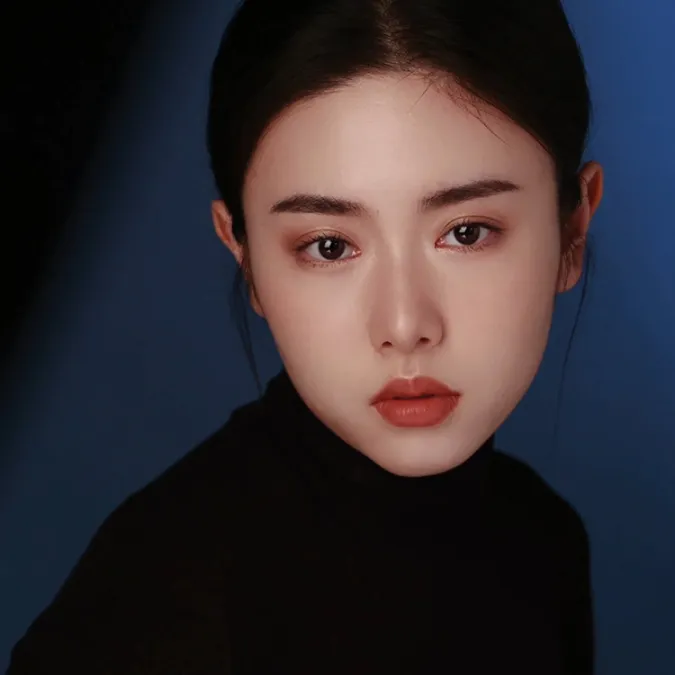
Dr. Jinni Shen, a soprano from Nanjing, China, began her musical journey at the age of five. She earned her Bachelor’s degree from China Conservatory of Music in 2018 before moving to New York City to complete her Master’s degree in Voice at the Mannes School of Music. During her graduate studies, she participated in the International Vocal Arts Institute, the Savannah Voice Festival, and served as a studio artist with Pittsburgh Festival Opera. In 2024, Dr. Shen earned her Doctor of Musical Arts degree from The University of Texas at Austin and began the Artist Diploma program at the Butler Opera Center the same year. From 2022 to 2025, she performed a wide range of principal roles with the Butler Opera Center, including Rosina in The Ghosts of Versailles, Lisa in The Queen of Spades, Musetta in La Bohème, Giulietta in Les Contes d’Hoffmann, “Ma” Zegner in Proving Up, and Micaëla in Carmen. She also appeared as Rosalinde in Die Fledermaus with FAVA Opera and completed an apprenticeship with the OPERA San Antonio Young Artist Program. Dr. Shen is a co-founder of The Rêverie Project, a local artist initiative program based in Austin, Texas. She was a finalist and earned the honorable mention in the 2025 NATS Artist Award Texoma Region and is a member of the Opera for Peace 2025 US Academy. Upcoming engagements include Giorgetta and Suor Angelica in Il trittico with Butler Opera Center.
Aaron Kurz
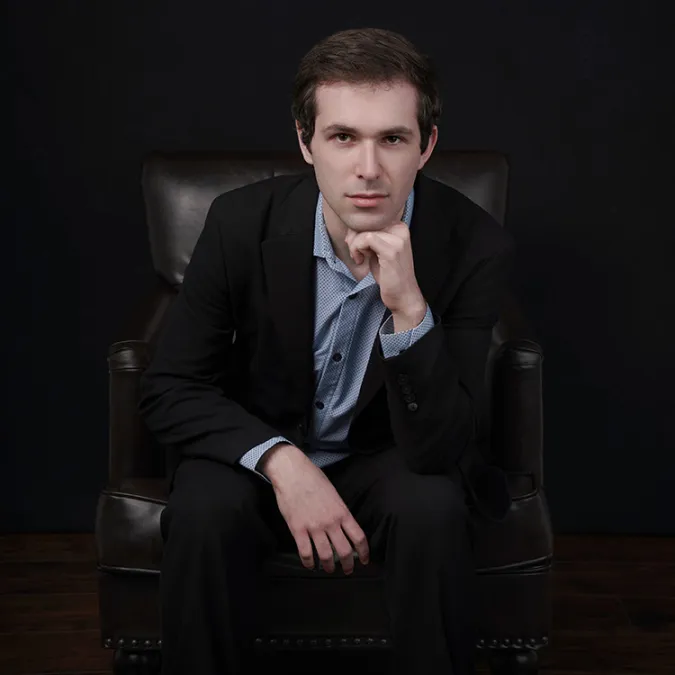
Engaging audiences with his charismatic and moving performances, American pianist Aaron Kurz enjoys a burgeoning career. Aaron has soloed with numerous orchestras and across three continents, in venues such as Carnegie Hall, Salle Cortot, and the Palace of Peace and Harmony in Kazakhstan. His performances have been lauded by the press, called both “nuanced musical journeys” (Belgium’s Le Soir) and “a lesson in pianism” (England’s Cambridge Independent). Most recently, Aaron just completed a tour of Asia, where he performed and taught at various venues across Indonesia and China. He is poised to return to the region for another tour in Autumn 2026. Aaron’s playing has also garnered recognition in competitions, winning top prizes in the New York, Los Angeles, Virginia Waring, and World Piano Teachers Association International Piano Competitions, among others. He has performed extensively across North America, Europe, and Asia, soloing with numerous orchestras, including the Fort Worth Symphony, City of Cambridge Symphony Orchestra, Shanxi Shuozilun Symphony (China), and Central Texas Philharmonic. Aaron is currently pursuing his Doctorate of Musical Arts at UT with Anton Nel, and he holds recent degrees from SFCM (studying with Jon Nakamatsu and Jeremy Denk), Yale (Boris Berman), and RCM (Norma Fisher and Ian Jones).
Matthew Pavon
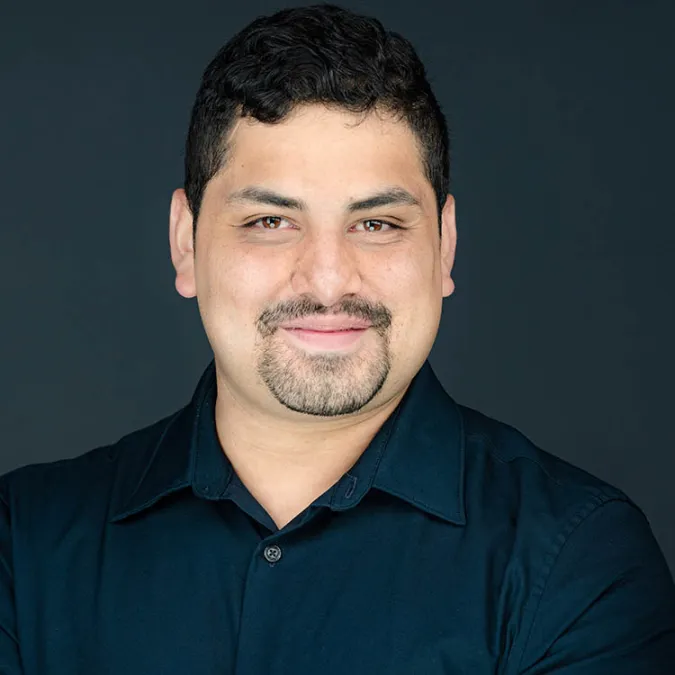
Matthew Pavon is a conductor and violist studying orchestral conducting under Farkhad Khudyev at The Butler School of Music. In his role as assistant instructor for university orchestras, Matthew is an active conductor and administrator for Symphony Orchestra. He also serves as Co-Director for University Orchestra. Matthew holds viola performance degrees from Evangel University (B.M. '19) and Missouri State University (M.M. '22). Guest conducting appearances have included concerts with the Austin Civic, Kansas City Civic, Missouri State University Symphony, Drury University, and Kansas City Youth Symphony, and Missouri Philharmonic Orchestras. As a violist, he was an active member of the Springfield Symphony Orchestra for seven years and a substitute violist for the Symphony of Northwest Arkansas. Matthew’s passion is connecting with people of all ages and backgrounds through music. He lives in Austin, TX, with his wife, Leianna, and their two mini-Australian Shepherds, Koda and Ellie.
Symphony Orchestra
Violin I
Yusong Zhao, concertmaster
Summer Bradshaw
Wells Gjerlow
Shijie Li
Zi Wang
Sui Shimokawa
Emma Thackeray
Jordan Bartel
Lamu Zhaxi
Dyer McLeod
Cade Carter
Violin II
Chloe Yofan, principal
Mei Liu
Misa Stanton
Evelyn Lee
Eric Wang
Jackie Shim
Kai Lindsey
Suhyun Lim
Ivan Arras
Mia Zajicek
Viola
Thomas Gougeon, principal
Nelle Joung
Kyle Adams
Cecilia Nguyen
Grace Dias
Cello
Javy Liu, principal
Katsuaki Arakawa
Aidan Bolding
Selina Xu
Christopher Tran
William Han
Nicole Parker
Kyra Hong
Yochen Zhong
Savva Wagner
Arturo Gonzalez
Zachary Houlton
Double Bass
Darrin Luong, principal
Will Penn
Andres Hernandez
Natalia Guerra
Aizza Guerrero
Eddie Otto
Mirabai Weatherford
Ema Deguchi
Lydia Chen
Piccolo
Diego Arias
Flute
Diego Arias3
Maggie Chvatal2, 4
Nichole Thompson1
Oboe
Sarah Bird1
Lademi Davies3, 4
Noah O’Brien2
English Horn
Noah O’Brien
Clarinet
Chase Cano2
Sarah Darragh3, 4
Kaitlyn Nguyen1
Bass Clarinet
Chase Cano
Bassoon
George Alazar3
Daniel Alvarez1
Isabella Perez2,4
Horn
Stephanie Chiang3,4
Owen Clark2
Andrew Clarkson1
Trumpet
Harmon Byerly3, 4
Enrique Lopez1, 2
Leland Rossi
Trombone
Jace Byrd1,3
Ross Ganske2,4
Bass Trombone
Jackson Quevedo
Tuba
Chancellor Joseph
Timpani
Ty Keller
Sean Simpson
Ashley Hsu
Percussion
Sean Simpson, principal
Ashley Hsu
Ty Keller
Aaryn Avila
Bella Scotti
Seth Underwood
Assistant Conductors
Chris Tran
Matthew Pavon
Principals
- Charoensri
- Wieniawski
- Puccini
- Prokofiev
Event Details
$5 – 15
All University of Texas at Austin students are allowed one free ticket as long as they are available. Student tickets must be picked up at the Box Office with valid student I.D. Seating is unassigned.
If you are a patron with specific seating needs, please email tickets@mail.music.utexas.edu and we will reserve ADA seating for you.