




Jerry F. Junkin, conductor
Doug Henderson, guest conductor
Gao Hong, pipa
This concert will last about 90 minutes without intermission.
Please silence your electronic devices.
Photography, video, or recording of any part of this performance is prohibited
Program
Ron Nelson
Savannah River Holiday Overture
Doug Henderson, conductor
John Gibson
Caim
Celtic prayer for the victims of the 2025 Texas Hill Country floods
Gao Hong
A Musical Journey, Concerto for Pipa world premiere
John Mackey
The isle is full of noises, Symphony No. 2 u.s. premiere
The enchanter’s plot
Suffer a sea change
Rough magic
About the Program
Ron Nelson
Savannah River Holiday Overture
Born December 14, 1929, Joliet, Ill
Died December 24, 2023, Scottsdale, Ariz.
Composed 1953
8 minutes
Savannah River Holiday was originally composed as an orchestral overture, and received its premiere over NBC Radio on 16 March 1953. After the success of his Rocky Point Holiday, Nelson transcribed the work for wind ensemble in 1973, where it has received most of its performances. Savannah River Holiday consists of two contrasting moods that take turns alternating throughout the composition, representing the power and serenity of the Savannah River. The Allegro Vivace theme begins and ends the work with a flourish, while the Adagio provides a lovely, somber, reflective melody. This is one of several works that Ron Nelson composed on a “holiday” theme, including Rocky Point Holiday, Aspen Jubilee, and Sonoran Desert Holiday.
The Savannah River forms most of the border between the states of South Carolina and Georgia, and is 350 miles long.
– Nikk Pilato
Used by permission.
John Gibson
Caim
Composed 2025
6 minutes
Early in the morning of July 4, 2025 the Texas Hill Country region was devastated by catastrophic flooding of the Guadalupe River and its watershed, centered in Kerr County. Tragically, 138 and possibly more people died, including 27 children and young counselors, most of whom were at summer camps, only there for a visit. Many of us celebrating Independence Day, distracted by celebrations, including concerts, cook-outs and local fireworks were unaware of the disaster unfolding until the reports from the area began to dominate the news that evening and for some time thereafter. Then, as it is with today’s world, other tragic news replaced the headlines of the tragedy and most people moved on to other concerns, unlike the families of the victims, especially those of the children who are still living that moment in their lives.
I wanted to express my personal and our collective sadness for the loss and the life-long effect it would have on so many families and communities by creating music that would hopefully provide some comfort. I also wanted to make that music accessible to audiences and suitable for performance by many groups, including school and community wind bands across Texas. Drawing upon my Scotch-Irish roots, I had been working on a simple tune, Celtic in nature which struck me as prayerful. I chose to use it as the basis for Caim, pronounced “key-em,” which is ancient Celtic for “prayer.” Caim is intended to be music to accompany your reflection and, perhaps prayer for peace for those who were lost, those who lost loved ones, and all the rest of us who will simply never comprehend the tragedy.
– John Gibson
Gao Hong
A Musical Journey, Concerto for Pipa
(‘Yue Xing’ 樂·⾏)
Born 1964 in Luoyang, Henan, China
World Premiere
12 minutes
"Yue Xing" (樂·⾏) in Chinese can be interpreted as Musical Journey or Happy Journey, as the character for “music” (樂, yue) also means “happiness.” Over the years, Gao Hong has collaborated with musicians from Japan, India, the Middle East, Europe, and the Americas—from jazz to blues, and classical to world music. This concerto unites all those global influences into one musical landscape, reflecting the joy, inspiration, and freedom Hong has discovered through cross-cultural collaboration.
A reflective pipa solo opens the work, evoking Hong’s early memories and the daunting uncertainties of life ahead. The shifting harmonies that follow mirror her youthful questions—wondering about the future, unsure where music would lead her. As the orchestra enters, it symbolizes the unfolding of her journey: unexpected joy, vibrant experiences, and a sense of renewal. Returning to her cultural roots through the Chinese pentatonic scale, Hong reflects on her deep connection to China—her homeland and foundation. “Although I left my family and country at a young age, that identity has always stayed with me.”
Part II recalls Hong’s move from China to Japan—her first time leaving home—and then to America, where she began collaborating with musicians from diverse traditions. The music draws upon Japanese, Indian, Arabic, and Western influences. In the middle section, Arabic scales emerge, leading into the cadenza, where Gao explores the shared Silk Road roots of the pipa and barbat.
Part III is Hong’s joyful tribute to music itself and the life it has given her—a life filled with beauty, connection, purpose, and meaning. The concerto culminates in a jubilant celebration of unity, honoring how music transcends language, background, and geography.
“Yue Xing is more than just a composition—it is my musical autobiography. This piece is like a sequel to Flying Dragon, which represents my youth—my struggles, my strength, and my will to survive. Musical Journey continues that story, reflecting where I am now: a life enriched, shaped, and in many ways, saved by music.”
Yue Xing was originally commissioned by the Minnesota Orchestra in 2025 for pipa and Western orchestra. The pipa and wind band version was commissioned in 2026 by The University of Texas at Austin Wind Ensemble and Maestro Jerry Junkin, marking the first-ever pipa concerto for wind band—a groundbreaking work of its kind.
– Provided by Gao Hong
John Mackey
The isle is full of noises, Symphony No. 2
Born October 1, 1973, New Philadelphia, Ohio
Composed 2025
Premiered January 24, 2026, Blasorchester Stadtmusik Luzern,Switzerland, Hervé Grélat, conductor
26 minutes
Although John Mackey has written for orchestras, theater, and extensively for dance, the majority of his work for the past decade has been for wind ensembles. In 2014, he became the youngest composer ever inducted into the American Bandmasters Association. He holds a Master of Music degree from The Juilliard School and a Bachelor of Fine Arts Degree from the Cleveland Institute of Music, where he studied with John Corigliano and Donald Erb, respectively. His newest work is his Symphony No. 2: Isle Is Full of Noises, which was commissioned by the Blasorchester Stadtmusik Luzern in Switzerland and is given its American premiere here with The University of Texas at Austin Wind Ensemble. The piece is inspired by Shakespeare’s The Tempest. A.E. Jaques writes of this three-movement work:
A shoddy and distracted duke, Prospero should not have been altogether shocked when his throne was usurped by one more interested in ruling. But as it happens Prospero was enraged—and has become only moreso in the dozen years since. Deposed, deported, deprived of his wealth, power, and home, he has survived on a diet of vengeful scheming. As those designs spiral into the tempest for which Shakespeare’s play is named, we begin.
i. The enchanter’s plot
From the island of his exile, Prospero summons all his magic. Decades of single minded study have yielded enormous and devastating power: he weaves weather, loss, betrayal, and the tide into a brutal braid, a storm that shipwrecks the men who conspired in his downfall.ii. Suffer a sea change
The atmosphere is calmed, but interior tempests surge. With the instruments of his exile at his mercy at last, Prospero toys with his captives. He channels each one’s worst fears and fatal weaknesses into torrents of torment and temptation. The sorcerer’s manipulations transform them all, not least Prospero himself, as vengeance scars the avenger.iii. Rough magic
His return secured and his rule regained, Prospero relinquishes his magic in a final flourish—only to find that the fruits of his plot are not enough. A hunger remains: He pleads for, then demands, our adoration as well. As the depth of this need is revealed, his desperation grows. In the end, the things we feed may swallow us.
– Mark Bilyeu
About the Artists
Gao Hong
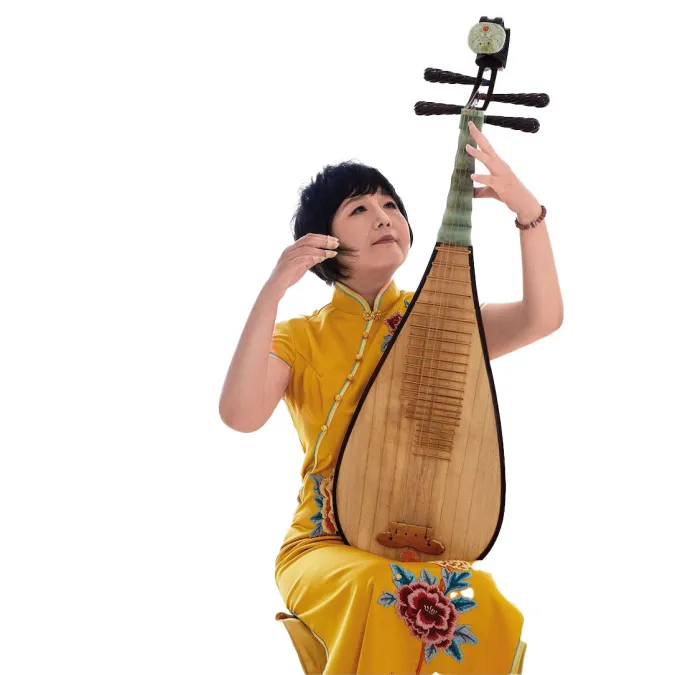
Gao Hong graduated from Beijing’s elite Central Conservatory of Music. Since coming to the United States, she has performed at the Lincoln Center Festival, Carnegie Hall, the San Francisco Jazz Festival, Smithsonian, and at festivals in Paris, Caen, Milan, and Perth. She has presented concertos for the pipa with the Minnesota Orchestra, Saint Paul Chamber Orchestra, the Heidelberg Philharmonic, the Buenos Aires Philharmonic, the China National Traditional Orchestra, Guangdong National Traditional Orchestra, Louisville Orchestra, Hawaii Symphony, and the Women’s Philharmonic (San Francisco), among others. In 2017 she became the first Chinese musician to play the National Anthem at an NBA basketball game when she did so on pipa for the Minnesota Timberwolves in Minneapolis. Gao Hong has received numerous top awards and honors in China and U.S. In 2005 Gao Hong became the first traditional musician to be awarded the prestigious Bush Artist Fellowship, and in 2019 she became the only musician in any genre to win five McKnight Artist Fellowships for Performing Musicians. As a 2018 Sally Award winner, Gao Hong was honored at the Ordway Center for her commitment to the arts. She is the author of the first pipa method book written in English that was published and distributed worldwide by Hal Leonard, the world’s largest music print publisher.
Douglas Henderson

Douglas Henderson serves as associate director of bands at The University of Texas at Austin, where his responsibilities include conducting the Wind Symphony, teaching advanced undergraduate and graduate conducting, and teaching band literature. Prior to joining the UT faculty, Dr. Henderson was an associate professor, associate director of bands, and director of athletic bands at Oklahoma State University. Dr. Henderson is active as a guest conductor, adjudicator, and clinician throughout the United States, and he has guest conducted in Austria and Japan. He is a frequent guest conductor of the World Youth Wind Orchestra Project (WYWOP), in Schladming, Austria. Dr. Henderson received his bachelor of music degree in music studies from The University of Texas at Austin, his master of music degree in wind conducting from Michigan State University, and his doctor of musical arts degree in wind conducting from The University of Texas at Austin. From 2003-2006, he was the associate director of bands at J.J. Pearce High School in Richardson, Texas.
Jerry Junkin
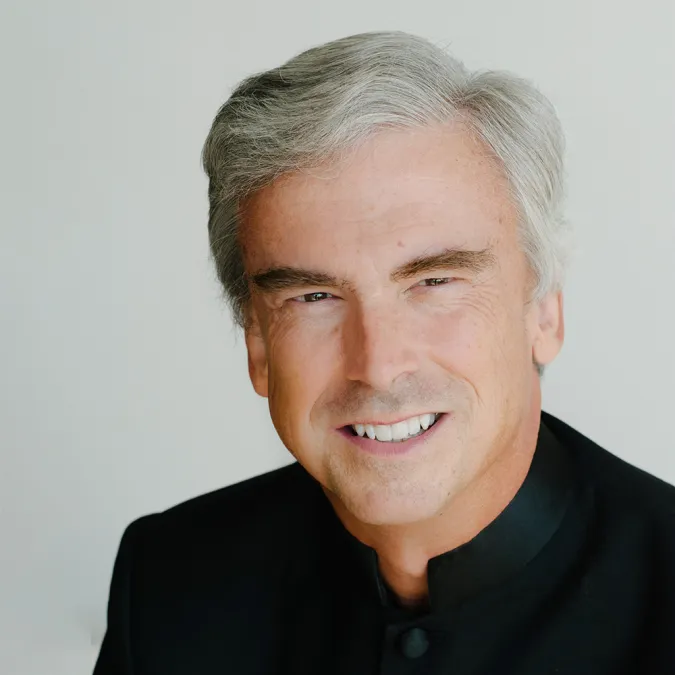
Serving since 1988 on the faculty of The University of Texas at Austin, where he holds the Vincent R. and Jane D. DiNino Chair for the Director of Bands, in addition to serving as a University Distinguished Teaching Professor, Jerry Junkin is recognized as one of the world’s most highly regarded wind conductors. Previously, he served on the faculties of both the University of Michigan and the University of South Florida. In addition to his responsibilities as professor of music and conductor of the Texas Wind Ensemble, he serves as head of the conducting division and teaches courses in conducting and wind band literature. He has served as music director and conductor of the Hong Kong Wind Philharmonia since 2003, and as artistic director and conductor of the Dallas Winds since 1993. He also serves as visiting professor at the Senzoku Gakuen College of Music Wind Ensemble in Tokyo, Japan. Mr. Junkin has conducted All-State bands and festivals in forty-eight states and five continents, and is a Yamaha master educator.
Wind Ensemble
Flute
Gianna Baker
Riley Bender
Kyndahl Britton
Maggie Chvatal
David Ma
Oboe
Genevieve Britten
Lademi Davies
Ryan Hirokawa
Rachel Marquez
Clarinet
Andrew Battaglia
Chase Cano
Connor Gibson
Katelyn Nguyen
Maja Pechanach
Matthew Rockwell
Alayna Rosas
Alexander Vaquerizo
Alex Vo
Bassoon
Thomas Klink
Isabella Perez
Rishabh Sajjan
Tucker Van Gundy
Saxophone
Ethan Ashley
Ben Kaplan
Matthew Meyers
Levi Peña
Jason Shimer
Andrew Stine
Trumpet
Samuel Acosta
Enrique Lopez
Mehdi Mercier
Will Palladino
Leland Rossi
Aiden Spicer
Americo Zapata
Horn
Chia-Ling Stephanie Chiang
Owen Clark
Margaret Euscher
Lucas Hamilton
Sam Stephenson
Tsai-Chen Wu
Trombone
Ross Ganske
Carlos Garcia
Eric Garcia
Jackson Quevedo
Landon Reimer
Josh Stout
Euphonium
Miguel Gonzales
Henry Otts
Tuba
Ethyn Evans
Tyler Lane
Percussion
Marcus Alvarado
Aaryn Avila
Matt Garcia
Randy Griner
Marcos Jurado
Chia Yu (Erika) Lin
Bella Scotti
Colton Townsend
Seth Underwood
Harp
Kirsten Karamihan
Carrie Levenhagen
Double Bass
Shiying Feng
Edward Otto
Keyboard
Shao-Chu Pan
Upcoming Events
Add Upcoming Events Here
Event Details
$5 – 15
All University of Texas at Austin students are allowed one free ticket as long as they are available. Student tickets must be picked up at the Box Office with valid student I.D. Seating is unassigned.
If you are a patron with specific seating needs, please email tickets@mail.music.utexas.edu and we will reserve ADA seating for you.