




Daniel Ching, violin
William Fedkenheuer, violin
John Largess, viola
Joshua Gindele, cello
Stephen Page, saxophone
Whilhelm Magner, viola
This concert will last about 90 minutes with one intermission.
Please silence your electronic devices.
Photography, video, or recording of any part of this performance is prohibited
Program
Hildegard von Bingen
O virtus Sapientie
Caroline Shaw
Other Song
And So
Stephen Page, saxophone
W.A. Mozart
Quintet for Strings in G Minor, K. 516
Allegro
Menuetto: Allegretto
Adagio ma non troppo
Adagio—Allegro
Wilhelm Magner, viola
intermission
Franz Schubert
String Quartet in G Major, D. 887
Allegro molto moderato
Andante un poco moto
Scherzo: Allegro vivace—Trio: Allegretto
Allegro assai
About the Program
Program notes by Mark Bilyeu
Hildegard von Bingen
O virtus Sapientie
Born 1098, Bermersheim vor der Höhe, Germany
Died September 17, 1179, Bingen, Germany
3 minutes
Hildegard of Bingen, commonly known as Saint Hildegard, the Sibyl of the Rhine, or simply: Hildegard, was a German Benedictine abbess and polymath who was active as a composer, writer, philosopher, mystic, visionary, and as a medical writer and practitioner. She corresponded with the Pope, and offered spiritual guidance to kings and queens. As a composer, she primarily wrote chants for her and her fellow nuns to sing, setting pre-existing liturgical texts, but often her own writings. In her lifetime, these works were never heard (or meant to be heard!) beyond the convent for which they were written, and it wasn’t until 1979 that she was first mentioned in a reference book. Now, her music and her writings are widely performed and set to music. “O virtus Sapientia” is an ode to Divine Wisdom, one of Hildegard’s most constant visionary companions.
Caroline Shaw
Other Song
Born August 1, 1982
Composed 2021
4 minutes
And So
Born August 1, 1982
Composed 2022
5 minutes
Caroline Shaw is a New York–based vocalist, violinist, composer, and producer who performs in solo and collaborative projects. She was the youngest recipient of the Pulitzer Prize for Music in 2013 for “Partita for 8 Voices,” written for the Grammy–winning Roomful of Teeth, of which she is a member.
Her collaboration with Sō Percussion’s "Other Song," is a track from their 2021 album, Let the Soil Play Its Simple Part. “I had these bits of ‘Other Song,’ writes Shaw, “so I made this abstract reduction, with a verse-chorus structure and a wild build in the middle. The prompt for all of us was: what would we make in the room together if there were no single person in charge, the way a band writes in the studio?”
“And So” is from Shaw’s 2022 collaboration with Attacca Quartet on their album Evergreen, which includes two songs for voice and string quartet, which Shaw said was “about thinking about what the world looks like after we’re gone.”
Wolfgang Amadeus Mozart
String Quintet No. 4 in G Minor, K. 516
Born January 27, 1756 in Salzburg, Austria
Died December 5, 1791 in Vienna, Austria
Composed May, 1787
30 minutes
On April 2, 1788, Mozart put out an ad in the Wiener Zeitung:
Three new quintets for 2 violins, 2 violas and cello which, beautifully and correctly written, I offer on subscription. The price is 4 ducats or 18 gulden in Viennese currency. The subscriptions may be ordered daily from Herr Puchberg at Sallinz’ business establishment in the High Market, where from the 1st of July the works will be available. I request out-of-town music lovers to pay postage for delivery.
Kapellmeister Mozart, in the service of his Majesty
The first two movements of this quintet are dark and moody giving way to the third movement’s adagio. This movement, which instructs the string players to mute their instruments, deeply moved Tchaikovsky when he first heard it: “No one else has ever known how to interpret so beautifully and exquisitely in music the feeling of resignation and inconsolable sorrow...” he wrote, “I had to hide in the farthest corner of the concert-room so that others would not see how much this music affected me.” The final movement opens with another adagio before launching into the work’s final boisterous rondo.
The public never showed much interest in these works for five musicians that Mozart advertised (he had it reprinted twice in the following week), and he was forced to delay the publication for over a year. It’s difficult to identify what drew Mozart to the string quintet, especially considering the public’s apathy towards them, yet his string quintets are acknowledged as some of the most heartfelt music he wrote. As for Haydn, Mozart’s friend and predecessor, when asked why he had never written a string quintet like Mozart, he replied, “Because no one asked me.”
Franz Schubert
String Quartet No 15 in G Major, D. 887
Born January 31, 1797, Vienna, Austria
Died November 19, 1828, Vienna, Austria
Composed June 20-30, 1826.
Premiered December 8, 1850, Hellmersberger Quartet
50 minutes
"I have created very few new songs,” wrote Franz Schubert in an 1824 letter to his friend Leopold Kupelwieser, “however I have attempted various instrumental pieces, for I did compose quartets for violins, viola and violoncello and one octet and I will write another quartet; in all, I hope in this way to pave the path to a great symphony." The quartets he had just finished were his quartet in A minor (D804), and the famous “Death and the Maiden” quartet, the upcoming “Sinfonie” quartet he was envisioning was also to be his last: his String Quartet in G Major, (D. 887).
The first moments of the work set the tone for the next four movements: be prepared to feel unsettled. A declamatory G-major chord quickly transforms to minor. Follow that with another major/minor juxtaposition, and we are left just a bit uncomfortable trying to guess what mood Schubert is trying to set, and although Schubert maintains a very familiar sonata structure throughout the work, the tonal unease he creates (along with all those tremolos!) undermines any sense of stability. The second movement offers a lovely cello melody until it is once again interrupted by an angular recitative-like interjection (with yet more tremolos). The third movement opens with even more nervy energy before Schubert finally offers us one of the most German things of all: a Ländler—the simplicity of this lovely cousin to the waltz is made exponentially more striking by all the complexity which comes before and after it. The closing movement, reminiscent of the Italian operas by Rossini, again plays with the alternation of minor and major shadings in this raucous and delightful finale which might end in a whisper—you’ll have to stick around to find out.
The full fifty-minute work took him just ten days to complete. Yet, he chose to include only the first movement in the only all-Schubert concert held during his lifetime, in the spring of 1828. The full work would not be heard publicly until December 8, 1850, twenty-five years after his death.
About the Artists
Miró Quartet
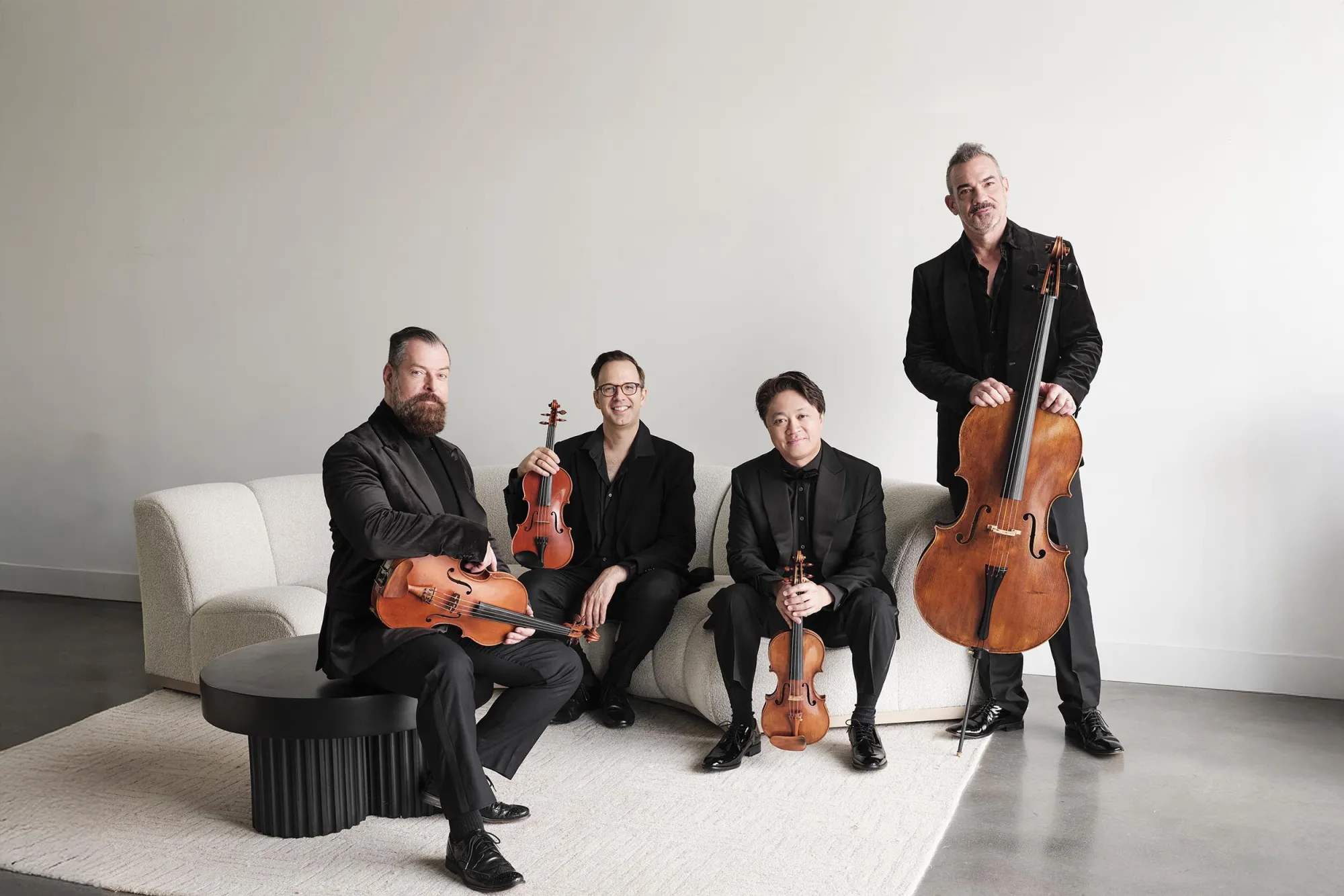
The Miró Quartet is one of America’s most celebrated and dedicated string quartets, having been labeled by The New Yorker as “furiously committed” and noted by the Cleveland Plain Dealer for its “exceptional tonal focus and interpretive intensity.” For over twenty-five years the Quartet has performed throughout the world on the most prestigious concert stages, earning accolades from critics and audiences alike. Based in Austin, TX, and thriving on the area’s storied music scene, the Miró takes pride in finding new ways to communicate with audiences of all backgrounds while cultivating the longstanding tradition of chamber music.
In their 2023-24 season, the Miró Quartet embarks on a new performance and recording project with pianist Lara Downes. Here on Earth features musical depictions of planet earth, its evolution, and the lives of its inhabitants, with works spanning a century of cultural shift that begins with Darius Milhaud’s La Création du Monde, performed in a new arrangement for piano and string quartet. Upcoming performances include the premiere of a new version of Kevin Puts’ Credo with the Naples Philharmonic, as well as performances for the Chamber Music Society of Lincoln Center, the Mondavi Center for the Performing Arts, the Saratoga Perfoming Arts Center, and Premiere Performances in Hong Kong.
Miró Quartet took its name and its inspiration from the Spanish artist Joan Miró, whose Surrealist works — with subject matter drawn from the realm of memory, dreams, and imaginative fantasy — are some of the most groundbreaking, influential, and admired of the 20th century.
Stephen Page
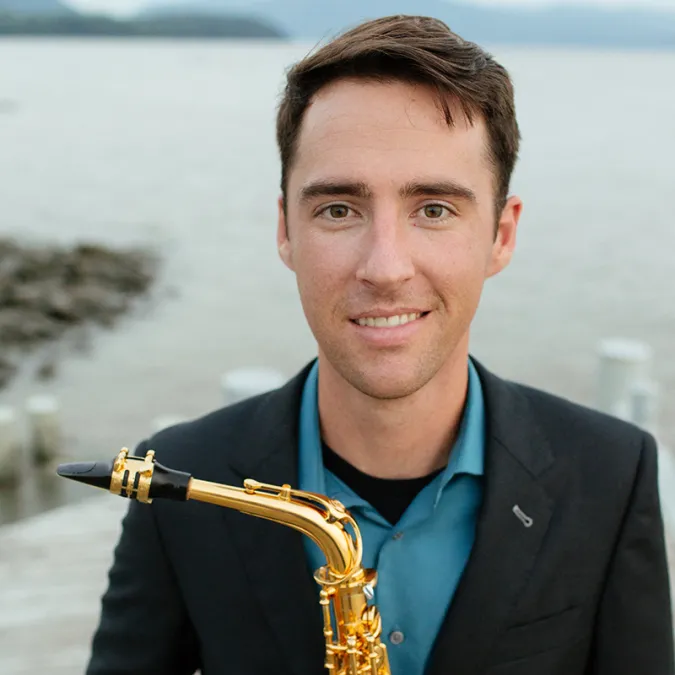
Described by noted American composer Libby Larsen as “fearless on stage,” saxophonist Stephen Page has garnered international prominence as one of today’s leading saxophonists. Dr. Page has concertized across five continents and released more than twenty recordings as a soloist and chamber musician which can be heard on the Enharmonic, Parma, Mark Custom, Crystal Music, Teal Creek, and AUR Labels. Well known for his interpretations of new and emerging repertoire for the instrument, Stephen has also gained acclaim for his innovative arrangements and performances of the violin repertoire, including works by Strauss, Grieg, Franck, Prokofiev, and Bach. He continues to further the advancement of the saxophone repertoire through the commissioning of new works from composers such as Viet Cuong, JoAnne Harris, Ida Gotkovsky, David Lang, Alexandra Gardner, Gala Flagello, David Maslanka, Marc Mellits, and Martin Bresnick. He has enjoyed significant collaboration as a Musicians Advisory Board member with D’Addario, serving and has served as Yamaha Performing Artist and Clinician for nearly twenty years. Stephen Page currently serves as Associate Professor of Saxophone and Director of Undergraduate Studies at the Butler School of Music within The University of Texas at Austin.
Wilhelm Manger
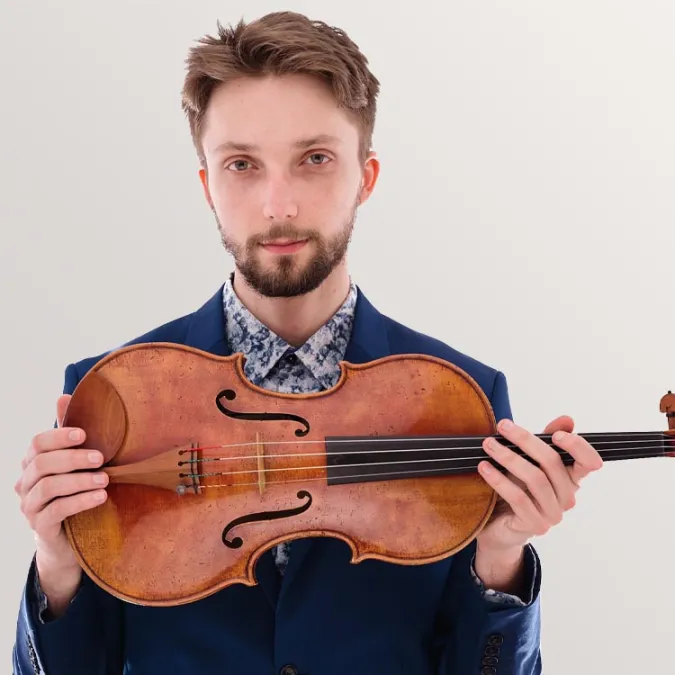
The first violist in 111 years of the competition to be awarded the Prix d'Europe in 2022, Wilhelm's solo engagements in 2023-2024 include recitals and chamber music concerts in Canada, the United States and Poland. Wilhelm is interested in expanding the viola repertoire and has transcribed many works by composers such as Bach, Lutoslawski, Paganini and Waxman for the viola. In addition to performing, he has given masterclasses in the USA and Canada. He holds a master's degree in viola performance from Yale University in the class of professor Ettore Causa. Previously, he studied with Professor André Roy and Natalia Kononova. He was named to CBC Music's "30 under 30" list in 2022. Wilhelm has appeared in many summer festivals, including Yellowbarn, Gstaad Menuhin Festival, Kneisel Hall, the Young Artists Program of the National Arts Center, and the Orford Music Academy. In his spare time, Wilhelm enjoys playing chess and listening to music. Wilhelm is a recipient of the Sylva Gelber Foundation award. He plays a Ryan Soltis, Nelson, 2023 viola and an Ouchard bow generously loaned by CANIMEX INC. of Drummondville (Quebec), Canada.
Upcoming Events
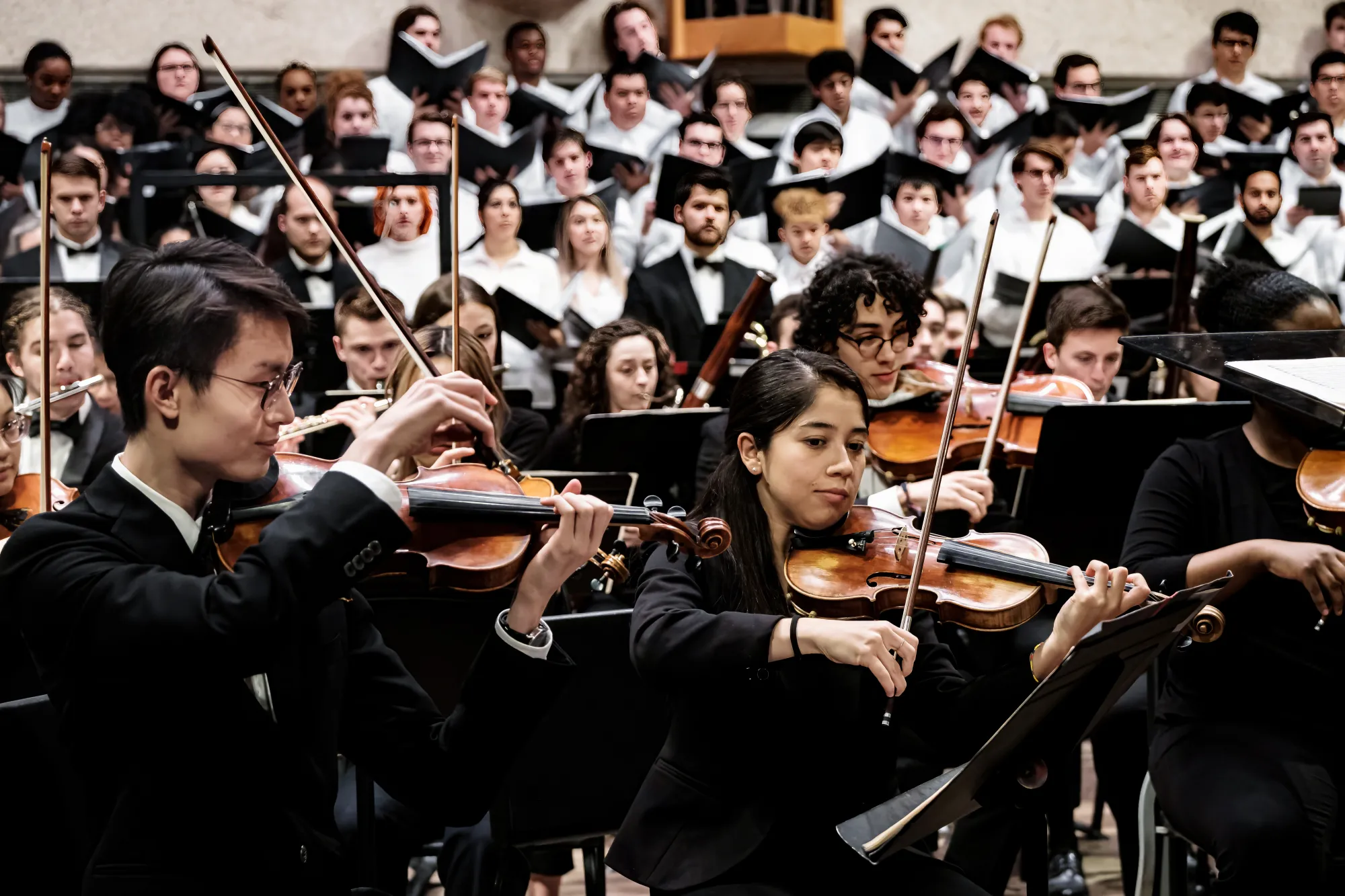
Mahler Symphony No. 2
Resurrection
Symphony Orchestra & Combined Choirs
Leah Crocetto, soprano
Sophio Dzidziguri, mezzo soprano
One of the most beloved symphonies in the canon, Mahler's "Resurrection" symphony boasts a large orchestra, mezzo and soprano soloists, and similarly to Beethoven's 9th Symphony, a large choir in the final movement. For this performance, the Butler School's Concert Chorale and University Chorus ensembles will join forces; they will be joined by Butler School alumni singers and community choral singers from around Austin.
Tuesday, March 31, 8:00 p.m.
Long Center for the Performing Arts
Event Details
$10 – 20
All University of Texas at Austin students are allowed one free ticket as long as they are available. Student tickets must be picked up at the Box Office with valid student I.D. Seating is unassigned.
If you are a patron with specific seating needs, please email tickets@mail.music.utexas.edu and we will reserve ADA seating for you.