



August 28, 2026

Bill Lewis performs in Blimunda at the La Scala opera house in Milan
William “Bill” Lewis, the acclaimed tenor, longtime professor of voice at The University of Texas at Austin’s Butler School of Music and former holder of the Frank C. Erwin Jr. Centennial Professorship in Opera, died last week. He was 94.
For more than three decades, Lewis stood on the stage of the Metropolitan Opera, appearing in 234 performances and building an international career that took him from Fort Worth to New York, San Francisco, Salzburg and Milan.
But Lewis’ legacy cannot be measured simply by the number of performances he gave or the stages on which he appeared. His was a life that stretched well beyond the opera house, a life that included baseball, writing, ranching and, eventually, teaching generations of young singers.
When Lewis retired from the Metropolitan Opera and came to Austin, he embraced not only the Butler School of Music but also the Texas way of life. Living on his ranch in Elgin, Texas, he would coach students while chickens, dogs, cats, and horses wandered nearby.
For the singers who came to his studio, the contrast was striking. Their teacher had performed alongside some of the greatest opera singers of the 20th century, yet he was equally at home discussing music with a student on his ranch, surrounded by animals and the Texas countryside.
Former student Maggie Chen remembered the stories Lewis would tell about the extraordinary musicians he had encountered throughout his career.
“His priceless stories about Arturo Toscanini, James Levine, Plácido Domingo, Leontyne Price and so many others gave me a glimpse into a musical world that I could never have learned from books alone.”
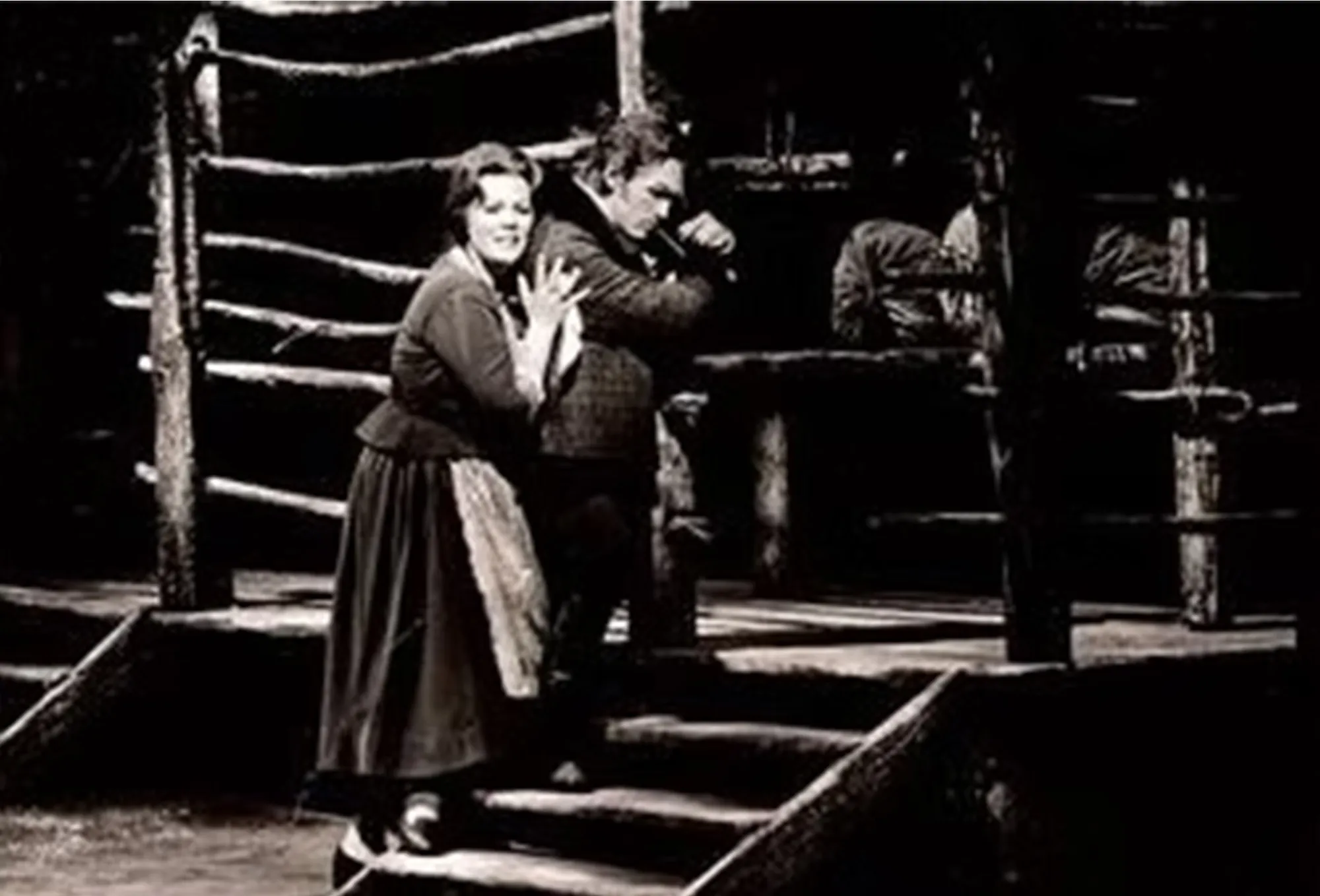
Bill Lewis and Teresa Kubiak perform in Jenůfa at the Metropolitan Opera
Those stories offered students something that could not be found in a textbook: a direct connection to the history of opera through someone who had lived it.
Lewis’ unconventional life as an opera star began with an unconventional path into music.
He studied at the University of Colorado, Texas Christian University and New York University, initially pursuing careers as a writer and baseball player. Only later did he decide to devote himself to opera.
He began his vocal training in Fort Worth with Karl Kritz and Arthur Faguy Coté before continuing his studies in New York with Susan Seton and Hulda and Luigi Rossini. In the summer of 1951, he attended the Music Academy of the West.
Two years later, Lewis made his professional opera debut with Fort Worth Opera as Rinuccio in Puccini’s Gianni Schicchi.
His rise was swift. In 1955, he won the Metropolitan Opera’s Audition of the Air competition, the predecessor to the company’s National Council Auditions.
On March 1, 1958, he made his Metropolitan Opera debut as Narraboth in Richard Strauss’ Salome.
He would return to the Met stage for the next 35 years, ultimately appearing in 234 performances.
Although Lewis sang an extraordinarily broad operatic repertoire, ranging from Mozart to Wagner, he became particularly associated with the music of the 20th century.
At the Metropolitan Opera, he appeared in works by composers including Alban Berg, Richard Strauss, Leoš Janáček, Arnold Schoenberg and Benjamin Britten. His roles included Andres and the Drum Major in Berg’s Wozzeck, Aegisth in Strauss’ Elektra, Steva in Janáček’s Jenůfa, Alwa in Berg’s Lulu, Oedipus in Stravinsky’s Oedipus Rex and Red Whiskers in Britten’s Billy Budd.
His work at San Francisco Opera similarly reflected his commitment to modern repertoire. He sang Steva in Jenůfa, Albert Gregor in Janáček’s The Makropulos Affair, Boris in Káťa Kabanová, Sergei in Shostakovich’s Lady Macbeth of Mtsensk and Frank Sargeant in Andrew Imbrie’s Angle of Repose.
Lewis was not simply an interpreter of contemporary music. He was also a creator of new roles.
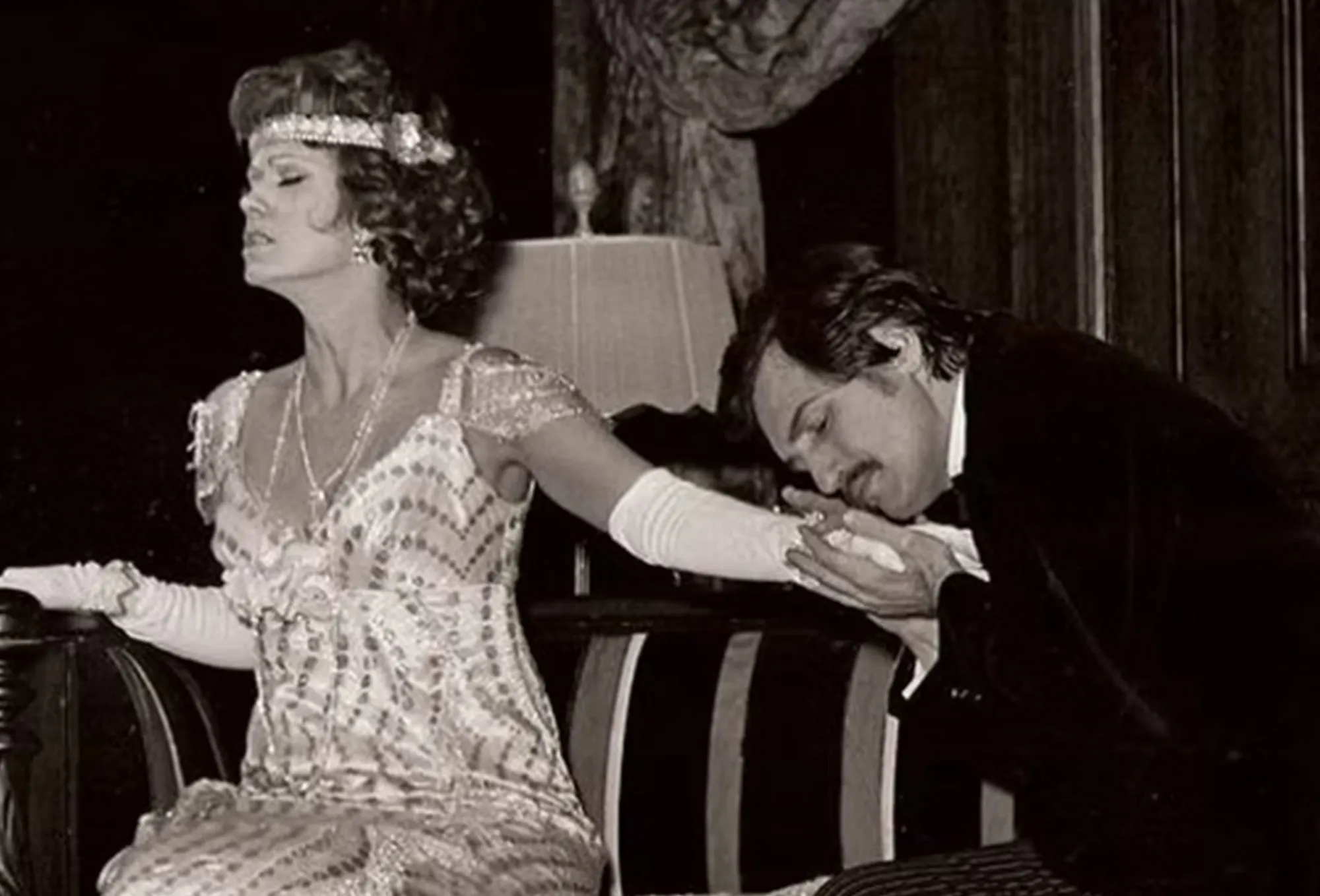
Bill Lewis and Carole Farley perform Alban Berg’s Lulu at the Metropolitan Opera.
In 1959, he created the role of Bill in Samuel Barber’s A Hand of Bridge at the Festival dei Due Mondi in Spoleto, Italy. In 1976, he originated the role of Frank Sargeant in Imbrie’s Angle of Repose at San Francisco Opera. More than a decade later, he created the title role in Flavio Testi’s Riccardo III at La Scala in Milan.
His commitment to rarely performed repertoire continued late into his career. In January 2000, at Lincoln Center, he sang Pollux in a concert performance of Richard Strauss’ Die Liebe der Danae.
Lewis’ international career brought him to some of the world’s most important opera houses and festivals.
In 1975, he made his San Francisco Opera debut in Wagner’s The Flying Dutchman, singing both Steuermann and Erik. He would subsequently appear in 16 productions with the company.
In 1981, he made his debut at the Salzburg Festival in the title role of Offenbach’s The Tales of Hoffmann. He returned to Salzburg for the following four years, appearing in roles including Arbace in Mozart’s Idomeneo and the First Geharnischter in The Magic Flute.
In 1990, he appeared at Milan’s Teatro Lirico in the world premiere of Azio Corghi’s Blimunda.
His performances also survive through recordings and video. Lewis can be seen in the Metropolitan Opera’s 1984 production of Zandonai’s Francesca da Rimini, alongside Renata Scotto, Plácido Domingo and Cornell MacNeil. His recordings include works by Samuel Barber, Hector Berlioz, Leoš Janáček, Richard Strauss and Virgil Thomson.
But the significance of Lewis’ career was not simply that he performed with some of the greatest artists in opera. It was that he eventually took everything he had learned from those experiences and passed it on.
Eventually, his career as a performer gave way to another calling: developing the next generation of singers. At the University of Texas at Austin's Butler School of Music, Lewis held the Frank C. Erwin Jr. Centennial Professorship in Opera and served as director of the Studio Ensemble of the Butler Opera Center.
For Butler students, Lewis offered something few teachers could: the perspective of an artist who had spent decades working at the highest levels of the profession. For Cameron Schutza, that experience translated into something deeply personal. “He believed in me and my voice early on and gave me some huge opportunities, and I will forever be grateful to him for his guidance and support.”
It was that combination of experience and belief in his students that became central to Lewis’ teaching. Butler School alumnus Rafael Davila said, “His teachings have stayed with me all these years and continue to live through every performance.”
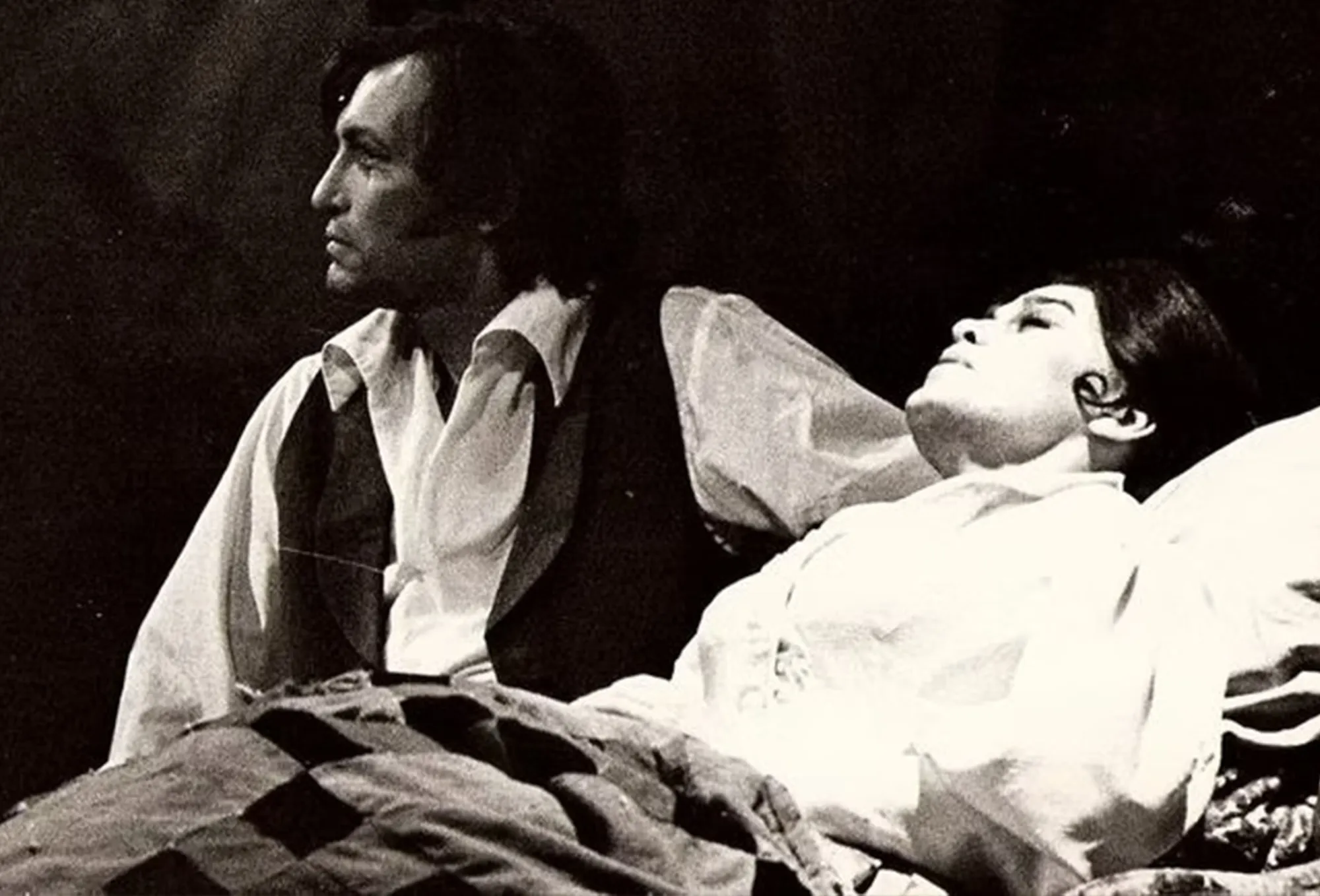
Bill Lewis and Joanna Bruno perform in La Bohème with the Santa Fe Opera.
That is perhaps the clearest measure of Lewis’ legacy. His career can be counted in performances, productions, premieres and recordings. His teaching legacy is harder to quantify.
After decades of performing at the Metropolitan Opera and traveling the world, he settled into life in the Austin area, bringing together the worlds that had shaped him. At his ranch in Elgin, opera students could find themselves receiving a voice lesson while horses grazed nearby and chickens, dogs and cats moved about the property. The setting was a long way from the Metropolitan Opera.But perhaps the distance was less significant than it appeared.
Lewis had always followed an unconventional path. He began as a writer and athlete before becoming an opera singer and superstar. He built a career performing some of the most demanding works in the repertoire. He became a champion of new and rarely performed music. And, eventually, he became a teacher who helped young singers discover what they might become.
For Aurora Ann Sein Perry, the impact of that belief was profound. “A legend has gone from us. He was the first professor who believed in me and my voice.” He gave his students the perspective of someone who had spent a lifetime inside the world they hoped to enter. And, for some, he gave them something even more fundamental: the belief that they had a voice worth hearing. As Davila put it, “His teachings have stayed with me all these years and continue to live through every performance.”