



June 8, 2026

2026 Piano Technicians Workshop
On Saturday, May 30, 2026, a group of professionals who usually work far from the spotlight took center stage. Most concertgoers never see them, yet without their expertise much of the music audiences enjoy would not be possible. These are piano technicians, the craftsmen and engineers who dedicate their careers to ensuring that pianists can perform at their very best.
Technicians traveled from across the country to attend a workshop focused on advanced rebuilding techniques and best practices. The event featured presentations from some of the most respected names in the field, including Ken Eschete and Dale Erwin, who shared insights from their work rebuilding piano soundboards.
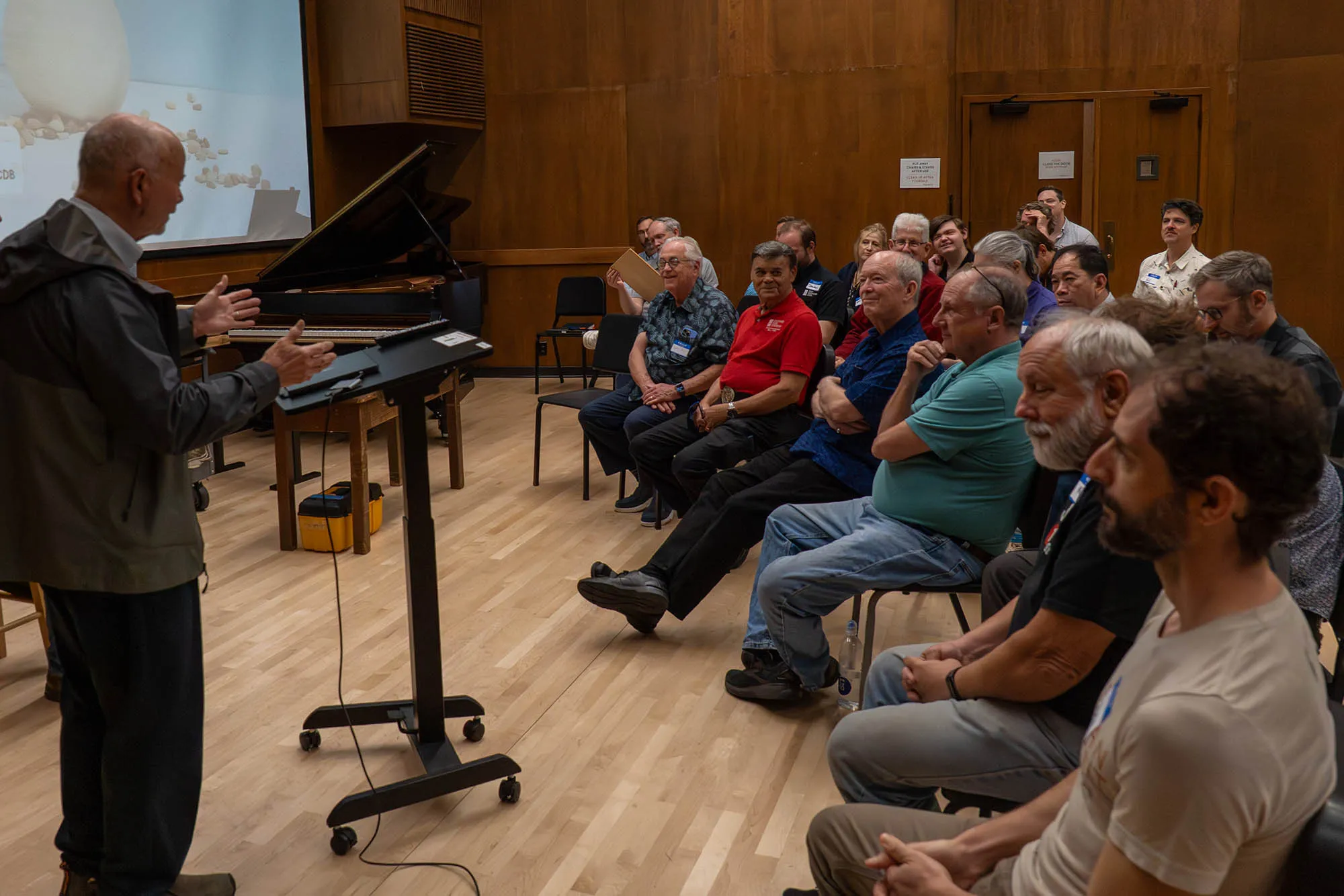
Ken Eschete talks about hammers and how they relate to drumsticks
One of the topics that drew particular interest was the mystery of the “dead note”, a piano note (almost always a high note) that lacks the tone and resonance of the notes around it. Eschete and Erwin explained that replacing hammers or strings often fails to solve the problem. In many cases, the true culprit is the soundboard itself. Their specialty is diagnosing and correcting these issues, a process that often involves installing several new ribs beneath the soundboard. The repair is extraordinarily labor-intensive, requiring both precision craftsmanship and a deep understanding of acoustics.
The workshop then turned to Daniel R. Moore, who joined the audience via Zoom for a presentation and question-and-answer session. Moore discussed the sophisticated Excel-based mathematical tools he has developed, a resource many technicians regard as something of a “holy grail” in piano rebuilding. His spreadsheets allow rebuilders to accurately replicate the original mass and stiffness of piano ribs, helping preserve the instrument’s intended sound. Moore walked attendees through the formulas and engineering principles behind the calculations, noting that piano technicians often rely on the same mathematical concepts used by engineers designing bridges and other large structures.
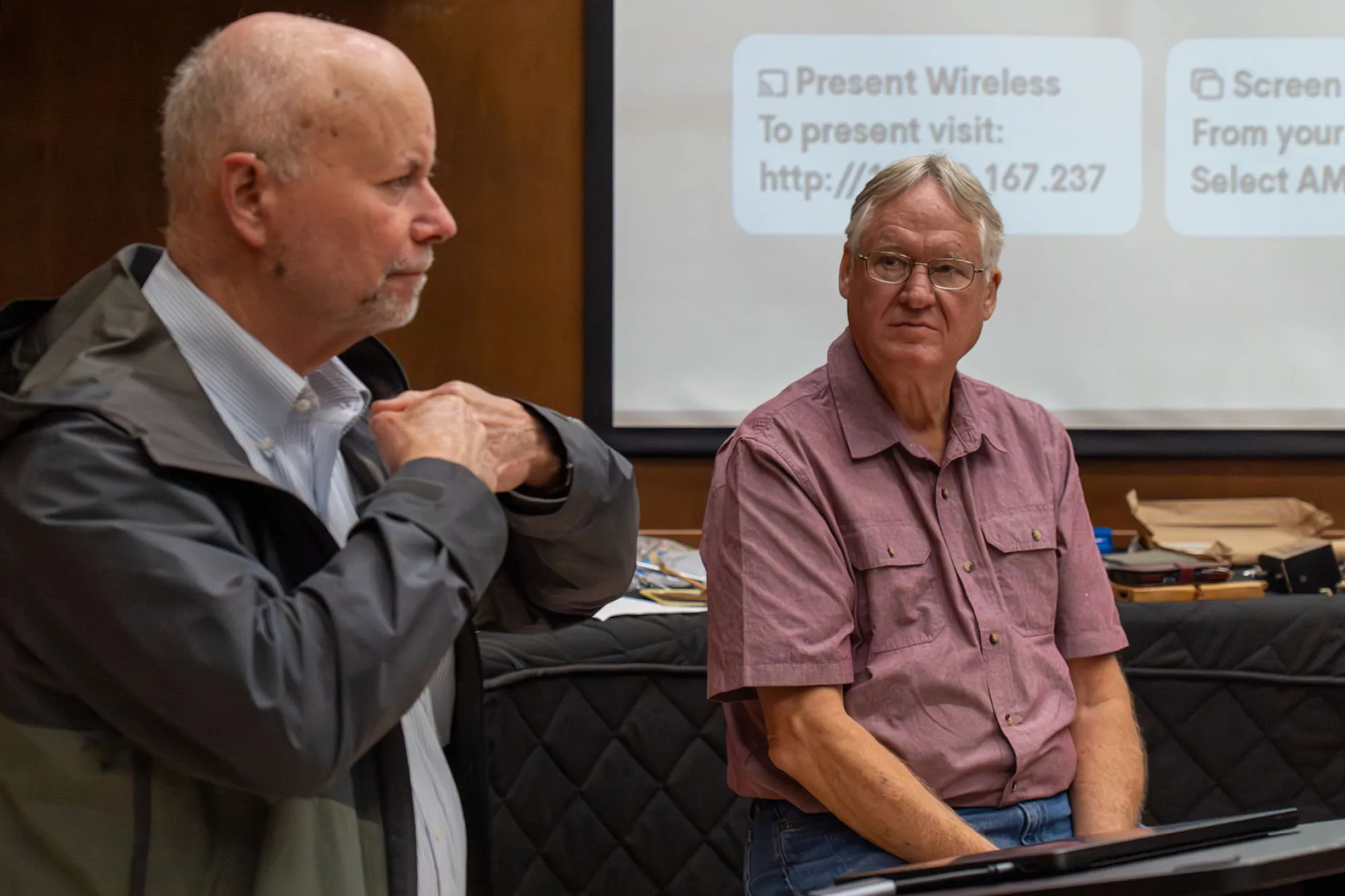
Dale Erwin listens as Ken Eschete explains about piano compression
The final explored the science behind hammer selection, including hammer pressing techniques and weight considerations. Using slow-motion video footage, they demonstrated how different hammers behave in action. Erwin and Eschete also presented practical methods for balancing piano actions using principles of rotational inertia, an application of Newton’s Second Law that helps technicians optimize touch and responsiveness.
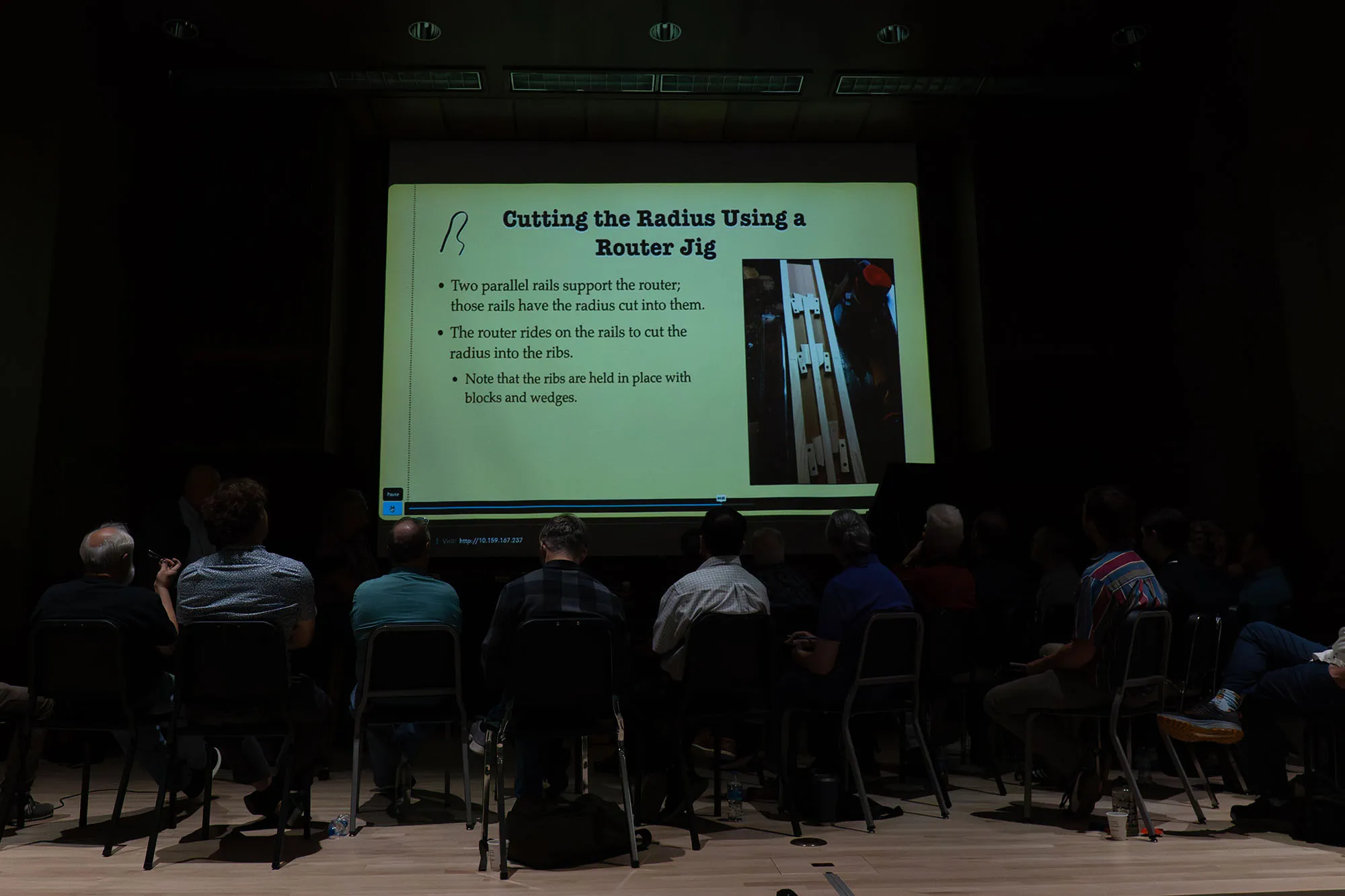
Demonstrations using power tools were shown in video clips
For anyone who thinks classical music is complicated, the workshop offered a reminder that building and restoring the instruments can be just as complex, if not more so. Behind every great performance stands a network of highly skilled technicians whose work combines craftsmanship, physics, engineering, and mathematics. Their contributions may rarely be seen by audiences, but the workshop made clear that the music world could not function without them.