


Sonia Seeman, director
Hannah Baer, teaching assistant
This concert will last about 90 minutes without intermission.
Please silence your electronic devices.
Photography, video, or recording of any part of this performance is prohibited
Sounding Craftsmanship in the Middle East
Program
Fasıl Suite of Instrumental and Vocal works in makam Hicaz
- Peşrev: Ottoman-Turkish instrumental composition by Neyzen Salih Dede (1818–1888)
- Hicaz çiftetelli Improvisations with street vendor calls
- Helvacı (The Helva seller) Hicaz Kanto
theatrical song
Ashley Clark, Evrim Solmaz, and Duygu Tuncer Mullin, solo voice
UT Middle Eastern Ensemble choir - Bugün Ayın Işığı (Moonlight Today)
regional song from the Abdal of Central Anatolia; based on the version of Hacı Taşan
Doruk Başoğlu, director
bağlama; voice. - Jadaka al-Ghaithu (May the Rain Fall Generously Upon You)
Andalusian muwashah, Lisan al-Din ibn al-Khatib (14th c., Granada), lyrics
Majdi al-Aqili, composer (Aleppo, 1948)
Abdullah Alqaroot, director, voice. - Ya Ghusna Naqa (O Branch upon the Sand Dune)
Andalusian muwashah; Abu Bakr ibn Zuhr (12th c., Seville), lyrics
traditional melody attributed to Abu Khalil al-Qabbani (1835 - 1902)
Abdullah Alqaroot director, voice
UT Middle Eastern Ensemble choir - Ey Saraban – (O Camel driver) song by Homayoun Khoram
Moeinee Kermanshahi, composer
Oscar Garcia, director
Ahmed Ahmadian, solo voice - Inshallah-Mashallah
Participatory Invocation by Mohammad Firoozi
in honor Roberto Paulo Riggio
composed by Mohammad Firoozi. - Potporri of Thatch-Weaving dance songs from Azerbaijan
Shovqat Aliqulieva
UT Middle Eastern Ensemble Choir
Laman Hendricks, dancer - El bahr Byedhak Leh (Why is the River Smiling)
Folk song from Egypt
El Sheikh Imam, composer
Naguib Surur, lyrics
Soraya Limare, voice
Haitham Gabr, director, voice
UT Middle Eastern Ensemble Choir - Two dance songs from Palestine
- Mijana and ‘Ala dal’ouna (Come to our Aid)
Improvised taqsim on mijwiz by Kameel Kishek
in maqam bayati followed by dabka dance song
arrangement by Dr. Hanna Salmon with improvised verse by Dunia Abdelqader
lead dance song verses by Nadia ElBdour
new mijana verse by Dayanara Martinez. - Wein Ramallah (Where are you going? To Ramallah)
Traditional Palestinian dance song;
introduced by Dr. Sari Andoni
Dunia Abdelqader, solo voice
UT Middle Eastern Ensemble Choir
- Mijana and ‘Ala dal’ouna (Come to our Aid)
- Thracian Kasap (Butcher’s guild dance)
with improvised phrases
About the Program
Bereket Middle Eastern Ensemble is comprised of university students, faculty, staff and community members. “Bereket” is a word with cognates in Turkish, Arabic and Persian that translates as “abundance,” “fruitfulness,” and “divine gift.” Over half of our members are from the Middle East, and all are interested in learning about the culture, history, religions and languages from these areas. Our repertoire includes music from the Middle East, Armenia and North Africa. Each semester focuses on a particular era, area and/or topic. This ensemble is offered as a class that is open to the general public as well as to UT students, supported by the Butler School of Music and the Center for Middle Eastern Studies. Our Fall 2026 concert celebrates the contributions of the craftspeople and laborers throughout the region of the Middle East considered broadly. We thank the Center for Middle Eastern Studies and the Bulter School of Music for supporting our activities.
Robert Riggio, 1971–2026
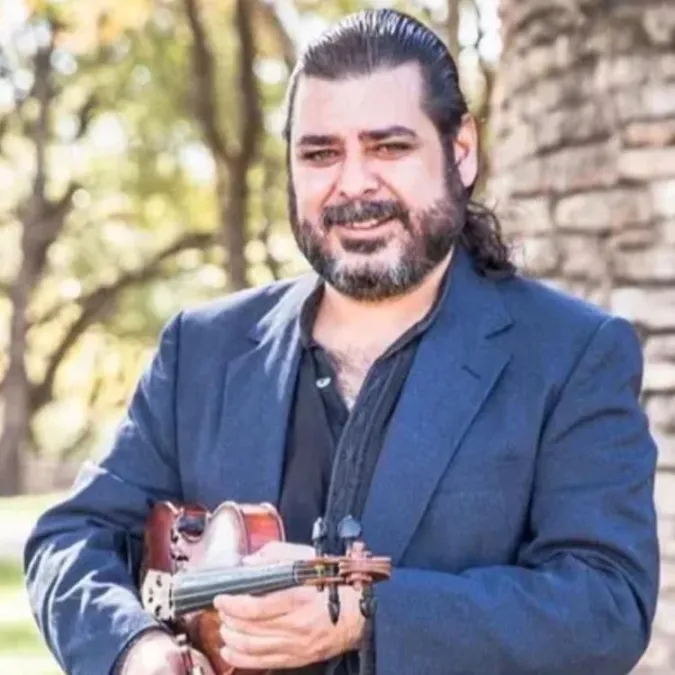
In this concert we honor the memory and contributions of local global musician violinist, composer and collaborator Roberto Paulo Riggio. Among his many accomplishments, he was a Grammy-nominated and seven-time Austin Music Award-winning international fusion group Atash, he composed, arranged, produced, and conducted for a variety of musical acts, concert events, and film scores across different genres and disciplines. He hosted a dynamic and well-attended “world music jam” for several years on 4th street where musicians collaborated, jammed and forged lasting networks. Roberto had also served several semesters as director of Bereket when Prof. Seeman was on leave, and frequently inspired local musicians to come to UT’s Bereket ensemble from his varied and inspiring workshops and community offerings. His dear friend and musical collaborator Mohamad Firoozi, a creative poet, singer and tombak musician from Iran, will lead the ensemble and audience in a musical invocation to Roberto’s resonant memories during this concert.
About the Artists
Directors of the Muwashahat Arabic Choir
Abdullah Alqaroot
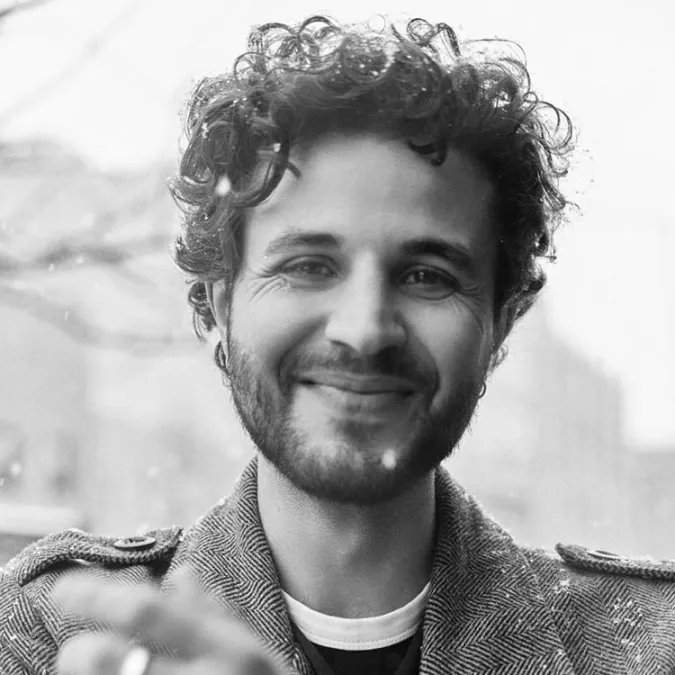
Abdullah Alqaroot is an Austin-based vocalist and musician originally from Nablus, Palestine. He has studied and performed the classical Arabic music traditions of Syria, Lebanon, Egypt, and Palestine, with a focus on muwashahat — the centuries-old Andalusian song form. He is an active member of several Austin ensembles, including Viva Palestina Orchestra, Shams, Ushaq, and the newly formed Tayyar, bringing muwashahat and Sufi-influenced repertoire to Austin audiences.
Reema Barakat
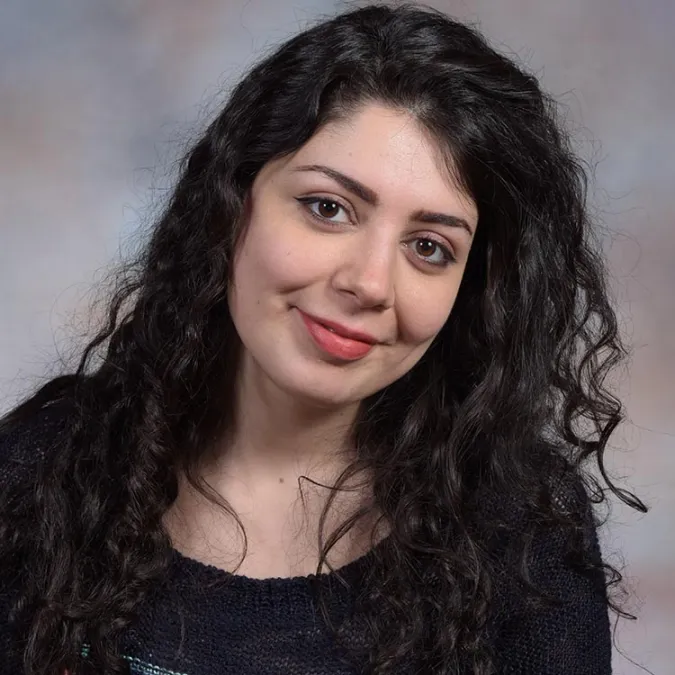
Professor Reema Barakat is a faculty member at the Middle Eastern Studies Department at UT. Specialized in Arabic Language and literature. In her teaching she bridges Arabic language with Arabic culture and arts. Beyond her academic work, she is an Arabic musician who brings traditional Arabic music to the local communities in Austin. She is an attendee of Simon Shaheen's annual Arabic music retreat, a founding member of Shams Arabic fusion band and a member of Viva Palestina Orchestra.
Musicians
Bereket
Abdullah Alqaroot: oud; voice
Ahmad Ahmadian: tombak; voice
Amira Sefidi; def
Annika Mulkay: viola
Alexis Mitrushi, viola
Ashley Clark: def; voice
Benjamin Rangell, violin
Danny Kodieh: oud
Diego Salinas: cello
Doruk Başoğlu: kaval; baglama; voice
Duygu Tuncer Mullin: def; voice
Evrim Solmaz: def; voice
Fataneh Fasihnia: def; voice
Griffin Romley: oud
Haitham Gabr: darbuka; def; voice
Janet Farhang: def; voice
Juniper Katz-Warmflash: cümbüş
Kameel Kishek: alto saxophone; mijwiz
Kim Packard: def; voice
Lila Al-Kassem: def; voice
Maleiva Flores-Stowe: def; voice
Mahmoud Ahmadian: kamancheh
Mana Pouresmaeil: def; tombak
Max Geller: tar
Nadia ElBdour: def; voice
Neri Osmanovic: oud
Oscar Garcia: piano; viola
Raneem Mahrouq: def; voice
Rehan Mallick: oud
Ryan Knight: oud
Saina Rezvani: def; voice
Sewar al-Masalha: accordion; def
Shaira Rahman: def; voice
Shovqat Aliqulieva: kanun
Sonia Tamar Seeman: kanun; G klarnet
Yahya Gahbiche: oud
Yasemine Qutob: def; voice
Yasmeen Hamad: def; voice
William Flores: darbuka; def; riqq; voice
Middle Eastern Ensemble Choir
Sonia Tamar Seeman, Abdullah Alqaroot, & Reema Barakat, directors
Addison Van
Anjum Alam
Ava Burr
Bareera Saif
Dayanara Martinez
Dunia Abdelqader
Elizabeth Pompa
Ghada Housen
Ginevra Muniu
Grace Collins
Hermela Assefa
Ifedayo Abegunde
Kaylie Stevens
Keyana Agbo
Misha Michael Marmo
Roman Fermanian
Sevval Kara
Soraya Limare
Sami Sabbagh
Talia Kabaio
Vivian Fifi Mutty
Yusuf Enes Karaman
Zeinab AlZuhairi
Event Details
Free admission